Pakistan Chronicle Weekly News
Senator Lindsey Graham Dies Suddenly at 71; South Carolina Prepares for Senate Succession
By Staff Reporter
WASHINGTON, D.C. | Veteran Republican U.S. Senator Lindsey Graham of South Carolina, one of the most influential voices on national security and foreign policy in Congress, died suddenly late Saturday night at his Capitol Hill home following what his office described as a brief and sudden illness. He was 71.
Cause of Death
Emergency personnel responded to a call reporting cardiac arrest at Graham’s residence on Saturday evening, and the senator was later declared dead. According to preliminary findings released by the District of Columbia medical examiner’s office, the cause of death was an aortic dissection linked to arteriosclerotic cardiovascular disease.
Final Hours and Ukraine Trip
Graham had returned to Washington just a day earlier from a diplomatic visit to Ukraine, where he met with President Volodymyr Zelenskyy to discuss continued U.S. military assistance and further sanctions on Russia. He had been scheduled to appear on NBC’s Meet the Press on Sunday morning.
President Donald Trump said he had spoken with Graham by phone on Saturday evening, before the senator’s death, and that Graham had mentioned feeling tired after the overseas trip but otherwise seemed fine. Trump later paid tribute to Graham on social media, describing him as a true American patriot and one of the finest people he had known in the Senate, and ordered flags at federal buildings lowered to half-staff.
Tributes From Washington
Tributes poured in from across the political spectrum. Senate Majority Leader John Thune praised Graham’s decades of counsel to presidents and world leaders, while South Carolina Governor Henry McMaster called him an irreplaceable fighter for the state. Leaders in Ukraine and Israel also mourned his passing, crediting him with sustained advocacy for both nations throughout his Senate career.
First elected to the U.S. House of Representatives in 1994, Graham moved to the Senate in 2002, winning the seat previously held by Strom Thurmond, and had served continuously since January 2003. Over more than two decades, he became one of the chamber’s most prominent voices on defence, judicial nominations and foreign affairs, chairing both the Senate Judiciary Committee and, most recently, the Senate Budget Committee. He had just secured his party’s nomination in June for a fifth term.
Who Will Replace Lindsey Graham? Senate Succession Explained
Under South Carolina law, because Graham’s death occurred more than 100 days before the November general election, Governor McMaster is required to appoint an interim senator to hold the seat. That appointee will serve until January 2027, when a successor elected in November is sworn in. State law further provides that, because Graham had already won his party’s primary for a fifth term, his vacancy on the ballot must be filled through a special Republican primary. Candidates must file between July 21 and July 28, with the primary set for August 11 and a runoff, if needed, on August 25. The winner will face Democratic nominee Dr. Annie Andrews in the November 3 general election.
A Crowded Field Emerges
Speculation over both the interim appointment and the permanent seat began within hours of Graham’s death. President Trump told NBC News he already had a preferred successor in mind but said it was too soon to name the individual out of respect for Graham. Among Republicans publicly weighing a run are Representative Nancy Mace, who recently lost a bid for the state’s GOP gubernatorial nomination, and Representative Ralph Norman, who also fell short in that race. Lieutenant Governor Pamela Evette, a close ally of both McMaster and Trump, has been described as a leading contender for the interim appointment, while Treasury Secretary Scott Bessent, a South Carolina native, has reportedly fielded calls encouraging him to enter the race.
Representative Joe Wilson, the longest-serving Republican in South Carolina’s congressional delegation, was widely floated as a candidate but ruled himself out, saying on social media that he intended to remain in the House to help preserve the chamber’s narrow Republican majority. Republican Mark Lynch, who placed second to Graham in June’s primary, confirmed he plans to run again, while Democratic nominee Dr. Annie Andrews offered condolences and praised Graham’s service.
Because McMaster is himself a Republican, his appointment is expected to preserve the GOP’s 53-47 Senate majority, which had already been operating a member short amid Senator Mitch McConnell’s continued hospitalisation. Even so, Graham’s absence removes a pivotal figure from ongoing legislative battles, including a complex budget reconciliation process he was steering as chairman of the Senate Budget Committee, and from this week’s confirmation hearing for acting Attorney General Todd Blanche before the Judiciary Committee he once led.
A Career Defined by Foreign Policy
Born on July 9, 1955, in the small town of Central, South Carolina, Graham grew up helping run his family’s restaurant and pool hall and became the legal guardian of his younger sister after both of his parents died while he was still in his twenties. He was the first in his family to attend college, earning undergraduate and law degrees from the University of South Carolina before serving as a U.S. Air Force lawyer, including an overseas posting in Germany. He later served stateside during the first Gulf War and retired from the Air Force Reserve in 2015 as a colonel.
Graham represented South Carolina’s third congressional district in the U.S. House from 1995 to 2003 before winning the Senate seat vacated by the retiring Strom Thurmond. He built a reputation as a foreign policy hawk, forming a close bond with the late Senators John McCain and Joe Lieberman — the trio was often dubbed the ‘Three Amigos’ for their shared interventionist views and joint overseas trips. In recent years, Graham made ten wartime visits to Ukraine and was a leading Senate voice pushing both the Biden and Trump administrations to sustain military support for Kyiv, while also urging a hard line against Iran.
His relationship with Donald Trump shifted dramatically over the years. Once a sharp critic who warned during the 2016 campaign that nominating Trump would lead the party to disaster, Graham later became one of the president’s most trusted Senate allies, a frequent golf partner, and a vocal defender of his administration’s policies, including recent U.S. strikes on Iranian nuclear sites.
At home in the Senate, Graham chaired the Judiciary Committee from 2019 to 2022, overseeing the swift confirmation of Justice Amy Coney Barrett, and was known for working across the aisle on several major bipartisan agreements despite his sharp partisan rhetoric on other issues. He was re-elected in 2008, 2014 and 2020, and had just won his primary for a fifth term in June.
International Reaction
Ukrainian President Volodymyr Zelenskyy said he was deeply saddened by the news, thanking Graham for his repeated visits and steadfast advocacy for Ukraine’s defence. Israeli Prime Minister Benjamin Netanyahu called Graham a beloved friend who understood that the security of Israel and America were inseparable, and Israeli President Isaac Herzog described him as a beacon of moral clarity for the U.S.-Israel relationship. In Iran, state media reacted very differently, with a television host on a government-linked network openly celebrating Graham’s death, reflecting the intensity of the antagonism his hawkish stance on Tehran had generated.
Democratic Senator Jeanne Shaheen, the top Democrat on the Foreign Relations Committee, said the most fitting tribute to Graham’s legacy would be to pass legislation supporting an independent and secure Ukraine, a cause she said he had championed for years.
Graham’s funeral arrangements had not been announced at the time of writing. His office asked for privacy for the family in the coming days.
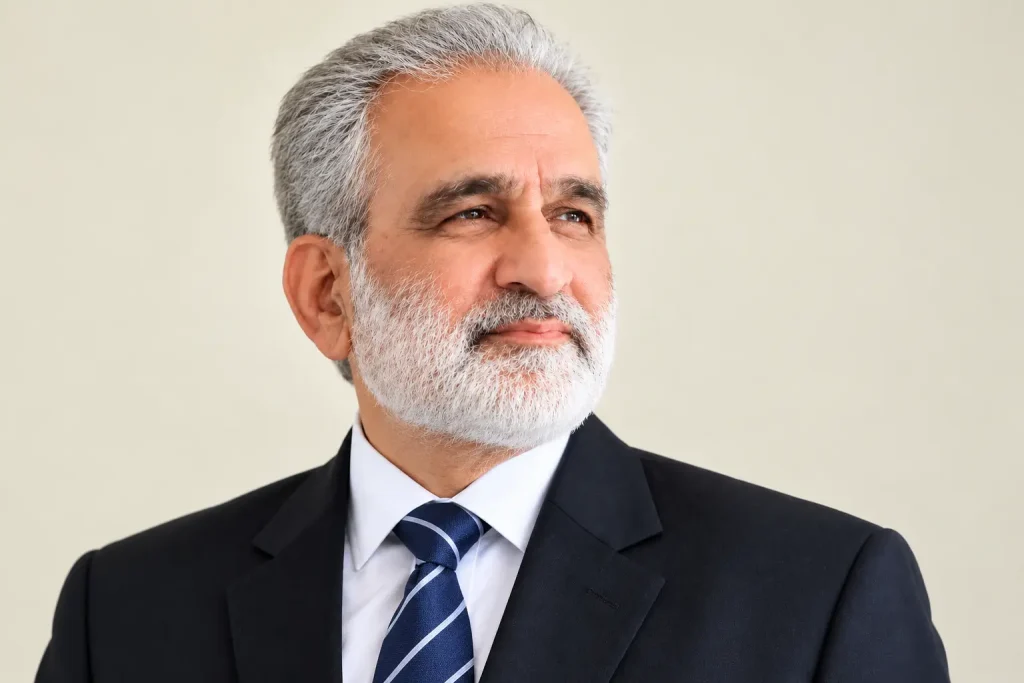
Photo Caption: Senator Lindsey Graham is pictured in an official portrait with the American flag. Graham represented South Carolina in the U.S. Senate from 2003 until his death in July 2026.