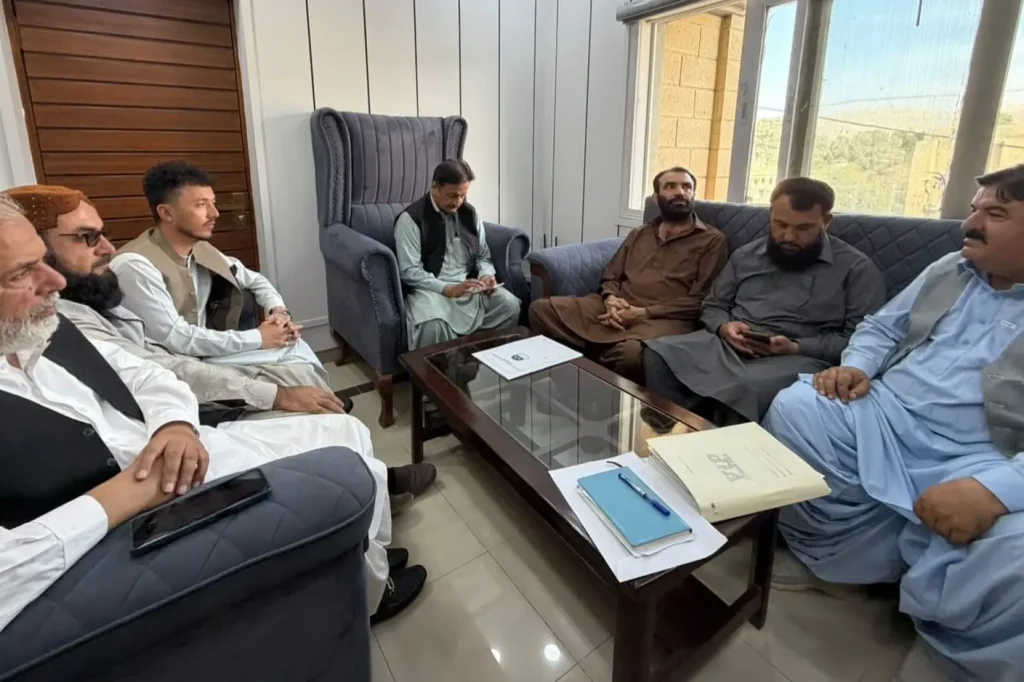
The Judicial Commission of Pakistan is holding a key meeting today, July 21, 2026, to consider the appointment of additional judges to the Lahore High Court. With 24 candidates shortlisted for 10 vacant positions, this Judicial Commission of Pakistan meeting marks one of the most significant judicial appointment exercises of the year.
Background: Why This JCP Meeting Matters
Pakistan’s superior judiciary has been grappling with a growing backlog of cases for years. One of the core reasons behind this crisis is the shortage of judges in high courts across the country. The Judicial Commission of Pakistan has convened a key meeting on July 21, 2026, to consider the appointment of additional judges to the Lahore High Court. According to an official communication issued by the Judicial Commission’s secretary, the meeting will be held at 2:00pm in the conference room of the Supreme Court of Pakistan in Islamabad.
The session will be chaired by Chief Justice of Pakistan Justice Yahya Afridi, who also serves as the chairman of the Judicial Commission. Other constitutional members of the Judicial Commission of Pakistan are also expected to attend and participate in the deliberations.This is not just a routine administrative exercise. The appointments being considered today will directly affect how quickly citizens can access justice at one of the country’s busiest courts. The Lahore High Court serves millions of people across Punjab and its capacity has been stretched for years.
What Is on Today’s Agenda?
According to the agenda, the commission will first consider the confirmation of one additional judge before taking up the appointment of 10 additional judges against vacant positions in the Lahore High Court. The commission will review the names of 24 shortlisted candidates for the available vacancies.
That means 24 legal professionals are currently in contention for just 10 seats. The competition is tight, and the decisions made today by the Judicial Commission of Pakistan will shape the composition of the Lahore High Court for years to come.
In addition to the Lahore High Court appointments, the JCP will also consider confirmation of four additional judges for the Peshawar High Court, and names for elevation to fill three Islamabad High Court offices. The Peshawar High Court, which serves Khyber Pakhtunkhwa, has also been awaiting these confirmations for some time.
Judicial Commission of Pakistan Next Meeting: Sessions Scheduled July 21–23
Today’s session is only the beginning. The commission is expected to hold sessions from July 21 to 23 to assess and finalise appointments for the Lahore, Sindh and Balochistan high courts. Recommendations for the Peshawar High Court are also being finalised and are expected to come before the commission in the same period.
The Judicial Commission of Pakistan next meeting in this series will therefore take place on July 22 and July 23, covering the Sindh and Balochistan High Courts respectively. This makes the current week arguably the most consequential period for judicial appointments in 2026.
The JCP has already received 35 nominations for five offices of judges in the Sindh High Court. This intense activity underscores how seriously the commission is treating the current vacancy crisis across Pakistan’s superior judiciary.
The 27th Amendment and the New Appointment Framework
A major reason today’s meeting is happening at all is the passage of the 27th Constitutional Amendment. The institutional momentum is tied directly to the recently enacted 27th Constitutional Amendment, which modified Article 175A(4) to empower the JCP to formulate its own rules for assessing, evaluating, and determining the professional fitness of judicial candidates. Prior to these rules, a mounting backlog of cases and rising vacancies had stalled appointments across multiple provincial benches.
The structural gridlock was broken when 20 members of the 35-member commission voted by a majority to adopt the interview protocols, along with key amendments to the Judicial Commission of Pakistan (Appointment of Judges) Rules, 2024.
Under the new framework, a structured interview process now precedes the final appointment decision. A seven-member panel will conduct structured interviews of shortlisted candidates. The panel’s recommendations will not be binding on the full commission, which will retain the authority to make final decisions through a majority vote.
This is a meaningful reform. Earlier, the appointment process was often opaque and dominated by internal judicial hierarchies. The new structure introduces a layer of structured evaluation before the full Judicial Commission of Pakistan casts its vote.
Judicial Commission of Pakistan Members After 27th Amendment
The composition of the Judicial Commission of Pakistan changed significantly following the 27th Constitutional Amendment. Understanding who sits on this body helps explain how judicial appointments are now made.
The judicial members of the JCP after the 27th Amendment now include: the Chief Justice of the Federal Constitutional Court, the Chief Justice of the Supreme Court, the next senior-most judges of the FCC and the SC each, and a judge of the SC or FCC jointly nominated by both Chief Justices. The other members remain the same as before.The Federal Law Minister Azam Nazeer Tarar, Attorney General Mansoor Usman Awan, and four parliamentarians two each from the government and the opposition will also participate in the Commission’s proceedings. Additionally, a female member nominated by the Speaker of the National Assembly and a lawyer nominated by the Pakistan Bar Council have been included.
Specifically, Justice Aamer Farooq has been nominated as a member of the Judicial Commission, while Justice Jamal Khan Mandokhail has been appointed to the Supreme Judicial Council and Practice and Procedure Committee.
Judicial Commission of Pakistan Total Members: How Many Are There?
One of the most frequently searched questions around the JCP is about its total membership. The Judicial Commission of Pakistan is a 35-member commission. This makes it one of the largest judicial appointment bodies in South Asia.
The total membership reflects a deliberate attempt to balance judicial independence with parliamentary and executive representation. Critics, however, argue that the inclusion of so many political figures raises questions about whether appointments can truly remain free from political influence a concern that legal observers have repeatedly flagged.
Two opposition members from the PTI boycotted a recent JCP meeting where rules regarding judge appointments were approved, citing concerns over what they described as increasing executive dominance in the decision-making process.
No Supreme Court Judges in Vetting Panels: A Controversial Decision
One of the more striking features of the current appointment process is the composition of the interview panels. The Judicial Commission of Pakistan has set up separate seven-member panels to interview candidates for four high courts. None of the committees includes a Supreme Court judge.
The composition of the four committees, while varying slightly in their judicial members, uniformly draws its judicial strength from either the Federal Constitutional Court or the respective high courts, conspicuously bypassing the Supreme Court.
FCC Judge Syed Hassan Azhar Rizvi will head the seven-member panels for the Lahore High Court and Islamabad High Court. Other members include Lahore High Court Chief Justice Aalia Neelum, Islamabad High Court Chief Justice Muhammad Sarfraz Dogar, Attorney General for Pakistan Mansoor Usman Awan, Senators Farooq H. Naek and Syed Ali Zafar, and Supreme Court Bar Association representative Muhammad Ahsan Bhoon.
Legal observers have noted that the exclusion of Supreme Court judges from these panels marks a significant departure from past practice and may have long-term implications for the institutional relationship between the apex court and the high courts.
Political Maneuvering Around Judicial Appointments
The JCP process is rarely purely technical. Political parties have long understood that influencing judicial appointments can shape the legal landscape for years.
PPP Senator Farooq H. Naek has proposed 33 candidates for appointment to the four high courts. Of the proposed names, 16 are for the Sindh High Court, 10 for the Lahore High Court, five for the Balochistan High Court and two for the Islamabad High Court.
Legal observers note that the Chief Justice has not evolved a clear strategy to reduce executive influence in judicial appointments. Senior lawyers maintain that high court chief justices remain crucial in the appointment process for superior court judges, particularly for ensuring balance and institutional independence.
This tension between the desire for judicial independence and the reality of political participation in the JCP process is something the Supreme Court of Pakistan will have to navigate carefully in the weeks ahead.
Impact on the Peshawar High Court
The Peshawar High Court has been a focal point in recent JCP activity. In an earlier meeting, the Judicial Commission of Pakistan approved the confirmation of six additional judges of the Peshawar High Court as permanent and granted six-month extensions to four others. The commission recommended the confirmation of Justice Tariq Afridi, Justice Abdul Fayaz, Justice Salahuddin, Justice Sadiq, Justice Mudassar, and Justice Qazi Jawad Ehsanullah as permanent judges.
The current round of appointments for the Peshawar High Court again comes before the Judicial Commission of Pakistan during this week’s sessions, continuing the effort to stabilise one of Pakistan’s important provincial high courts.
What Comes Next
The coming days will be decisive. After today’s Judicial Commission of Pakistan meeting for the Lahore High Court, sessions will continue on July 22 and 23 for the remaining courts. Once the commission finalises its recommendations, the names will be forwarded for formal appointment through the constitutional process.
After nominations are compiled, shortlisted candidates will be summoned before the seven-member panel for structured interviews, after which the committee’s final recommendations will be presented to the full commission for confirmation before the end of July.
Pakistan’s legal community, bar associations, and general public are watching closely. The quality of judges appointed through this process will directly determine how fairly and efficiently the courts serve millions of people across the country.
Frequently Asked Questions (FAQs)
Who is the current Chief Justice of Pakistan in 2026?
Justice Yahya Afridi is the current Chief Justice of Pakistan. He assumed office on 26 October 2024, after being appointed by President Asif Ali Zardari following the retirement of Justice Qazi Faez Isa. He also serves as the Chairman of the Judicial Commission of Pakistan and heads both the Supreme Judicial Council and the reconstituted Practice and Procedure Committee. He is set to remain as Chief Justice until October 2027. Justice Afridi previously served as Chief Justice of the Peshawar High Court and is notably the first chief justice with family roots from what were once the Federally Administered Tribal Areas. As JCP chairman, he has presided over all the major judicial appointment sessions currently underway in July 2026.
What is the salary of a Judge in Pakistan per month?
Judicial salaries in Pakistan vary significantly by rank and court level. A District and Sessions Judge in Pakistan earns approximately PKR 265,000 to PKR 375,000 per month in 2026, including basic pay and allowances such as House Rent Allowance, Medical Allowance, and Conveyance Allowance. High court judges and their chief justices earn considerably more, with chief justices of high courts drawing upward of PKR 650,000 per month. The Chief Justice of Pakistan draws a salary that is seven times higher than that of the Prime Minister of Pakistan, reflecting the constitutional stature of the office. Supreme Court judges also receive benefits including official residences, vehicles, staff, and post-retirement perks. These figures represent official pay scales and the actual compensation package including in-kind benefits is substantially higher in practice.
What is Article 184(3) of the Constitution of Pakistan?
Article 184(3) is one of the most powerful and frequently invoked provisions in the Constitution of Pakistan. It grants the Supreme Court of Pakistan original jurisdiction to take up matters of public importance involving the enforcement of fundamental rights. What makes it exceptional is that any citizen can approach the Supreme Court directly under this article without going through the normal litigation process through lower courts. Over the past two decades, the Supreme Court has used Article 184(3) to take suo motu notice of issues ranging from corruption and governance failures to environmental disasters and price hikes. While it has been praised for holding governments accountable, critics argue it has at times been used selectively or expanded beyond its original constitutional intent. The debate over the proper scope of Article 184(3) remains one of the central conversations in Pakistan’s ongoing judicial reform discussions.