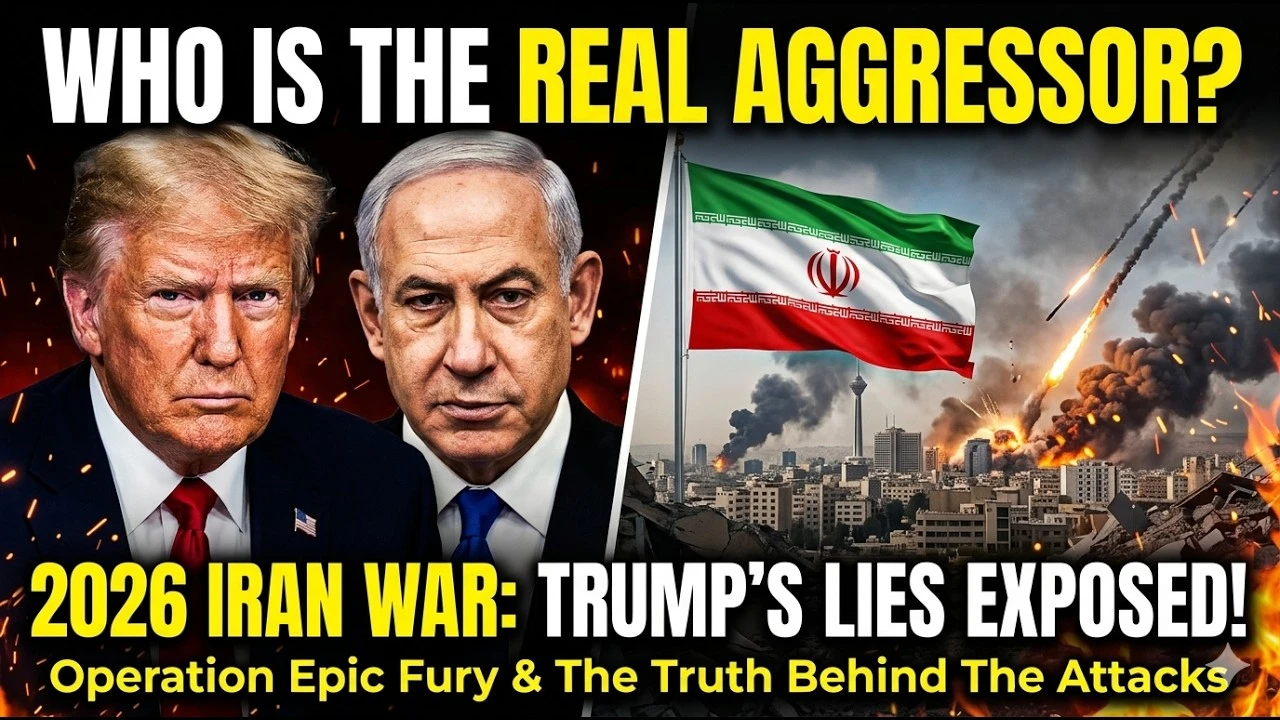
The Middle East war start date 2026 is February 28 the day the United States and Israel launched surprise airstrikes on Iran. Since then, the Iran US conflict 2026 has reshaped global energy markets, disrupted the Strait of Hormuz, and pushed the world to the edge of a wider war. Here is everything you need to know, with the latest Iran war 2026 updates.
Middle East War Start Date 2026 How It All Began
Since February 28, 2026, the United States and Israel have been engaged in a war with Iran and its regional allies. The conflict began when the US and Israel launched airstrikes on Iran, targeting military and government sites and assassinating several Iranian officials, including Supreme Leader Ali Khamenei.
The surprise attacks came at a deeply sensitive moment. They were launched during negotiations between Iran and the US regarding Iran’s nuclear program, making the strike widely condemned as a betrayal of diplomatic good faith.
Iran responded with missile and drone strikes on Israel, US bases, and US-allied Arab countries in West Asia, and the closure of the Strait of Hormuz, disrupting global trade. The Middle East war start date 2026 is not just a footnote it marks the beginning of the most serious military escalation in the region in decades.
Who Started the War in Iran 2026?
The question of who started the war in Iran 2026 has a clear answer militarily, though both sides claim justification. Israeli Prime Minister Benjamin Netanyahu lobbied President Donald Trump for a joint military strike on Iran, specifically targeting its leadership.
The lead-up was years in the making. In June 2025, Israel launched the Twelve-Day War by attacking Iranian military and nuclear facilities, provoking Iranian counter-strikes. The US also struck Iranian nuclear facilities during the Twelve-Day War, which ended in a ceasefire.
Then, in early 2026, the situation exploded. In January 2026, Iranian security forces massacred thousands of civilians in their crackdown on the largest Iranian protests since 1979. This gave Washington and Tel Aviv a further political justification for the February 28 strikes that formally launched the Iran US conflict 2026.
The Strait of Hormuz The War’s Most Dangerous Flashpoint
No single location defines this war more than the Strait of Hormuz. This narrow waterway between Iran and Oman carries roughly 20% of the world’s oil supply. Iran’s decision to close it has been the conflict’s most devastating economic weapon.
US forces targeted Iranian military facilities responsible for launching a series of “unprovoked” missile, drone, and small boat attacks against American warships transiting the Strait of Hormuz. The US Navy has been fighting to reopen the waterway ever since.
The US launched “Project Freedom,” an effort aimed at guiding commercial vessels through the Strait of Hormuz. However, the mission has faced stiff resistance. A senior Iranian official warned that any US interference in the Strait of Hormuz would be considered a violation of the ceasefire, calling it outside American authority to manage.Trump eventually announced he would pause Project Freedom, citing progress in diplomatic talks. The Strait of Hormuz remains the central battleground of this conflict not just militarily, but economically and diplomatically.
Iran War 2026 Updates Where Things Stand Today
The Iran war 2026 updates paint a picture of a war that is neither won nor over. US Central Command stated that it had struck over 11,000 targets in Iran since the beginning of the war. The scale of destruction inside Iran has been enormous.
More than 12,000 residential buildings damaged during the US-Israeli war with Iran have been repaired, according to the head of Iran’s Basij Construction Organization. About 46,000 housing units in Tehran, 12,300 in Isfahan, and 2,200 in Qom were damaged a total of about 60,500 units.
There were more than 600 attacks against US facilities in Iraq during the active conflict of the Iran war. Iran’s proxy network Hezbollah, the Houthis, and Iraqi militias has kept pressure on US forces across the region even as direct Iran-US fighting has slowed.
The average price of a gallon of US regular gas has risen nearly 50% since the start of the Iran war on February 28. Ordinary Americans are paying a steep price at the pump, fueling political pressure on the Trump administration to end the conflict quickly.
Who Is Winning the Iran War?
Who is winning the Iran war is a question with no simple answer. Militarily, the US and Israel have struck thousands of targets and killed Iran’s top leadership. But strategically, the picture is more complicated.
Secretary of State Marco Rubio said the US military operation launched in February was “over,” suggesting the US priority now was reopening the critical waterway. Iran, meanwhile, framed the pause of Project Freedom as an American retreat. Iranian state media hailed Trump’s suspension of the operation, describing it as “Trump Backs Down.”
As the standoff over the Strait of Hormuz drags on, new vessel-tracking and trade data reveal how the crisis is rattling global markets. Iran has not collapsed. The US has not achieved its key objective of reopening Hormuz freely. Both sides are wounded and both are talking.
2026 Iran War Map The Regional Picture
Any 2026 Iran war map would show a conflict far wider than Iran’s borders. Iran responded to the initial US-Israeli strikes with missile and drone attacks on Israel, US bases, and US-allied Arab countries in West Asia.
Lebanon has also been drawn in. More than 2,600 people have been killed in Israeli strikes on Lebanon since March 2, despite a ceasefire between Israel and Hezbollah. The Houthis in Yemen continue firing missiles at Israel. Iraq has seen over 600 attacks on US facilities.
CSIS experts are analyzing how the war with Iran is reshaping geopolitics across Africa, Asia, Australia and the Pacific, Europe, and the Middle East. The 2026 Iran war map is, in truth, a map of a world being reorganized by one conflict at its center.
Iran War When Will It End?
Iran war when will it end is the question every government, oil trader, and ordinary family is asking. The signals are mixed but cautiously hopeful.
Iran submitted a 14-point response to a US proposal, calling for “ending the war on all fronts, including Lebanon.” Iran’s deputy foreign minister said the proposal was “aimed at the permanent end” of the war.
The US proposed a two-month ceasefire, but Iran believes the issues should be resolved within 30 days, and that negotiations should focus on the “termination of the war” rather than extending a ceasefire.
Trump has warned that if Iran does not sign a deal soon, the US will “knock them out a lot harder, and a lot more violently.” At the same time, US special envoy Steve Witkoff confirmed that “we’re in conversation” with Iran, suggesting the door to peace is still open.
Iran war when will it end depends on whether both sides can agree on the future of the Strait of Hormuz, Iran’s nuclear program, and US sanctions relief. None of these issues are simple. None will be resolved overnight.
Global Impact Energy, Alliances, and the New World Order
The Iran US conflict 2026 is not just a bilateral war. It is reordering global alliances and economies. China watches the US-Iran war with unease. Experts explore Beijing’s fears over the Strait of Hormuz and how the conflict reshapes China’s view of a global order it relies on but cannot control.
Europe has been caught off guard. The US launched the war without notifying most NATO allies. Friction between European leaders and the Trump administration has intensified as a result.
Demand for oil is falling at the fastest rate seen outside the Covid pandemic, as businesses and consumers cut consumption. The Middle East war start date 2026 may go down in history as the moment the post-Cold War energy order began to break down.
Conclusion A War With No Easy Exit
The Iran US conflict 2026 began with airstrikes but has become something far more complex a battle over the Strait of Hormuz, Iran’s future, and the shape of the Middle East for the next generation. The Iran war 2026 updates suggest neither side is clearly winning. Both sides are talking. But trust has been shattered, and the road to peace is long.
The Middle East war start date 2026 will be remembered as a turning point. What happens next in diplomacy, in Hormuz, in Tehran and Washington will define the region, and perhaps the world, for years to come.
FAQs
Is Pakistan in the Middle East?
No, Pakistan is not in the Middle East. It is located in South Asia, bordering India to the east and Afghanistan to the west. However, Pakistan plays a role in regional diplomacy notably, Iran submitted its 14-point peace proposal to the United States through a Pakistani intermediary, showing Islamabad’s diplomatic bridge-building role in the Iran US conflict 2026.
What will happen in 2030 for Muslims?
Predicting 2030 with certainty is impossible, but the Iran US conflict 2026 is already reshaping the Muslim world. If the war ends with Iran weakened and the Strait of Hormuz under Western influence, Muslim-majority nations in the Gulf and beyond could face dramatic political and economic realignment. Analysts at CSIS and other institutions are tracking how this war is reshaping relationships across Muslim-majority regions in Asia, Africa, and the Middle East for decades ahead.
Which 10 countries support Israel?
The United States is Israel’s primary backer in the Iran US conflict 2026, providing military assets, intelligence, and airpower. Other countries that have expressed support for Israel in varying degrees include the United Kingdom, Germany, France, Canada, Australia, the Netherlands, Italy, Japan, and India. Support varies from direct military cooperation to diplomatic backing in international forums, and not all of these countries endorsed the February 28 strikes that began the Middle East war in 2026.