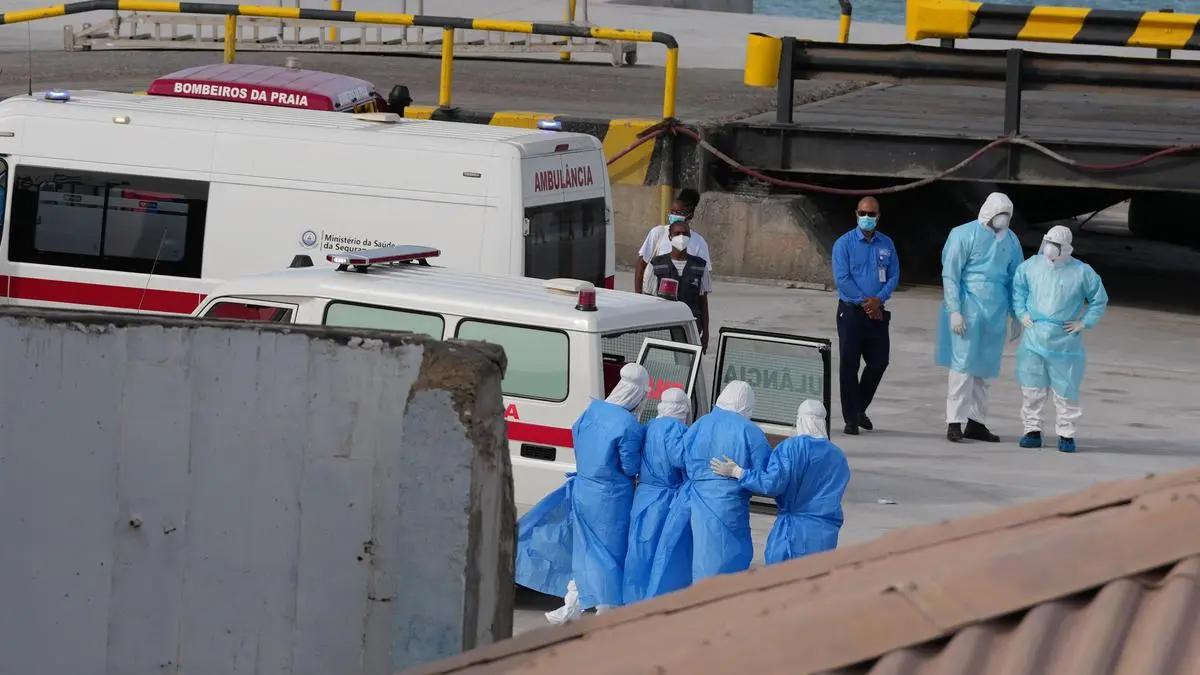
A rare and deadly hantavirus outbreak on a cruise ship has triggered an international health emergency. The MV Hondius, a Dutch-flagged vessel carrying passengers from 23 countries, is now heading toward Tenerife after multiple deaths, confirmed infections, and a frantic global contact tracing effort. Here is everything you need to know.
What Is the Hantavirus Cruise Ship and Where Is It Now?
The vessel at the centre of this crisis is the MV Hondius, a Dutch-flagged cruise ship operated by Oceanwide Expeditions. As of May 8, 2026, the ship is between Cape Verde and the Canary Islands, heading toward the Port of Granadilla on Tenerife, with many passengers and one dead body still on board.
The vessel is expected to arrive Sunday at the Spanish island of Tenerife, off the coast of West Africa, where passengers will be taken to a “completely isolated, cordoned-off area,” according to the head of Spain’s emergency services, Virginia Barcones.
The hantavirus cruise ship location has been closely tracked by health authorities worldwide as they work to trace every person who may have been exposed to the virus during or after the voyage.
How Many Passengers Are on the Hantavirus Cruise Ship?
The scale of the outbreak is significant given the number of people on board. There were 149 people on board from 23 different nationalities, including nine EU and EEA member states: Belgium, France, Germany, Greece, Ireland, the Netherlands, Poland, Portugal, and Spain.
A total of 146 people from 23 different countries including 17 Americans are still aboard the vessel under strict precautionary measures, according to operator Oceanwide Expeditions.
The diversity of nationalities on board has complicated the response significantly, requiring coordination between dozens of national health agencies simultaneously.
Hantavirus Cruise Ship Deaths What We Know
The hantavirus cruise ship deaths are the most alarming aspect of this outbreak. There have been three deaths, with only one confirmed to have been caused by hantavirus, while the other two remain under investigation.
The three who have died are a Dutch couple and a German national. The first suspected case was a 70-year-old Dutchman who suddenly fell ill on the ship with a fever, headache, abdominal pain, and diarrhea. He died on board on April 11.
A second adult female, who was a close contact of the first case, went ashore at Saint Helena on April 24 with gastrointestinal symptoms. She subsequently deteriorated during a flight to Johannesburg, South Africa, on April 25, and died upon arrival at the emergency department on April 26. She was subsequently confirmed by PCR to have hantavirus infection.
As of May 8, 2026, the WHO reports eight suspected cases and five confirmed cases. The numbers continue to evolve as contact tracing expands across multiple countries.
Hantavirus Cruise Ship Timeline From Argentina to Tenerife
Understanding the hantavirus cruise ship timeline helps explain how this outbreak developed and spread across borders so rapidly.
Cases 1 and 2 had travelled in South America, including Argentina, before they boarded the cruise ship on April 1, 2026.
Illness onset occurred between April 6 and April 28, 2026, and was characterised by fever, gastrointestinal symptoms, rapid progression to pneumonia, acute respiratory distress syndrome, and shock.
It was not until May 2 that health authorities first confirmed hantavirus in a ship passenger, according to the WHO. That delay meant that several passengers had already disembarked and returned to their home countries before the outbreak was identified.
On May 2, 2026, WHO received notification from the UK’s National International Health Regulations Focal Point regarding a cluster of severe acute respiratory illness, including two deaths and one critically ill passenger, aboard the Dutch-flagged cruise ship.
The MV Hondius then departed Cape Verde on Thursday heading toward Tenerife, a journey expected to take around three and a half days, according to the Spanish Ministry of Health.
Where Did the Hantavirus Cruise Ship Come From?
The question of where the hantavirus cruise ship outbreak originated is still under active investigation. WHO is working on the assumption that the Dutch couple who died were infected off the ship, possibly while sightseeing in Argentina before joining the cruise.
The first two cases travelled through Argentina, Chile, and Uruguay on a bird-watching trip that included visits to sites where the species of rat known to carry the virus was present.
Argentina is now reconstructing the route taken by the Dutch couple before they boarded the MV Hondius in Ushuaia on April 1, in an effort to determine the source of infections. The country’s health ministry said that, so far, no cases related to the cruise ship outbreak have been identified in Argentina. It also said that no cases of the hantavirus had been recorded in Ushuaia in recent decades.
The Argentine health ministry reported 101 hantavirus infections since June 2025, roughly double the caseload recorded over the same period the previous year. This elevated background rate in Argentina adds important context to the investigation.
Hantavirus Cruise Ship France What Is the Connection?
The hantavirus cruise ship France connection has drawn particular attention from European health authorities. Eight French nationals who were not on the cruise have been identified as close contacts of a confirmed case, according to the French health ministry. The nationals were on an international flight on April 25, 2026, between Saint Helena and Johannesburg, on which the confirmed case also travelled. One of the individuals is displaying mild symptoms, with diagnostic tests being carried out and isolation measures put in place.
This illustrates how quickly the virus can create exposure chains well beyond the ship itself. A single confirmed passenger on a commercial flight created eight potential contacts in France alone.
Hantavirus Cruise Ship Docking The Tenerife Dispute
The hantavirus cruise ship docking situation has become a political and humanitarian flashpoint. The president of the Canary Islands, Fernando Clavijo, said he “cannot allow the Hondius to enter the Canaries” and refused to receive the ship in Tenerife. His refusal stemmed from concern that the ship’s arrival would endanger the people of the Canary Islands, a view shared by many islanders, particularly in light of their experiences during the COVID-19 pandemic.
However, the WHO pushed back forcefully on that position. The WHO said that “Spain has a moral and legal obligation to assist these people, among whom are several Spanish citizens.”
Spanish authorities on Friday were preparing to receive more than 140 passengers and crew members. Passengers will be evacuated in small boats to buses only after their repatriation flights are ready, and transported in isolated and guarded vehicles through cordoned-off areas of the airport.
Both the United States and the United Kingdom have agreed to send planes to evacuate their citizens from the cruise ship.
Hantavirus Cruise Ship Update Global Response as of May 8
The hantavirus cruise ship update from May 8 shows a rapidly expanding international response. Symptomatic patients are currently in five countries, with confirmed cases in South Africa and Switzerland, and unconfirmed cases in Saint Helena, the Netherlands, Singapore, and France. Airlifted patients who have tested positive are being treated in Germany and the Netherlands.
Health authorities in at least five US states Arizona, California, Georgia, Virginia, and Texas are monitoring previous passengers of the ship, though none have shown symptoms.
President Donald Trump said Thursday night he has been briefed on the hantavirus, and said that “it’s very much we hope under control,” adding that “a lot of great people” are studying it.
The US Centers for Disease Control and Prevention has classified the outbreak as a Level 3 emergency response.
The specific species of hantavirus identified is the Andes virus the only hantavirus known to spread between people, though this spread is rare and has previously occurred mainly in cases of close, sustained contact.
Opinion A Preventable Crisis That Exposed a Global Gap
From an objective standpoint, the MV Hondius outbreak reveals a dangerous gap in cruise ship health protocols. The first death occurred on April 11. Passengers disembarked freely at Saint Helena on April 24. Hantavirus was not confirmed until May 2. That is a three-week window during which infected individuals scattered across more than a dozen countries with no warnings, no contact tracing, and no protective measures in place.
This is not primarily a criticism of the ship’s crew or even the operator. It reflects how poorly equipped the global health system is to identify rare pathogens quickly on vessels at sea. The Andes strain of hantavirus is not a new discovery. Its potential for limited human-to-human transmission has been documented in South American outbreaks for decades. The tools to detect it exist. What is missing is a consistent, enforceable international protocol for onboard disease surveillance that triggers earlier.
The WHO’s current assessment is that global risk remains low. That is reassuring. But the narrative of this outbreak slow identification, premature disembarkation, contested docking right should serve as a formal case study for maritime health security reform.
Frequently Asked Questions (FAQs)
Where did the hantavirus ship dock?
The MV Hondius is expected to dock at Tenerife in Spain’s Canary Islands, where Spanish authorities have prepared isolated, cordoned-off areas to receive passengers, who will be transported in guarded vehicles to repatriation flights. Prior to this, the ship made stops in Cape Verde, where some evacuations took place.
Which cruise ship has hantavirus?
The cruise ship at the centre of the hantavirus outbreak is the MV Hondius, a Dutch-flagged vessel operated by Oceanwide Expeditions, carrying 149 people from 23 nationalities when the outbreak was first reported to the WHO on May 2, 2026.
How did Gene Hackman’s wife get hantavirus?
Gene Hackman’s wife, Betsy Arakawa, died in February 2025 from hantavirus pulmonary syndrome. Hantaviruses are contracted through exposure to rodents such as rats and mice, specifically through their droppings and urine. People contract hantavirus mainly through the inhalation of virus-contaminated air, and rodent infestations in and around homes remain the primary source of exposure. New Mexico authorities confirmed her cause of death in March 2025. Her case is unrelated to the MV Hondius outbreak but brought the virus into public awareness months before this cruise ship crisis emerged.