A verification survey has found that 1,085 of the 1,087 industrial boiler units within Faisalabad’s municipal limits have emission control systems (ECS). The survey was carried out as the smog season approaches in November. Officials say the two remaining units are gas-fired. The finding is being presented as a key step in smog control in Faisalabad, one of Pakistan’s largest industrial cities.
Background: Why Faisalabad Industrial Units Are Under Watch
Faisalabad is often called the “Manchester of Pakistan” because of its large textile sector. That industry depends heavily on boilers and heaters, which burn fuel and release flue gases. Research on Faisalabad’s textile mills has warned that these gases, including oxides of nitrogen and sulphur, can contribute to smog and respiratory illness.
Industrial emissions in Pakistan have become a bigger public concern every winter, when smog covers much of Punjab. Factories, vehicles, crop burning and construction dust all add to the problem. In Faisalabad, industrial boilers are one of the main targets because they are easier to inspect and regulate than many other sources.
An earlier Environmental Protection Agency survey painted a worrying picture of the city’s industrial base. It classified more than half of urban industrial units as “very high” environmental risk. It cited boiler emissions, untreated effluent and closeness to homes as the main causes, and it found that 734 units lacked a no-objection certificate. Against that background, the new ECS numbers stand out.
Details: What the Verification Survey Found
According to officials, the survey was conducted to test claims made by the Environment Protection Department (EPD) that emission control systems had been installed in all industrial units. A third-party assessment was also carried out to evaluate the systems. The survey identified 1,087 boiler units within municipal limits.
Of these, two were gas-fired, while 1,085 had emission control and monitoring infrastructure installed. Officials in the divisional administration said the EPD had claimed full coverage, and the survey largely backed this up. The results give the administration a clearer baseline before the smog season begins.
An additional commissioner said the systems were put in place during the tenure of former Deputy Director Environment Faisalabad, Usman Azhar. He credited them with helping to control smog levels last year. Azhar said that when he took charge, only about 10 to 20 per cent of industrial units had ECS installed.
Pre-Smog Crackdown and Inspections
Reports say the Environmental Protection Agency plans round-the-clock inspections of industrial units during a pre-smog crackdown. The aim is to make sure that installed systems are working, not just present. This matters because a system that is switched off or poorly maintained does little to cut emissions.
The divisional commissioner, Dr Imran Hamid Sheikh, has also announced a seven-point pre-smog action plan. It covers industrial emissions, construction sites, sand trolleys, commercial kitchens, public transport, illegal fat-melting activity and stubble burning. Live CCTV feeds from industries will go to the Punjab Clean Air Watch (PCAW) so that black smoke can be spotted quickly. Units that failed to comply by September 30 were warned they would be shut down.
Quotes: What Officials Have Said
Earlier this year, then Divisional Commissioner Raja Jehangir Anwar said that Faisalabad “can no longer afford further environmental hazards,” while describing plans to relocate polluting industry. The administration has since paired that push with checks on industrial boilers and vehicles.
Commissioner Sheikh has said that units not meeting the requirements would not be allowed to keep running. He has also said cooperation from traders’ groups is being used to monitor dust control. These statements show that the administration intends to combine technology with tough enforcement.
Impact: What This Means for Air Quality
For residents, the installation of emission control systems is a positive sign, but not a guarantee of cleaner air. Industrial boilers are only one source of smog, and weather conditions in November can trap pollution regardless of what factories do. Vehicles, crop residue burning and construction dust still need strict control.
For industry, the requirement adds costs for equipment, maintenance and monitoring. Larger mills can usually absorb these, while smaller units may struggle. Officials will need to balance compliance with business survival, especially in an export-driven city.
At the national level, Faisalabad’s progress could serve as a model for other Punjab cities. If the system works, other districts may copy the third-party verification approach. It could also give exporters a stronger environmental record, which matters to international buyers who look at emissions and sustainability.
Conclusion: What Comes Next
The next few weeks will test whether the installed systems perform as claimed. Inspection teams will check operations, and PCAW will watch live camera feeds for signs of black smoke. Units that fail to comply face closure, according to the commissioner.
The bigger question is whether the effort can be sustained through the whole smog season. Regular maintenance, honest reporting and action against violators will decide the outcome. If they hold up, smog control in Faisalabad may see a real improvement this winter.
Frequently Asked Questions (FAQs)
What are emission control systems?
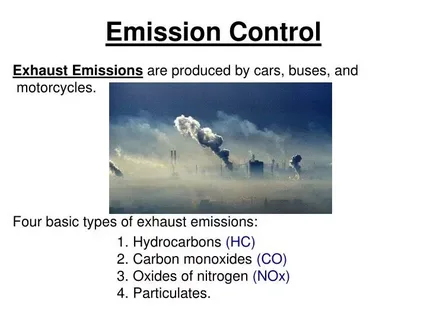
Emission control systems are devices and technologies designed to reduce the harmful gases and particles released from engines, boilers and industrial processes. In factories, they include filters, scrubbers, cyclones and monitoring equipment that capture smoke, dust and gases such as oxides of sulphur and nitrogen before they leave the chimney. In vehicles, they include parts such as the catalytic converter, oxygen sensors and exhaust gas recirculation valve. Their purpose is to bring pollution within legal limits, such as Pakistan’s environmental quality standards. Good systems also include monitoring so that authorities can check that they are working.
How does an emission control system work?
In an industrial boiler, an emission control system captures pollutants from the flue gas before it is released into the air. Depending on the design, it may use filters to trap particles, water sprays or chemical scrubbers to remove gases, or settling chambers to drop out heavy dust. Sensors then measure things like smoke opacity and gas levels, and the data can be sent to a control unit or to regulators. In a car, the engine computer uses sensors to adjust fuel and air, and the catalytic converter turns harmful gases such as carbon monoxide and nitrogen oxides into less harmful ones. In both cases, regular maintenance is essential for the system to work as intended.
How to fix emission control system warning light?
The warning light means the car’s computer has found a fault in the emission-related parts. First, check that the fuel cap is tight, since a loose cap can trigger the light. If it stays on, have the car scanned with an OBD-II diagnostic tool, which gives a fault code pointing to the problem. Common causes include a faulty oxygen sensor, a failing catalytic converter, a misfire, or a leak in the fuel vapour system. Repairs depend on the code, so it is best to have a qualified mechanic fix the fault. Ignoring the light can lower fuel economy, damage the engine or cause the car to fail an emissions test.