ANATOMY OF A SUPERPOWER’S
BLIND SPOT
Inside the FAA’s Nationwide Ground Stop
and America’s Aging Aviation Crisis
On Friday, November 13, 2026, the United States—the world’s foremost economic superpower and technological leader—came to an abrupt standstill. The Federal Aviation Administration issued a rare nationwide ground stop, halting all departing flights for more than four hours.
This illustrated briefing examines what failed, why Congress holds the purse strings, and the deeper structural crisis behind 1980s-era copper wiring still carrying the sky.
November 2026 • Special Report
1. What Happened on November 13, 2026?
The crisis unfolded at approximately 3:36 p.m. Eastern Time as communication and radar data across multiple Air Route Traffic Control Centers began to destabilize. By roughly 3:54–4:00 p.m., the FAA had issued a nationwide order: all departing traffic must remain ground-stopped.
The Technical Failure
Transportation Secretary Sean Duffy explained that legacy analog telecommunications equipment—specifically 1980s-era copper wiring, switches, and routers—became overwhelmed with data traffic and began outputting inconsistent information. Homeland Security Secretary Markwayne Mullin added that attempts to integrate newer technologies into the aging network inadvertently stressed the antiquated hardware beyond its design limits.
Deteriorating Facilities
Duffy also highlighted the physical decay of U.S. aviation infrastructure. Many air traffic control towers approach 50–100 years of age and suffer chronic issues including failing elevators, broken air conditioning, and leaky roofs—symptoms of decades of deferred maintenance.
Safety Outcome
Both the FAA and DHS firmly emphasized there was zero evidence of a cyberattack or foreign intrusion. Air traffic controllers and pilots successfully used backup radio frequencies and standard emergency protocols. Approximately 3,500 commercial aircraft were airborne when the stop began; all landed safely. The ground stop remained active until 8:15 p.m. ET, producing more than 10,000 delays and several thousand cancellations (estimates range 4,000–6,600+ depending on the tracker).
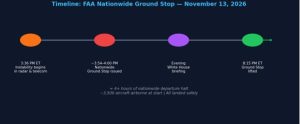
Figure 1 — Crisis timeline (Eastern Time)
Scale of the Disruption
Numbers varied slightly across trackers (FlightAware, Flightradar24, Cirium), but the order of magnitude was clear: the longest nationwide grounding since the post-9/11 shutdown, with ripple effects expected to last into the weekend and the Thanksgiving travel period.
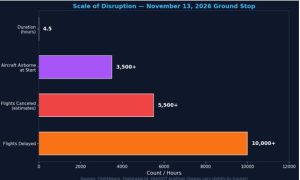
Figure 2 — Approximate impact metrics (tracker-sourced midpoints)
2. The Funding Reality: Is Congress to Blame?
The political narrative often points to Congressional inaction, yet the financial picture is more nuanced: an initial down payment was made, partial progress followed, and a larger standoff then emerged.
The $12.5 Billion Down Payment (2025)
Following an overhaul plan associated with the Trump administration and Secretary Duffy, Congress passed the One Big Beautiful Bill (reconciliation legislation), which appropriated roughly $12.5 billion to begin replacing legacy copper lines with fiber optics, upgrade analog voice switches, and deploy electronic flight strips, among other improvements.
Progress and Bottlenecks (through October 2026)
By mid-October 2026 the FAA reported replacing approximately 68% of targeted legacy telecommunications lines (about 3,508 of 5,170) and upgrading 49% of voice switches. Major radar and tower replacements lagged further behind, constrained by cost, scale, and the requirement to keep live air traffic running
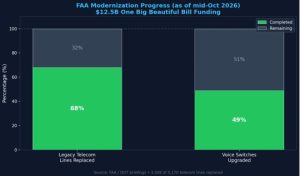
Figure 3 — Partial modernization progress under the $12.5B appropriation
The $30–50 Billion Standoff
Hours before the outage, Duffy and OMB Director Russell Vought had been pressing for additional funding (on the order of $30 billion) under a proposed Modern Skies package to finish ATC upgrades and address airport terminals. After the evening crisis, the ask was escalated toward $50 billion in emergency funding before the Congressional transition in early 2027.
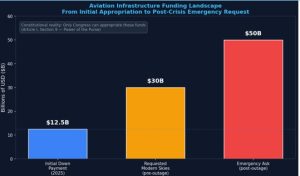
Figure 4 — Funding trajectory from initial appropriation to post-crisis request
3. Why Can’t the President Just Sign an Executive Order?
With more than 40,000 flights operating on a typical day across U.S. airspace, the question arises repeatedly: why not simply order the fixes? Three realities stand in the way.
1. The Power of the Purse (Article I, Section 9)
Under the U.S. Constitution, only Congress holds the authority to appropriate money from the Treasury. An Executive Order cannot create $30–50 billion. The FAA cannot legally bind multi-billion-dollar contracts without Congressional allocation of the funds.
2. Limits of Emergency Declarations
While the administration can declare operational emergencies to streamline internal protocols, a formal National Emergency declaration primarily permits redirection of limited, already-appropriated funds (for example, certain military construction accounts). Such moves routinely face court challenges and fall far short of a $50 billion modernization price tag.
3. Engineering and Safety Timelines
Even with immediate funding, critical infrastructure cannot be swapped overnight. Modern radar arrays, IP-based voice switches, and fiber-optic backbones must be installed in parallel without interrupting live air traffic. Friday’s events themselves illustrated the risk: hastily layering new technology onto 1980s legacy networks without full synchronization can induce system-wide data failures
4. The Global Paradox: How Can a Superpower Be This Vulnerable?
For international observers and domestic taxpayers alike, the incident raises a fundamental question: How can the global leader in economy and technology still rely on 1980s copper wiring for critical air-traffic functions? Why do hundreds of billions flow to other priorities while travelers face risks from aging towers and overloaded routers?

Figure 5 — Layered structural vulnerabilities exposed by the outage
As Secretaries Duffy and Mullin made clear during the White House briefing, the friction is a mix of political gridlock, bureaucratic inertia, and legislative brinkmanship. Putting the safety of millions of travelers at risk over funding disputes has intensified pressure on lawmakers in the lame-duck period.
What Happens Next?
The White House is using Friday’s disruption to press the outgoing Congress for a substantial modernization package before the close of 2026. The FAA is conducting a root-cause investigation into how data routing between upgraded and legacy switches produced the overload. Airlines are scrambling through the weekend to clear backlogs ahead of the Thanksgiving rush.
The fundamental question remains whether Washington will act decisively before the next system failure occurs.
| Key Takeaway
The November 13, 2026 nationwide ground stop was not a cyberattack and did not produce a single airborne catastrophe. It was, however, a high-visibility demonstration that America’s most critical civilian transportation network still depends on aging analog infrastructure. Partial modernization without full synchronization, combined with constitutional constraints on executive spending, leaves the system vulnerable until Congress funds and the FAA executes a complete, carefully sequenced replacement. |
Sources: FAA & DOT public briefings, Reuters, Flightradar24, FlightAware, POLITICO, Simple Flying, and contemporaneous White House statements, November 13–14, 2026. Figures on cancellations/delays vary by tracker and are presented as approximate ranges.