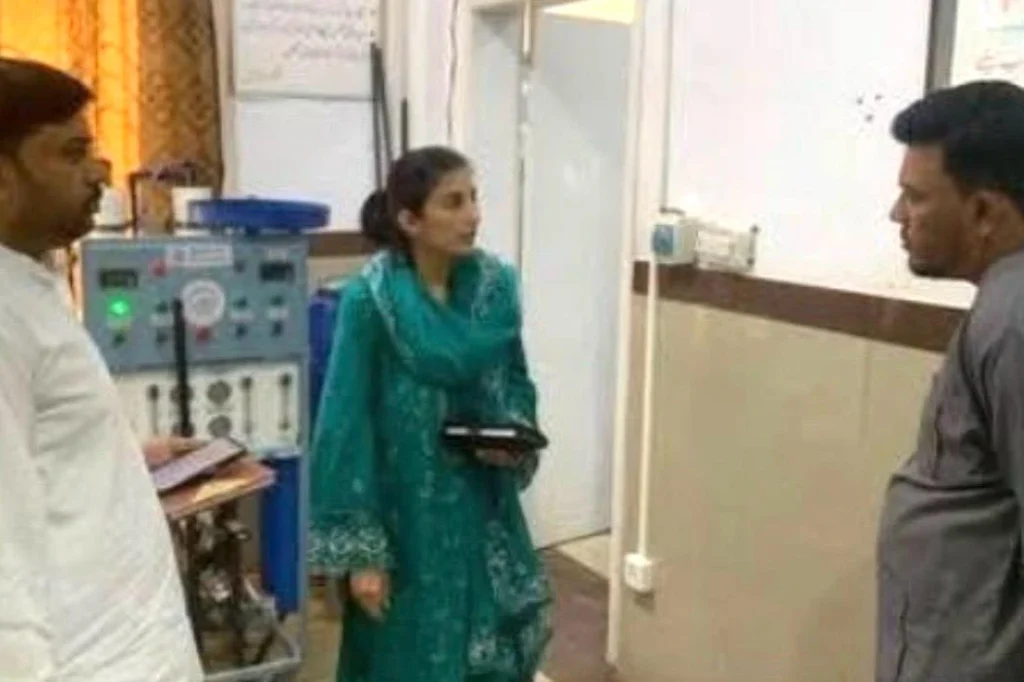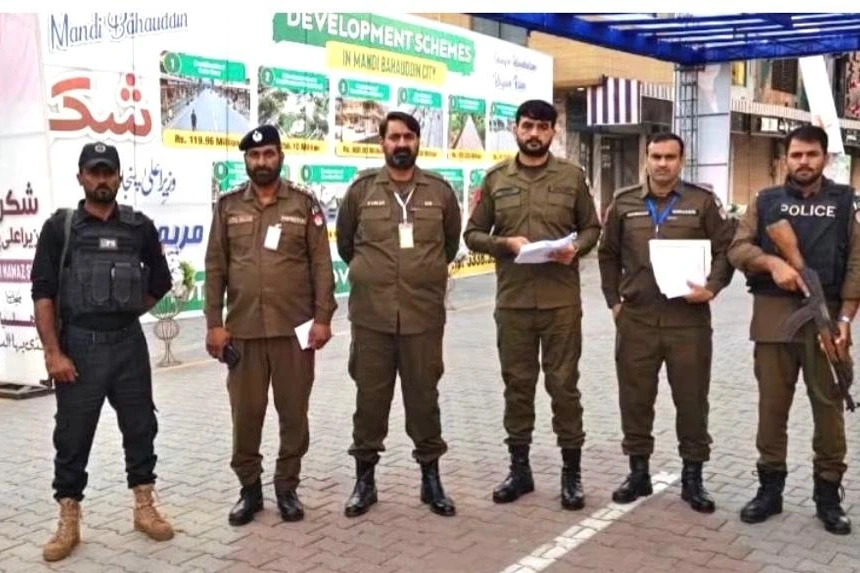
Three officials from the Balochistan Excise and Taxation Department were kidnapped after unidentified gunmen attacked a checkpost in the province’s Chagai district, according to police sources cited by Dawn. This is the latest in a string of Balochistan attack Dawn has reported in recent weeks, and it shows how widespread the unrest in the province has become.
Background
The situation in Balochistan has deteriorated sharply over the past several weeks. Chagai district, which sits along the strategically important N-40 highway connecting Quetta to the Iranian border, has become a recurring flashpoint, with militants repeatedly targeting security checkposts, government convoys, and infrastructure projects in the area.
Just days before this latest kidnapping, armed men attacked the Kochaki police checkpost on the same N-40 highway in Chagai, destroying the facility, though officers stationed there managed to escape unharmed. That attack followed an even larger and deadlier assault earlier in July, when dozens of militants stormed a remote police post in Ziarat district, killing nine policemen and briefly abducting eight others before a security operation secured their release.
This pattern of Balochistan turmoil Dawn and other outlets have documented reflects a broader, long-running insurgency. Baloch nationalist groups have waged an armed campaign for roughly two decades, accusing the federal government of extracting the province’s mineral wealth without adequately compensating or developing local communities, a charge Islamabad has consistently denied.
Details
According to police sources, unidentified gunmen ambushed a checkpost in Chagai and abducted three officials from the Excise and Taxation Department, along with two official vehicles and their service weapons. The attackers fled the area immediately after the assault, and a search operation was launched to locate both the kidnapped officials and the perpetrators.
This is not an isolated case. Reports from the same district have also described a much larger and more alarming development, with hundreds of armed fighters reportedly storming government buildings in Chagai town itself just weeks earlier, briefly claiming control of local administrative offices before security forces regained the area.
The broader Balochistan issue extends well beyond checkpost raids. In April, an armed attack on a mining project site in Chagai’s Darigwan area left ten people dead, including three security guards, with a foreign national reportedly abducted during the assault. The mining company involved said its operations were repulsed by security forces, including the Frontier Corps, who launched a clearance operation afterward.
Elsewhere in the province, coordinated attacks in Pishin and Qila Abdullah districts saw more than 50 armed men on motorcycles simultaneously target a police station and a security checkpost, overpowering personnel, seizing weapons, and setting facilities on fire before escaping.
Alongside the physical attacks, there has also been a notable Balochistan internet update in recent months, with residents in several districts reporting repeated mobile and broadband service suspensions during and after security operations, a measure authorities say is meant to disrupt militant communication but which has drawn criticism from local businesses and residents affected by the outages.
Quotes
Balochistan government spokesman Shahid Rind, commenting on the earlier Ziarat attack, confirmed that eight police officers who had initially been abducted were later rescued during a follow-up operation by security forces, describing the incident as part of an ongoing effort to restore order in the affected areas.
Local administration officials in Chagai, speaking to regional media after the April mining attack, described the assault in stark terms, confirming that ten people, including three security personnel, had been killed when roughly 40 attackers on motorcycles stormed the project site.
Following the mining attack, the company operating the site said in a statement that it remained committed to the development and empowerment of local communities in Balochistan, noting that the vast majority of its workforce was drawn from the surrounding region.
Impact
The continuing Balochistan unrest is taking a real toll on security forces, government employees, and the wider economy. Frequent attacks on checkposts and administrative staff have made routine government work in remote districts increasingly dangerous, complicating basic service delivery in areas that already struggle with limited infrastructure.
The targeting of mining and infrastructure sites also raises concerns for large-scale development projects in the province, including those tied to Chinese investment. Repeated attacks near project sites in Chagai have forced companies operating there to lean more heavily on security escorts, raising operational costs and, in some cases, slowing project timelines.
For ordinary residents, the recurring Balochistan internet update suspensions have added another layer of disruption, affecting everything from mobile banking to small business operations in districts where communication networks are already limited outside major towns.
Conclusion
With attacks continuing across multiple districts and security forces stretched across a vast and difficult terrain, there is little indication the situation in Balochistan will stabilize quickly. Officials say clearance operations remain ongoing in several affected areas, and further details are expected as investigations into the Chagai kidnapping and related incidents progress.
Frequently Asked Questions
Is Balochistan 44% of Pakistan?
Yes, Balochistan is Pakistan’s largest province by land area, covering roughly 44 percent of the country’s total territory. Despite its size, it remains the least populated of Pakistan’s provinces, with a relatively small population spread across vast, sparsely inhabited terrain that includes deserts, mountains, and a long coastline along the Arabian Sea. This combination of a huge landmass and low population density makes governance, security, and infrastructure development particularly challenging compared to Pakistan’s more densely populated provinces like Punjab and Sindh.
Is Balochistan a threat to Pakistan?
Balochistan itself is not a threat to Pakistan, but the province has been the site of a long-running separatist insurgency that poses a genuine internal security challenge for the state. Armed groups such as the Baloch Liberation Army have carried out attacks on security forces, infrastructure, and government installations for roughly two decades, driven largely by grievances over resource distribution, political representation, and economic development. The Pakistani government has responded with a mix of military operations and development initiatives, though critics argue that heavy-handed security measures without matching investment in local welfare have, at times, deepened rather than resolved underlying tensions.
Who is ruling Balochistan now?
Mir Sarfraz Bugti currently serves as the Chief Minister of Balochistan, having assumed office on March 2, 2024, after being elected with the backing of 41 votes in the provincial assembly. He represents the Pakistan Peoples Party and previously served as Balochistan’s Home Minister and briefly as federal Interior Minister during a caretaker government. The province’s governor, appointed separately by the federal government, is Sheikh Jaffar Khan Mandokhail, who has held the post since May 2024 and works alongside the chief minister’s cabinet in overseeing provincial administration.