

The Afghan women education crisis has reached a devastating new phase in 2026, as Pakistan aggressively deports hundreds of thousands of Afghan refugees including educated women and school-going girls directly into a country where the Taliban ban girls from education above grade 6. With over 146,000 Afghans already deported from Pakistan this year alone, the Afghan women education crisis in Pakistan is now intersecting with one of the worst refugee crises in the world. International organisations including UNESCO Afghanistan, UNICEF, and the UN Human Rights Council have all sounded urgent alarms.
Background: How the Afghan Women Education Crisis Began
The Afghan women education crisis did not begin overnight. Its roots stretch back to August 2021, when the Taliban retook control of Afghanistan and immediately began dismantling decades of hard-won educational progress for women and girls.
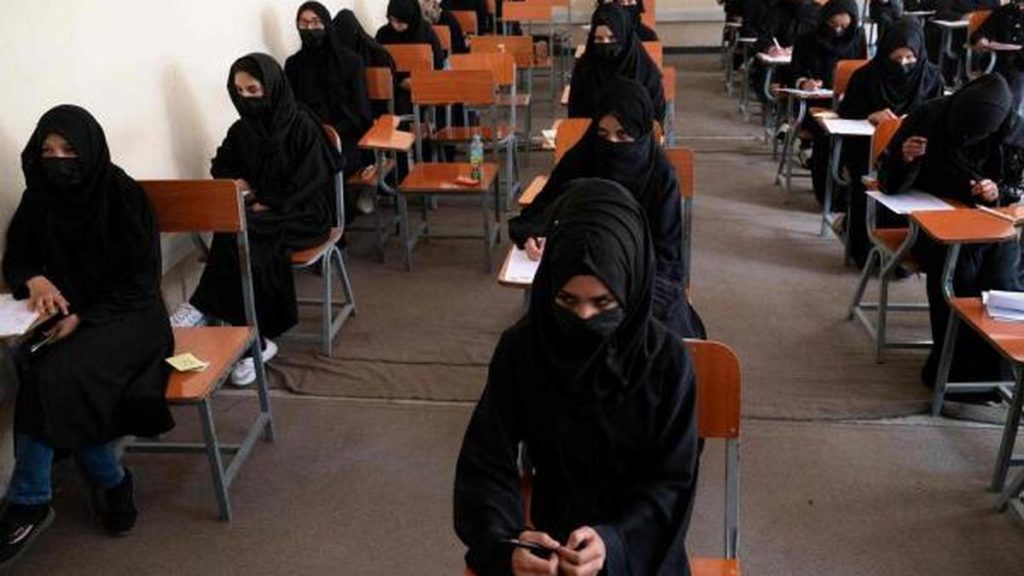
Since August 2021, the Taliban’s de facto authorities have issued dozens of directives stripping women and girls of their rights from education and work to freedom of movement and public decision-making. Girls are banned from secondary school, and women are barred from universities, most jobs, and public spaces.
The Afghan women education crisis 2021 marked the starting point of a systematic collapse. By December 2022, the situation had worsened further. The Taliban government decided in December 2022 to prohibit girls over the age of 12 from receiving an education a ban that has yet to be reversed, despite extensive international efforts.
The Afghan women education crisis 2022 drew global condemnation, with the BBC Afghanistan girls’ education coverage and international media shining a spotlight on millions of girls suddenly locked out of classrooms. But condemnation alone did not change Taliban policy.
Details: The Scale of the Afghanistan Education Crisis
The numbers behind the Afghanistan education problems are staggering, and they have only worsened through 2025 and into 2026.
In 2025, over 13 million crisis-affected Afghan children required educational support. Nine million children were out of school 57 percent of whom were girls. More than 90 percent of 10-year-olds cannot read a basic text, marking one of the worst education crises globally.
More than one million girls have been denied their right to learn since Taliban authorities banned girls from secondary education in September 2021. If the ban remains in place until 2030, more than two million girls will have been deprived of education beyond primary school in a country that already has one of the lowest female literacy rates in the world.
UNESCO Afghanistan has been one of the most vocal agencies documenting the scale of the crisis. UNESCO is focusing on community-based livelihood and vocational skills training, teacher professional development, and evidence-based education financing but with an estimated 5.3 million Afghan refugees and asylum seekers registered in neighbouring countries, the majority in Iran and Pakistan, the scale of the challenge far exceeds current resources.
The Afghan women education crisis PDF reports published by UNICEF, UNESCO, and the Geneva Global Hub for Education in Emergencies all point to the same conclusion: this is not merely an Afghanistan education problem it is a generational catastrophe for an entire country.
The Pakistan Dimension: Deportations Make Everything Worse
The Afghan women education crisis in Pakistan adds a second layer of tragedy to an already desperate situation. For years, Pakistan hosted millions of Afghan refugees who were able to access education particularly women and girls who had no such opportunity inside Afghanistan.
UN experts expressed alarm that many Afghan children and youth will see their education abruptly interrupted by Pakistani deportations, in particular women and girls for whom education is banned above grade 6 in Afghanistan.
In 2026 alone, more than 146,000 Afghans have already been deported from Pakistan, with numbers increasing sharply since April 1. Pakistani police have arrested Afghans while they were shopping, going to school, and seeking day labour confiscating their phones and cash and demanding bribes in exchange for release.
About 60 percent of those being forcibly returned from Pakistan are women and children. Many Afghan refugees including those holding Proof of Registration cards have resided in Pakistan for generations, some having never once set foot inside Afghanistan. Forcibly returning them would uproot them from the only home they have ever known.
For women and girls in this situation, deportation does not simply mean relocating. It means losing access to education entirely, because the Afghan women education crisis inside Afghanistan makes formal schooling above primary level completely inaccessible.
UNESCO Afghanistan and the Countries That Ban Girls’ Education
Afghanistan now stands virtually alone among countries that ban girls’ education at this scale and with such sweeping enforcement. While other nations have faced criticism for limiting girls’ access to schools, no other government has implemented as comprehensive and officially mandated an education ban as Afghanistan’s Taliban administration.
Women in Afghanistan remain excluded from all education above sixth grade. In November 2025, medical graduation examinations were held without the participation of women for the second consecutive year, after women were banned from medical institutes since December 2024.
Taliban officials in September 2025 also prohibited universities from teaching books written by women — an extraordinary deepening of the Afghan women education crisis that went beyond banning students to erasing women’s intellectual contributions from curricula entirely.
UNESCO Afghanistan has repeatedly called this situation a violation of fundamental human rights. The agency’s framework under the Afghanistan Education Sector Transitional Framework specifically targets girls and women for priority support but Taliban restrictions have made direct implementation inside the country nearly impossible, forcing programming into informal and community-based channels that reach only a fraction of those in need.
Quotes: What Officials Are Saying
UN Human Rights chief Volker Türk stated at the Human Rights Council in Geneva: “The cascade of edicts and laws announced by the de facto authorities since coming to power in 2021 is having a crushing impact on the Afghan people, particularly women and girls.”
UNICEF warned: “The crisis is already depriving children of learning and healthcare, while also weakening Afghanistan’s economy and the essential services that depend on trained women professionals.” The agency urged the de facto authorities to lift the ban on secondary education for girls immediately.
An Afghan refugee woman in Peshawar, whose registration card was not renewed when it expired in June 2025, told Refugees International: “My previous work as a journalist covering Taliban abuses would mean immediate imprisonment for me if I am forced to return to Afghanistan.
A woman forcibly returned from Pakistan described her life under the Taliban: “We cannot freely leave our home… there are no job opportunities.”
Impact: A Generation of Afghan Women Lost to Education
The human cost of the Afghan women education crisis is impossible to fully quantify, but the projections from major international bodies are alarming.
An estimated 78 percent of young Afghan women are not in education, employment, or training nearly four times the rate for young men. Early childbearing is projected to rise by 45 percent by 2026. Maternal mortality could increase by more than 50 percent. Denying girls a secondary education is already costing Afghanistan 2.5 percent of its GDP every single year.
The education ban is estimated to fuel a 25 percent rise in child marriage, a 45 percent increase in early pregnancy, and a 50 percent increase in maternal deaths by 2026.
The Afghan women education crisis also threatens Afghanistan’s essential services for decades to come. Restrictions on girls’ education and women’s employment could leave Afghanistan with a deficit of over 25,000 female teachers and healthcare workers by 2030. The number of female teachers in basic education has already fallen by more than nine percent from nearly 73,000 in 2022 to around 66,000 in 2024.
For the Afghan women education crisis in Pakistan, the deportation wave means that even the informal safety valve of cross-border education access is being rapidly shut off. Girls who were attending school in Peshawar or Islamabad are being sent back to a country where their classrooms no longer legally exist.
Conclusion: What Must Happen Next
The Afghan women education crisis demands urgent, coordinated international action on multiple fronts simultaneously. The Taliban’s education ban must face sustained diplomatic pressure, while countries like Pakistan must be held accountable for deporting vulnerable women and girls into conditions that violate international refugee law.
The Afghanistan humanitarian crisis has been formally classified by the EU among its 2026 “forgotten crises” a designation that captures how dangerously under-resourced the international response remains. The UN’s Humanitarian Needs and Response Plan for Afghanistan was less than 20 percent funded as of late 2025.
UNESCO Afghanistan, UNICEF, Human Rights Watch, and Amnesty International have all called for immediate action. Without it, an entire generation of Afghan women will reach adulthood without formal education a loss that will define Afghanistan’s trajectory for the next half century. The Afghan women education crisis 2022 warnings, the Afghan women education crisis 2021 documentation, and every report since have pointed to the same conclusion: the world is watching, but not doing enough.
FAQs
What is the education crisis in Afghanistan?
The Afghan women education crisis refers to the systematic banning of girls and women from education by the Taliban government since returning to power in August 2021. Girls are currently banned from attending school above grade 6, and women are barred from universities. By 2025, nine million Afghan children were out of school 57 percent of them girls. UNESCO Afghanistan and UNICEF have both described this as one of the worst education crises in the world. The ban has also been extended to prohibit universities from teaching books authored by women, and women were excluded from medical graduation examinations in 2024 and 2025.
What does 39 mean in Afghanistan?
In Afghan culture, the number 39 carries a strong social stigma. It is considered an extremely inauspicious number because in Dari, “39” is phonetically associated with a derogatory term meaning “pimp.” As a result, Afghans often go to considerable lengths to avoid the number requesting different licence plates, room numbers, or phone numbers that contain 39. The superstition is deeply embedded in Afghan society and is one of the more widely known cultural taboos connected to the country, though it has no connection to the political or Afghanistan education problems discussed in this article.
Why did Afghanistan fall so quickly?
Afghanistan fell to the Taliban in August 2021 with remarkable speed largely because of a combination of factors: a collapse in morale among Afghan security forces, widespread corruption within the US-backed government, the withdrawal of American and NATO troops, and the Taliban’s strategic use of negotiated surrenders with local commanders. Many Afghan soldiers had not been paid for months and saw little reason to fight for a government they had lost faith in. Once key provincial capitals began falling, a domino effect set in, and Kabul fell within days far faster than most Western intelligence estimates had predicted. The rapid collapse directly enabled the Taliban to immediately impose their extreme restrictions on women and girls, triggering the Afghan women education crisis the world is still grappling with today.