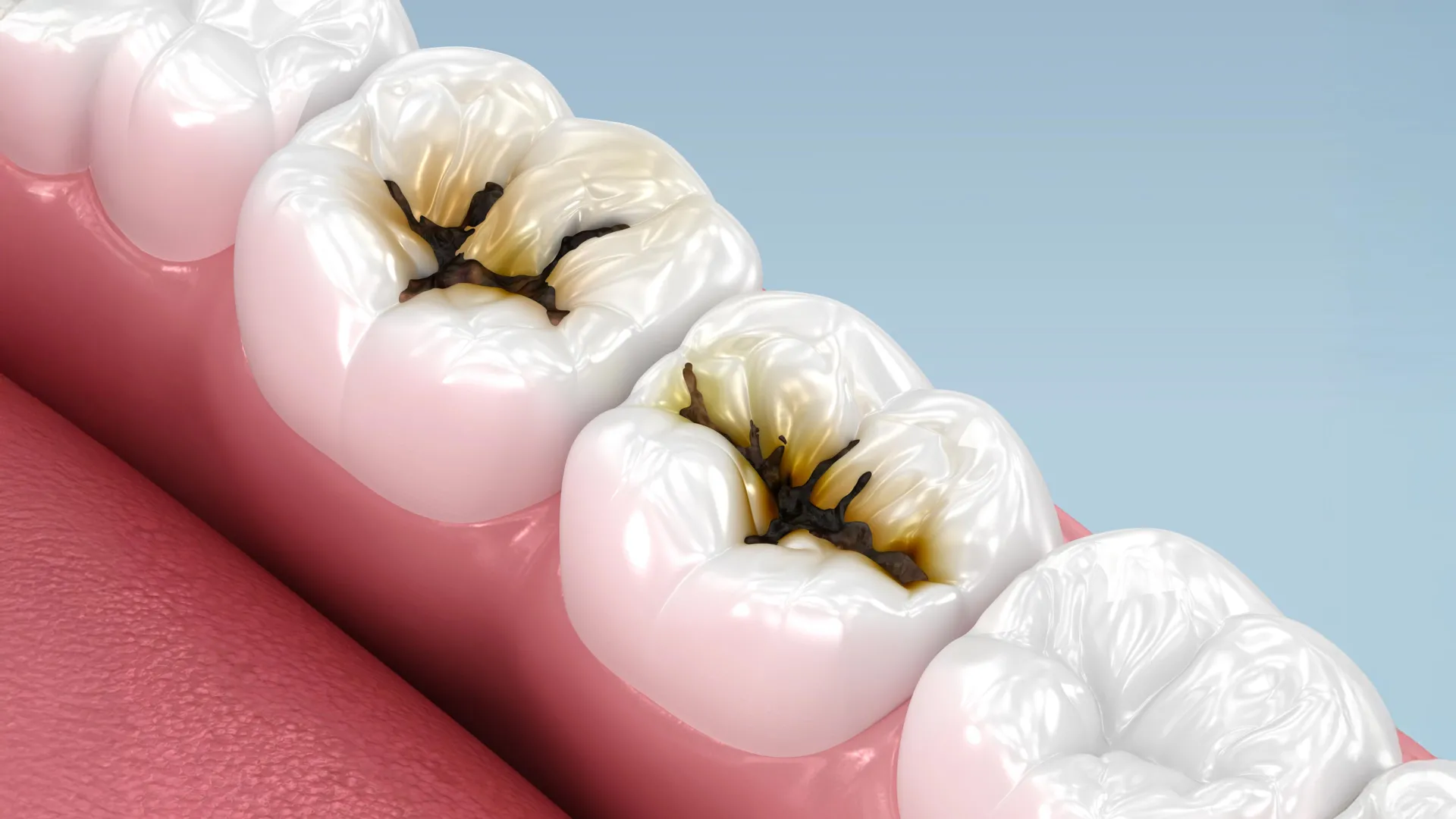
A groundbreaking clinical trial has found that a painless liquid treatment can halt tooth decay in young children without the need for drills, injections, or general anesthesia, offering a promising alternative to traditional cavity treatment.
Tooth decay remains the most common chronic childhood disease in the United States, affecting more than 40% of children under the age of six. Until now, treating cavities in toddlers has often required invasive dental procedures, including drilling and, in many cases, surgery under general anesthesia.
However, researchers at the University of Michigan have reported encouraging results from a landmark Phase III clinical trial, published in JAMA Pediatrics, showing that Silver Diamine Fluoride (SDF) can effectively stop cavities from progressing in baby teeth through a quick, non-invasive application.
What Is Silver Diamine Fluoride?
Silver Diamine Fluoride (SDF) is a 38% topical liquid applied directly to the surface of decayed teeth using a small brush. The treatment takes only a few seconds per tooth and does not require drilling or injections.
The solution combines two active ingredients:
- Silver, which kills cavity-causing bacteria and helps prevent further bacterial growth.
- Fluoride, which strengthens weakened enamel and dentin, promotes remineralization, and slows or stops the progression of tooth decay.
Unlike conventional fillings, SDF does not require removing decayed tooth tissue before treatment, making it especially suitable for very young children.
Landmark Clinical Trial
Although dentists in several countries have used SDF safely for decades, and the U.S. Food and Drug Administration (FDA) approved it in 2014 for treating tooth sensitivity, researchers sought stronger clinical evidence to support its use specifically for stopping dental cavities in children.
The study, funded with more than $12 million by the National Institute of Dental and Craniofacial Research (NIDCR), enrolled 830 children under the age of six at research centers in Michigan, New York, and Iowa.
Researchers applied 38% SDF every six months to affected baby teeth and monitored the results.
Key Findings
The trial produced several significant findings:
- More than 50% of treated baby teeth experienced successful arrest of cavity progression.
- The treatment was safely administered to children as young as one year old.
- No drilling, injections, or sedation were required.
- The study provides important clinical evidence that could support future FDA approval of SDF as an official treatment for dental cavities, potentially improving insurance coverage and wider access.
Benefits of SDF
Researchers highlighted several advantages of the treatment:
- Completely painless with no drills or injections.
- Quick application, requiring only seconds per tooth.
- Can be provided in both dental clinics and some primary healthcare settings.
- May reduce the need for surgery and general anesthesia in young children.
Limitations
Despite its benefits, SDF has some drawbacks:
- The treated decayed area permanently turns black, which can be noticeable on front teeth.
- The treatment generally needs to be repeated every six months.
- It stops decay but does not rebuild or restore parts of the tooth that have already broken away.
A Practical Option for Families
While the dark staining may concern some parents, many view it as a worthwhile trade-off if it helps their child avoid painful dental procedures or anesthesia. Since baby teeth naturally fall out over time, preserving them safely and comfortably until then is often considered the priority.
Researchers believe the findings could transform pediatric dental care by making cavity treatment simpler, less stressful, and more accessible for millions of young children.