
Houston Disaster Briefing Doubles as a Push to Sustain Ethnic Media
At an HCoM forum on disaster preparedness, ACoM’s Sandy Close and Anthony Advincula tell Houston-area ethnic outlets that community media’s survival depends on the same kind of trusted, local reach the panel says saves lives in a storm
By Tariq Khan | Pakistan Chronicle | American Community Media | Prepared 24 July 2026
HOUSTON — A forum billed as a briefing on disaster preparedness became, for the ethnic and community media outlets in the room, a briefing on two survival strategies at once: how neighbourhoods withstand a storm, and how the outlets that serve them stay in business long enough to keep covering the next one.
The event, “Hope for the Best, Plan for the Worst — Disaster Preparedness,” was organised by Houston Community Media (HCoM) and held at the Southern News Group offices on Bellaire Boulevard. Guests were welcomed by Nakia Cooper of HCoM, who briefed the room on the day’s format before three featured speakers — Brooke Campbell, Kara Cook-Schultz and Brian Murray — walked through disaster communication, community resilience and emergency response.
Also present were Sandy Close, founder of American Community Media (ACoM), and Anthony Advincula, ACoM’s New York-based national media outreach coordinator, whose conversations with attendees turned toward a subject just as urgent for outlets in the room: how ethnic media stays funded and sustainable enough to keep doing this work.
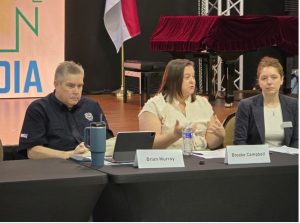
From left: Brian Murray, Brooke Campbell and Kara Cook-Schultz address the HCoM disaster preparedness forum on 22 July 2026.
Event at a glance
| Event | “Hope for the Best, Plan for the Worst — Disaster Preparedness” |
| Organiser | Houston Community Media (HCoM) |
| Date | Wednesday, 22 July 2026 |
| Time | 11:00 a.m. – 1:00 p.m. |
| Venue | Southern News Group, 11122 Bellaire Blvd, Houston, TX 77072 |
| Format | Three speaker sessions with dedicated Q&A, a joint panel Q&A, and a networking lunch |
| Catering | Lunchboxes from Phoenicia’s Specialty Foods |
How the session unfolded
The programme followed a tight, structured schedule, moving from individual speaker presentations into a joint panel discussion before closing with lunch and one-on-one interviews:
| 11:10 – 11:15 a.m. | HCoM welcome and briefing |
| 11:15 – 11:25 a.m. | Brian Murray, Harris County OHSEM |
| 11:25 – 11:30 a.m. | Q&A for Brian Murray |
| 11:30 – 11:40 a.m. | Brooke Campbell, United Way of Greater Houston |
| 11:40 – 11:45 a.m. | Q&A for Brooke Campbell |
| 11:45 – 11:55 a.m. | Kara Cook-Schultz, Greater Houston Community Foundation |
| 11:55 a.m. – 12:00 p.m. | Q&A for Kara Cook-Schultz |
| 12:00 – 12:15 p.m. | Q&A for all speakers |
| 12:15 – 1:00 p.m. | Lunch, networking and individual interviews |
Nakia Cooper — setting the stage for HCoM
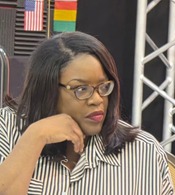 |
Nakia Cooper
Houston Community Media (HCoM) |
Nakia Cooper welcomed attendees and briefed the room on behalf of Houston Community Media, helping coordinate a programme that brought together emergency officials, nonprofit leaders and a wide cross-section of ethnic and community media outlets under one roof for the two-hour session.
Brooke Campbell — closing the disaster communication gap
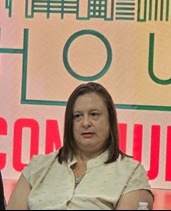 |
Brooke Campbell, CNP, CVA
Director of Community Outreach and Disaster Recovery, United Way of Greater Houston; Co-Director, Greater Houston Disaster Alliance |
Brooke Campbell, Director of Community Outreach and Disaster Recovery at United Way of Greater Houston and Co-Director of the Greater Houston Disaster Alliance, spoke on closing the disaster communication gap and reaching underserved and vulnerable communities. An AmeriCorps NCCC alumna who previously led Volunteer Houston, where she managed a volunteer recruitment platform and spontaneous volunteer coordination during disasters, Campbell also serves as Secretary on the board of the Citizens’ Environmental Coalition.
Key discussion points
- Closing the disaster communication gap between agencies and the residents who need information most.
- Reaching underserved and vulnerable communities before disaster strikes, not just after.
- Building and strengthening a unified regional disaster communication network.
Campbell said building that network depends on the same trusted local messengers that ethnic and community media already are for non-English-speaking households.
Kara Cook-Schultz — building year-round resilience
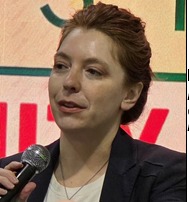 |
Kara Cook-Schultz
Director of Disaster Recovery, Greater Houston Community Foundation; Co-Director, Greater Houston Disaster Alliance |
Kara Cook-Schultz, Director of Disaster Recovery and Community Resilience at the Greater Houston Community Foundation, is an environmental attorney who previously served as Senior Policy Advisor and later Director of Innovation for Harris County Precinct 4, where she helped cut disaster response times from five days to under 48 hours. She also served as Executive Director of Precinct4Forward, a nonprofit focused on parks, disaster response and youth enrichment programmes.
Key discussion points
- What genuine community resilience looks like in practice, beyond emergency checklists.
- Building year-round readiness rather than only reacting during storm season.
- The role local nonprofits play in long-term disaster recovery.
- Where individual communities should begin when strengthening their own preparedness.
Sandy Close and Anthony Advincula — the business case for ethnic media
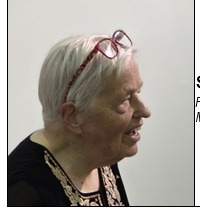 |
Sandy Close
Founder and Director Emeritus, American Community Media (ACoM); Ethnic Media Services |
Sandy Close founded American Community Media (ACoM) — known for decades as New America Media and Pacific News Service — and led the organisation for close to three decades before moving into a Director Emeritus role earlier this year, when Jaya Padmanabhan was named ACoM’s new Executive Director. Close remains closely involved with Ethnic Media Services and ACoM’s national network of more than 3,000 ethnic outlets, and attended the Houston forum as part of that continuing work.
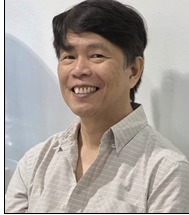 |
Anthony Advincula
American Community Media (ACoM), New York — Northeast Region |
Anthony Advincula, a New York-based editor and national media outreach coordinator for ACoM who has organised ethnic media projects across 45 states, joined Close in Houston to discuss a subject that rarely makes it onto a disaster-preparedness agenda but shapes whether outlets like Pakistan Chronicle can keep reporting at all: connecting ethnic media with media buyers and advertising revenue. Advincula said building sustainable, long-term revenue — not just readership — is central to keeping community and ethnic outlets viable, and that he and Close are working directly with outlets nationally, including in Houston, on that effort.
For Pakistan Chronicle and outlets like it, the message from Close and Advincula was direct: the same trust that makes ethnic media indispensable during a disaster is also its most valuable, and most under-monetised, asset — and ACoM’s national push is aimed at closing that gap.
The one thing every speaker agreed on: be prepared
Whatever their specific brief — emergency communication, community outreach or long-term recovery — the speakers kept returning to the same starting point: preparedness has to begin before a storm is even named, not after a warning is issued. Taken together, their guidance and HCoM’s own briefing point to a short list of steps every household can take now:
- Stay on top of the news from authentic, verified sources — not rumours or social media speculation — and watch official warnings closely.
- Remember that storms are unpredictable: a system can strengthen or weaken, and change direction, right up to landfall, so take every warning seriously regardless of category.
- Stock essential supplies well in advance — candles, flashlights, a generator, batteries and backup fuel such as gas cylinders — in case power, gas or water service is cut.
- Secure doors and windows before a storm arrives, not while it is already bearing down.
- If evacuation becomes necessary, shut off all utilities before leaving — power, gas and water — to reduce the risk of fire, flooding or further damage.
- Do not wait until the storm is at your doorstep. Prepare early, and don’t put yourself or your family at risk by waiting to see what happens.
A packed room of community and ethnic media
The forum drew a full room of reporters, editors and community media representatives, reflecting the broad cross-section of outlets HCoM and ACoM work with across Greater Houston. Attendees took notes, recorded audio and video, and lined up questions for the panel throughout the two-hour session.
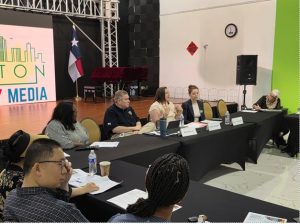
Panellists field questions as media professionals and community representatives fill the room at Southern News Group’s Bellaire Boulevard offices.
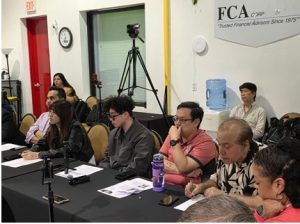
Journalists and community representatives take notes during the forum.
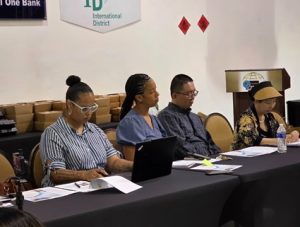
Attendees from ethnic and community media outlets follow the discussion.
A regional conversation with a local media lens
The forum closed with a joint question-and-answer session for all three featured speakers, followed by networking and one-on-one interviews with reporters. Across the day, one theme recurred: disaster preparedness campaigns succeed or fail based on whether they reach residents in the languages and through the messengers they already trust — and, as Close and Advincula argued, that same trust is what ethnic media needs the industry to start paying for.
A personal note from the author
I am adding this not as a reporter but as someone who has lived through it. I have been through hurricane season in the Houston area for 27 years, and in that time I have experienced more than ten hurricanes. None compared to Hurricane Harvey in August 2017.
My property sits upstream, near a dam. During Harvey, when authorities needed to protect government infrastructure, they released water that flooded our property. Our home was destroyed from the floor to the roof — we lost everything and had to rebuild from scratch: the structure itself, doors, windows, appliances, furniture, clothing, tools and equipment. In total, we lost more than $400,000 in property.
We filed a lawsuit against the federal government over the flooding, and after nearly ten years, we won the case. But the federal government has continued to delay compensation and is now seeking a hearing before the Supreme Court — nine years after Harvey, we are still waiting to be made whole.
I share this because hurricanes and windstorms are unpredictable. They change direction, they strengthen, they weaken, sometimes with little warning. The single most important thing anyone can do is be prepared — well before the storm, not after the warning arrives.