
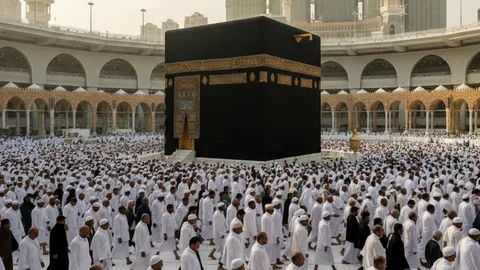

Pak Hajj 2026 is now fully underway, with Pakistani pilgrims already in the holy cities of Makkah and Madinah ahead of the formal start of the pilgrimage. The MORA Hajj 2026 government package priced between PKR 1,150,000 and PKR 1,250,000 was offered to a total of 179,210 registered pilgrims. With Hajj 2026 start and end date confirmed around May 25–30, 2026, this is everything Pakistani pilgrims and their families need to know.
Background: Pakistan’s Hajj 2026 Quota and MORA’s Role
Pakistan has one of the largest Hajj quotas in the world, and the MORA Hajj 2026 process began months in advance to ensure a smooth experience for pilgrims. The Ministry of Religious Affairs and Interfaith Harmony (MORA) is the central body that manages all aspects of Pak Hajj 2026, from registration and payments to visa processing and flight coordination.
Under the newly approved Hajj Policy 2026, the total quota for Pakistan remains at 179,210 pilgrims. Of this, the government scheme was allotted 119,210 seats (66.52%), while the private sector quota was reduced to 60,000 (33.48%). This was a significant shift in policy driven by problems faced by private operators in the previous year.
Religious Affairs Minister Sardar Muhammad Yousuf said the shift gives a greater share of the pilgrimage responsibility to the government, due to issues faced by private tour operators in 2025 when a large part of the private quota went unutilised. The government moved swiftly to prevent a repeat of that situation under the MORA Hajj 2026 framework.
When Is Hajj 2026: Confirmed Start and End Dates
One of the most searched questions among Pakistani Muslims is when is Hajj 2026. The answer is now clear, with pilgrims actively on the ground in Saudi Arabia.
Hajj 2026 is expected to take place from May 25 to May 27 as the core pilgrimage days, though many pilgrims arrive in Saudi Arabia weeks before to prepare. The full ritual schedule spanning Mina, Arafat, Muzdalifah, and the stoning of Jamarat extends the Hajj 2026 start and end date window to approximately May 25–30.
The key days are: 8th Dhul-Hijjah (May 25) Yawm at-Tarwiyah, pilgrims enter Ihram and travel to Mina; 9th Dhul-Hijjah (May 26) Day of Arafah and night in Muzdalifah; 10th Dhul-Hijjah (May 27) Eid al-Adha, stoning of Jamarat al-Aqabah, sacrifice, and Tawaf al-Ifadah; and 11th–13th Dhul-Hijjah (May 28–30) the Days of Tashreeq.
The international pilgrim airlift is complete, with the arrival phase ending May 21. Pilgrims are now in Makkah and Madinah preparing for the pilgrimage, which formally begins on May 25. Makkah remains restricted to permit holders as the season enters its final approach to the Day of Arafah.
Govt Hajj Package 2026: Costs and Payment Structure
The Govt Hajj package 2026 was structured to be accessible to a wide range of Pakistani households, with a two-tier system offering flexibility in duration.
The estimated cost of the government’s Hajj package 2026 ranges from Rs 1,150,000 to Rs 1,250,000 (approximately US$4,050–$4,236), subject to final agreements with service providers. Hajj applicants were required to submit their Hajj dues in two installments.Pilgrims applying through the government Hajj scheme 2026 had two options: a long-duration Hajj of 38–42 days with an initial deposit of PKR 500,000, or a short-duration Hajj of 20–25 days with an initial deposit of PKR 550,000.
The full payment breakdown under MORA Hajj 2026 included: First Installment of Rs 500,000 for the Long Package or Rs 550,000 for the Short Package; Second Installment of PKR 650,000; and a Final Installment to be announced after Saudi service contracts were finalized.
For those who explored the private route, costs were considerably higher. Economy private packages ran from PKR 1,375,000 to 1,600,000, while premium five-star packages exceeded PKR 2,000,000 all significantly above the Govt Hajj package 2026 ceiling.
Hajj Visa 2026: How Saudi Arabia Managed Approvals
The Hajj visa 2026 process was managed on a tight and highly organised schedule between Saudi Arabia and Pakistan’s MORA this year.
Saudi Arabia’s Ministry of Hajj and Umrah announced that the issuance of visas for the Hajj 2026 season would begin on February 8. Preparatory contracting for accommodation and core services began in late 2025, with October 12, 2025 set as the deadline for finalising operational data and opening pilgrim registration in participating countries.
The Hajj visa 2026 is strictly controlled. All pilgrims travelling for Hajj 2026 must carry an approved Hajj visa or travel authorisation, which is mandatory and issued only through Saudi-authorised platforms or home-country Hajj authorities. Tourist or visitor visas are not accepted for Hajj. Name, date of birth, and passport number must match across the passport, visa, Hajj registration system, and airline booking.
Under the MORA Hajj 2026 rules, Hajj applicants must be Muslim Pakistani passport holders with a passport valid until November 26, 2026. Children under 12 will not be allowed to perform Hajj this year.
Saudi Arabia Hajj 2026: On-the-Ground Preparations
Saudi Arabia Hajj 2026 preparations have been extensive, with the Kingdom investing heavily in pilgrim comfort and crowd safety.
Hajj 2026 falls in late May, when Mecca temperatures regularly exceed 40°C (104°F). Saudi authorities have expanded misting stations, shaded walkways, and cooling-coated roads between holy sites. Pilgrims have been advised to carry electrolyte salts, sunscreen, and lightweight breathable clothing to manage the heat safely.
Makkah entry is currently restricted to Hajj permit holders only. Individuals without a valid Hajj permit, Makkah residency ID, or holy sites work permit cannot enter the city. Umrah permits remain suspended through May 31.
Pakistan and Saudi Arabia have also deepened their bilateral cooperation for Saudi Arabia Hajj 2026. Both sides emphasized the importance of continuing the spirit of service, coordination, and teamwork for Hajj 2026, with a shared commitment to enhancing facilities for pilgrims building on commendations received for the successful management of Hajj 2025.
Hajj Inquiry 2026: MORA’s Digital Tools for Pilgrims
Hajj Inquiry 2026 has been made significantly easier through MORA’s investment in digital platforms. The Pak Hajj 2026 Mobile App is a mandatory tool for all pilgrims this year. It provides real-time notifications on application status, verification of bank account details and group information, training schedules, and health instructions.
Pilgrims seeking any Hajj Inquiry 2026 update whether about payment status, flight groups, or accommodation assignments were directed to use both the app and MORA’s official web portal. The ministry moved toward a fully digital-first approach to reduce confusion and processing delays that had affected earlier years.
The MORA Hajj 2026 government scheme application window saw 118,060 submissions from across the country and concluded earlier than usual due to the overwhelming public response. This figure reflects the enormous demand among Pakistani Muslims to perform Hajj despite the rising cost of the Govt Hajj package 2026.
Impact: What Pak Hajj 2026 Means for Pakistani Pilgrims
Pak Hajj 2026 carries deep religious and personal significance for hundreds of thousands of Pakistani families. For many pilgrims, the Govt Hajj package 2026 represents years of savings and spiritual preparation.
Pre-Hajj flights from Pakistan began departing on April 18, 2026, with seat allocations fully confirmed and outbound flights completing their final departures before the pilgrimage formally began.
The government’s decision to increase the MORA Hajj 2026 allocation to 119,210 seats under the official scheme up from the previous even split means more Pakistanis can access a more reliable and structured pilgrimage experience. This structural change in the Pak Hajj 2026 policy is expected to have a lasting impact on how Pakistan manages future pilgrimage seasons.
Conclusion: What Comes Next After Hajj 2026
As Hajj 2026 start and end date approaches its conclusion with the Days of Tashreeq ending around May 30, the focus will shift to the safe return of Pakistani pilgrims. MORA is coordinating return flights, and the Pak Hajj 2026 Mobile App will continue to provide updates throughout the journey home.
Looking ahead, MORA Hajj 2026 authorities are expected to begin an early review of this season’s performance including the effectiveness of the new quota structure, the digital application system, and the expansion of the government scheme to inform Hajj 2026 policy improvements and begin preparations well in advance for 1448 AH. Pakistan’s continued strong relationship with Saudi Arabia’s Ministry of Hajj and Umrah positions the country well to negotiate a strong quota and improve services in future years.
FAQs
How many Hajj applications were received in 2026?
The MORA Hajj 2026 government scheme application window received 118,060 submissions from across Pakistan. The process remained open for 17 days and concluded earlier than usual due to the overwhelming public response, with applications accepted both online and through designated banks on a first-come, first-served basis. Private scheme applications added tens of thousands more, though the private quota was capped at 60,000 this year.
Can we wear a bra in Hajj?
This is a commonly asked practical question among female pilgrims performing Pak Hajj 2026. Yes, women are permitted to wear a bra during Hajj. Islamic scholars generally agree that women are not required to enter a state of Ihram that restricts undergarments in the same way men’s Ihram restricts stitched clothing. Women’s Ihram simply requires modest covering of the entire body except the face and hands, and undergarments worn beneath the outer garb are permissible. Pilgrims are advised to consult their licensed MORA Hajj 2026 group scholar or local religious authority for any specific guidance relevant to their school of thought.
Which country has the cheapest Hajj?
The cost of Hajj varies widely depending on the country of origin, government subsidies, local currency strength, and distance from Saudi Arabia. Countries closest to Saudi Arabia such as Jordan, Egypt, and Yemen often have some of the lowest base travel costs. Indonesia, which has one of the largest Muslim populations in the world, offers heavily government-subsidised packages that keep costs relatively low for Indonesian pilgrims. For Pakistani pilgrims, the Govt Hajj package 2026 at PKR 1,150,000–1,250,000 remains one of the more affordable structured government packages in South Asia, particularly compared to private sector options. Pilgrims from Gulf countries residing near Makkah pay the least due to short travel distances. Ultimately, cost depends heavily on government subsidy levels and bilateral agreements with Saudi Arabia Hajj 2026 authorities.