

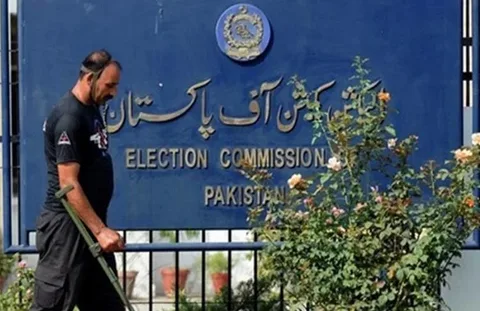

The Election Commission of Pakistan received a formal briefing from Balochistan’s provincial government on Wednesday, confirming that holding a by-election in Khuzdar’s NA-256 constituency is currently not feasible. Senior officials cited an active militant presence, tribal disputes, and an overall unstable law and order situation as key reasons. This latest ECP update puts the fate of the long-vacant seat in further uncertainty, with no new election date confirmed yet.
Background: How the NA-256 Seat Fell Vacant
The NA-256 Khuzdar constituency became vacant in September 2024, when Balochistan National Party (BNP) chief Sardar Akhtar Mengal submitted his resignation from the National Assembly. In his resignation letter to the National Assembly speaker, Mengal stated that Balochistan had been “consistently marginalised and ignored” and that the lack of genuine representation had left him unable to bring meaningful change.
The Election Commission of Pakistan accepted the resignation formally in February 2026, triggering the by-election process under the Elections Act, 2017. Under the provisions of this law, the ECP is obligated to schedule and conduct a by-election within a stipulated period after a seat falls vacant. Relevant procedures, including the issuance of Form C by the Election Commission of Pakistan the official nomination form for candidates were set in motion.
The ECP issued the by-election schedule on February 13, 2026. However, the schedule was suspended on March 27 at the provincial government’s request, citing a deteriorating security situation on the ground.
Details: What Happened at Wednesday’s ECP Meeting
Wednesday’s high-level meeting at the Election Commission of Pakistan brought together ECP officials, Balochistan’s Chief Secretary, and the Inspector General of Police. The provincial representatives delivered a detailed security briefing that formed the basis of their case against holding polls at this time.
Officials briefed the ECP that the “presence of militants, tribal disputes, and the need to deploy police and other law enforcement personnel from other districts” had made it extremely difficult to conduct the election. They further noted that the NA-256 constituency consists of challenging mountainous terrain that complicates troop deployment and voter access.
The security situation was described as “unstable,” with officials stating that complete security could not be guaranteed to election staff and voters. This directly raises concerns about compliance with the Elections Act, 2017, which requires that the ECP ensure a safe and free electoral environment for all participants.
The Election Commission of Pakistan announcement today reflects a broader tension between its constitutional mandate to hold elections on schedule and the practical realities of conducting polls in a conflict-affected region.
ECP’s Position: Constitution Comes First
Despite the security concerns raised, the Election Commission of Pakistan made its position clear. Chief Election Commissioner Sikandar Sultan Raja, who chaired the meeting, stated that the commission was bound under the Constitution and law to hold the by-election, saying: “The ECP will take an appropriate decision on the Khuzdar by-elections.
This statement is significant from a legal standpoint. Under the Elections Act, 2017 available in both English and Elections Act, 2017 PDF in Urdu format on the ECP’s official website the commission has a non-negotiable duty to fill vacant seats within the timeframe set by law. Repeated postponements without a court order or formal legal bar can expose the process to judicial scrutiny.
The ECP maintained that it was ready to proceed with the by-election and had sought an updated briefing from the provincial administration on the security situation before moving forward. The commission’s stance signals it is not willing to indefinitely defer its constitutional responsibilities even in difficult circumstances.
Quetta Local Government Elections: Another ECP Update
The same Wednesday meeting also addressed another long-pending electoral issue local government elections in Quetta, Balochistan’s provincial capital. This forms a separate but equally important part of the Election Commission of Pakistan new update for the day.
ECP officials informed the meeting that the term of local governments in the provincial capital had expired as far back as January 27, 2019. Since then, the commission had carried out two rounds of delimitation and issued three election schedules, but polling could not be held on any occasion.
Officials confirmed that delimitation has now been completed and the commission is prepared to hold the LG elections, with the election schedule potentially being issued in the second week of June 2026.
However, there is still a procedural hurdle to clear. Under Section 219(3) of the Elections Act and Section 16(2) of the Balochistan Local Government Act, consultation with the provincial government is required before holding the polls. The chief secretary indicated the matter would be placed before the provincial cabinet for a decision, keeping the timeline conditional.
The ECP update on Quetta’s LG polls is closely watched by civic groups and political parties in Balochistan who have long demanded restoration of local democratic governance in the provincial capital.
Impact: What This Means for Democracy in Balochistan
The continued suspension of the Khuzdar by-election raises serious questions about democratic representation in one of Pakistan’s most underserved provinces. Balochistan has historically struggled with governance deficits, and the NA-256 seat has now been vacant for over a year without a clear timeline for resolution.
The Election Commission of Pakistan operates under the Elections Act, 2017 a comprehensive legal framework governing everything from Form C Election Commission of Pakistan nomination procedures to polling schedules and candidate eligibility. The law was designed specifically to prevent indefinite delays and ensure citizens are not left without elected representation.
Security challenges in Khuzdar are not new. The district lies in a region plagued by tribal disputes, armed group activity, and difficult terrain all factors that have repeatedly disrupted governance and civic life. The inability to hold elections here reflects deeper structural problems that extend well beyond the ECP’s mandate.
Political analysts argue that the continued delay in conducting by-elections sends a troubling signal about the state’s capacity to extend democratic processes to its most troubled regions. Citizens of NA-256 have been without a directly elected representative for months, weakening their voice in the National Assembly on issues of resource allocation, security, and development.
Conclusion: What Comes Next
The Election Commission of Pakistan announcement today leaves the Khuzdar by-election in an uncertain state. The ECP has signalled it will make an “appropriate decision,” but has not yet announced a revised polling date. The provincial government’s next cabinet meeting will be critical in determining whether Balochistan formally opposes holding the polls or agrees to provide a security plan.
For Quetta’s local government elections, the ECP new update is slightly more optimistic a June 2026 schedule announcement is possible, contingent on provincial cabinet consultation. Both developments will be closely tracked by political parties, civil society, and voters across Balochistan who are waiting for clarity on when they will next get to vote.
The Elections Act, 2017 remains the governing legal framework for all these processes. Citizens can access the Election Act, 2017 PDF in Urdu and relevant forms including Form C Election Commission of Pakistan through the ECP’s official digital portal for transparency and public reference.
FAQs
Was there an earthquake near Khuzdar?
Khuzdar and the broader Balochistan region sit on an active seismic zone and have experienced earthquakes in the past. However, the current obstacles to the NA-256 by-election are related to security concerns specifically militant activity, tribal disputes, and challenging terrain and not to any recent seismic event. The Election Commission of Pakistan’s discussions with provincial authorities on May 20, 2026 focused exclusively on law and order challenges.
What are the main issues of Balochistan?
Balochistan faces a complex set of deeply rooted challenges. The province has long dealt with militant insurgency, underdevelopment, a lack of basic infrastructure, and limited access to quality education and healthcare. Political marginalisation has also been a persistent grievance, as reflected in former BNP chief Sardar Akhtar Mengal’s resignation from the National Assembly in 2024, where he cited Balochistan being “consistently marginalised and ignored.” Additional issues include tribal conflicts, natural resource revenue disputes, and governance gaps, particularly at the local government level evident in the fact that Quetta has had no functioning elected local government since 2019.
What are the security issues of Pakistan?
Pakistan faces a multi-dimensional security challenge. In Balochistan, separatist insurgent groups and militant networks have disrupted civilian life, governance, and now electoral processes for years. In the northwest, particularly in Khyber Pakhtunkhwa and tribal districts, terrorism linked to banned organisations remains a persistent threat. Across the country, sectarian violence, organised crime, and cross-border threats add to the complexity. The inability to hold by-elections in Khuzdar is a direct consequence of these security realities. Law enforcement agencies, including police and paramilitary forces, are frequently stretched across multiple districts, making it difficult to guarantee security for mass events like elections in volatile areas.