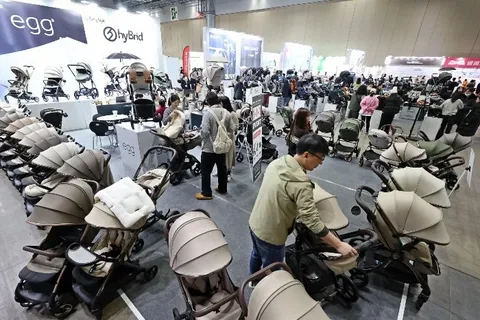
South Korea is celebrating a rare and fragile uptick in births a sliver of hope for a nation with one of the world’s lowest birth rates. But demographers warn that a short baby bump does little to reverse years of deep population decline driven by high costs, demanding work culture, and changing social values.
Background: A Nation Running Out of People
South Korea’s total fertility rate the average number of children a woman is expected to have fell to a record low of 0.72 in 2023. The replacement rate needed to keep a population stable is 2.1. No other developed country in the world has a birth rate this low.
For years, the government has spent billions on pro-natal policies cash bonuses for newborns, extended parental leave, subsidized childcare. The results have been limited. Cities have shrunk, rural areas have emptied, and the population is aging rapidly with fewer young people to replace those leaving the workforce.
The Baby Bump: What Is Happening Now
Officials have pointed to a modest increase in birth registrations in recent months as a sign that some family-support policies may be taking hold. Local media have welcomed the news, calling it a rare “baby bump” in a country where every birth is increasingly precious.
Experts, however, are cautious. A single-year rise in births, even if it holds, would take decades to meaningfully change South Korea’s age structure. The deeper forces pushing people away from starting families expensive housing, long working hours, unequal childcare burdens, and extreme education costs remain largely in place.
What Officials and Experts Are Saying
South Korean government officials say they are cautiously optimistic, but acknowledge that a lasting turnaround requires more than cash incentives. They say a fundamental shift in how Korean society supports parents especially mothers in the workplace is needed.
Demographers note that South Korea’s experience is a warning for other fast-developing East Asian economies including Japan, Taiwan, and China, all facing similar pressures. South Korea remains the most extreme case of a broader regional trend.
Why South Korea’s Population Is Shrinking
The causes are structural. Young Koreans, particularly women, often feel forced to choose between career and family. The education system is fiercely competitive, making child-rearing expensive. Housing costs in cities like Seoul rival the most expensive real estate on Earth.
Cultural expectations add to the problem. South Korean women pursue higher education and professional careers at high rates, yet workplaces often expect long hours and offer little flexibility for parents. Many couples simply decide the financial and social cost of raising children is too high.
Government Response
Beyond cash bonuses, the government is now pushing broader reforms more public childcare centers, flexible working policies, and housing subsidies targeted at young families. Some local governments are also running campaigns to reshape social norms around parenting and shared childcare between men and women.
Critics argue that until the fundamental incentive structure changes with the economic burden of raising children falling less heavily on parents and especially mothers no policy package will produce a lasting reversal.
Regional and Global Impact
South Korea’s shrinking population has direct economic consequences. A smaller workforce reduces productivity, strains pension and healthcare systems, and may force the country to rethink its historically restrictive immigration policies.
The World Bank and IMF have flagged East Asian population decline as a major risk to global economic growth in coming decades. South Korea’s experiment with aggressive pro-natal spending is closely studied internationally as a lesson in what is, and is not, enough to reverse a deep demographic slide.
Conclusion
The rare baby bump in South Korea is welcome news, but demographers agree that reversing decades of decline requires sustained, systemic change. The country’s future depends on whether it can make family life genuinely affordable and socially supported a challenge no single policy can solve. The world is watching closely.
FAQs
How do you stop Ebola from spreading?
Ebola spreads through direct contact with the bodily fluids of infected people. Key prevention measures include isolating patients, using protective equipment, contact tracing, safe burial practices, and vaccination. The rVSV-ZEBOV vaccine (Ervebo) has proven highly effective during outbreaks.
What was the largest outbreak of Ebola?
The largest Ebola outbreak in history was the West Africa epidemic of 2014 to 2016, affecting Guinea, Liberia, and Sierra Leone. It caused more than 28,000 cases and over 11,000 deaths far larger than all previous outbreaks combined.
Who has survived Ebola?
Thousands of people have survived Ebola. Survival depends heavily on early medical care, fluid replacement, and access to treatments such as monoclonal antibodies. Survivors often develop antibodies that may provide some protection against future infection.