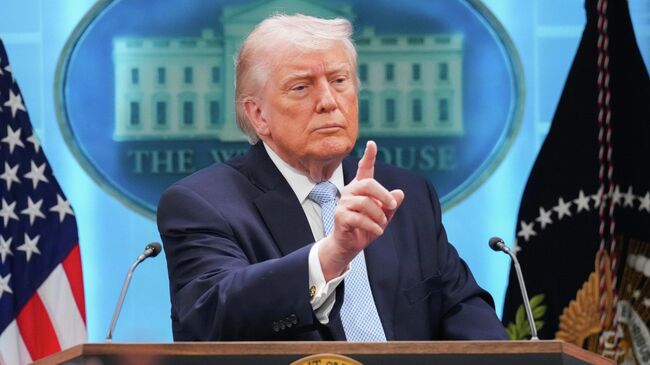
In one of the most dramatic diplomatic reversals in recent memory, President Donald Trump announced a two-week ceasefire in the US-Iran war on the evening of April 7, 2026 just 90 minutes before his own self-imposed deadline to launch devastating strikes on Iranian civilian infrastructure. Iran’s Foreign Minister Abbas Araghchi confirmed Tehran’s acceptance and said Iran would allow safe passage through the Strait of Hormuz during the two-week period.The Iran war news update today has sent shockwaves across global markets, capitals, and newsrooms worldwide.
The ceasefire, brokered by Pakistan, gives both sides two weeks to negotiate a longer agreement. But the central question on every analyst’s lips remains: in the US-Iran war, who is winning?
BACKGROUND
How the Iran War Began and Escalated
The US-Iran war began over five weeks ago when the United States and Israel launched coordinated military strikes against Iranian targets, with the stated goal of eliminating Iran’s nuclear weapons program. The conflict quickly escalated into one of the most dangerous military confrontations since World War II, triggering a global energy crisis and threatening to close the Strait of Hormuz the narrow waterway through which roughly 20% of the world’s oil flows.
The six-week-old war has killed thousands of people and sparked a global energy crisis.Iran retaliated with missile strikes, drone attacks on Gulf states, and threats to permanently close the strait. Its Houthi allies in Yemen also entered the conflict, firing missiles at Israel and threatening a second global shipping choke point at the Bab al-Mandeb waterway.
Trump’s latest news on Iran had been increasingly alarming throughout the day on April 7. Earlier in the day, Trump had warned on social media that “a whole civilization will die tonight” if there was no deal between the two warring countries. The world held its breath.
DETAILS
Trump’s Ultimatum and the Pakistan Factor
Trump’s latest news on Iran throughout April 7 was a rollercoaster of threats and ultimatums. He set an 8 p.m. ET deadline for Iran to either open the Strait of Hormuz completely or face massive US strikes on its power plants, bridges, and water treatment facilities. Legal experts were alarmed, with human rights authorities warning that targeting civilian infrastructure constitutes a war crime under international law.
The breakthrough came from an unexpected mediator. Pakistan Prime Minister Shehbaz Sharif asked Trump for a two-week delay of his Iran deadline, and for the Strait of Hormuz to open for the same period.Trump, who has spoken warmly of Sharif in the past, accepted. The idea of a two-week ceasefire was proposed by Pakistani Prime Minister Shehbaz Sharif, who said ongoing diplomatic efforts were progressing steadily with the potential to lead to substantive results in the near future.
Trump’s announcement came less than two hours before his deadline, and he declared on Truth Social: “This will be a double sided CEASEFIRE!”
What Iran Agreed To And What It Didn’t
Iran’s acceptance of the ceasefire came with significant conditions. Iranian Foreign Minister Araghchi said Iran would allow safe passage of the Strait of Hormuz for two weeks via coordination with Iran’s armed forces. This is a crucial distinction Iran is not simply reopening the strait freely. All vessel traffic must be coordinated with Tehran, which represents a departure from the prewar status quo and a form of continued Iranian leverage.
Iran’s broader 10-point peace proposal includes demanding that the US withdraw all combat forces from regional bases, lift all sanctions, release frozen Iranian assets, and pay war-related damages. Trump on Monday had said a ceasefire proposal put forward by Iran was “not good enough,” but later accepted Iran’s proposal as a “workable basis” for negotiations.
The US and Iran are expected to hold peace talks on Friday in Islamabad, with Vice President JD Vance likely to lead the US delegation.
Netanyahu and the Iran War: A Complicated Picture
Iran war news and Netanyahu’s position have been closely watched throughout this conflict. Israel was the co-initiator of the military campaign against Iran, conducting strikes on Iranian railways, bridges, and military installations. Netanyahu, along with the leaders of Saudi Arabia and the UAE and political allies like Senator Lindsey Graham, had urged Trump to reject any proposal unless Iran made major concessions.
When the ceasefire was announced, Netanyahu’s response was telling. The Israeli prime minister denied that any ceasefire was in place in Lebanon but said Israel would comply in Iran.Israel’s posture suggests it views the ceasefire as a tactical pause rather than a path to peace and that Iran war news and Netanyahu’s strategic thinking remain misaligned with the diplomatic direction Trump has chosen.
Who Is Winning the Iran War?
This is the defining question in the Iran war news update today and the honest answer is: no one clearly, and both sides partially. The US and Israel have dealt serious blows to Iran’s military infrastructure, nuclear program, and naval capabilities. US strikes launched in February destroyed a facility used by the Islamic Revolutionary Guard Corps navy to build and maintain boats.
However, Iran has not capitulated. Its leadership has remained defiant, its population has shown remarkable resilience, and its proxy network including the Houthis and Iraqi militias remains operational. Iran’s president said he is willing to die along with millions of Iranians to defend his country.
From a strategic standpoint, the US achieved its short-term goal of forcing Iran to the negotiating table. But Iran achieved something significant too a ceasefire without surrendering its nuclear program, its leadership, or its sovereignty. In the US-Iran war, who is winning depends entirely on what you measure.
QUOTES
“A whole civilization will die tonight, never to be brought back again.” President Donald Trump, Truth Social, April 7, 2026 (before ceasefire)
“If attacks against Iran are halted, our powerful armed forces will cease their defensive operations.” Iranian Foreign Minister Abbas Araghchi, confirming the ceasefire
“There will be lots of positive action! Big money will be made. Iran can start the reconstruction process.” President Trump, Truth Social, April 8, 2026 (after ceasefire)
Trump also told AFP that Iran’s enriched uranium stockpile “will be perfectly taken care of” under the deal, adding: “The United States won a total and complete victory. 100 percent. No question about it.
IMPACT
Global Markets React With Relief
The Iran US war ceasefire triggered an immediate and dramatic reaction in financial markets. S&P 500 futures rose more than 1%, while oil futures quickly sank about 6% markets had been weak all day on fears of escalation before rallying late in the day on signs a deal might be at hand.
The energy market impact of this Iran war has been severe. The Strait of Hormuz closure disrupted global oil flows for weeks, pushing prices sharply higher and straining economies from Europe to Southeast Asia. The ceasefire and partial reopening of the strait offer the first genuine relief since the war began.
Regional Powers Recalibrate
The ceasefire has forced every regional power to reassess. Saudi Arabia and the UAE, which had been targeted by Iranian missile strikes, are cautiously welcoming the pause. Pakistan has emerged as a surprising and significant diplomatic actor its role as mediator has elevated Prime Minister Sharif’s international standing considerably.
For Lebanon, the picture remains murky. Pakistan’s prime minister said the ceasefire would also apply in Lebanon, where Israel has been conducting an invasion but Netanyahu denied any ceasefire was in place there.
The Nuclear Question Looms
The deepest unresolved issue beneath all Iran war news is the nuclear program. According to March 2026 intelligence assessments, Iran possesses over 450kg of 60% enriched uranium enough for nine to eleven nuclear weapons with a breakout time measured in days. Whether peace talks in Islamabad can address this existential issue is the central challenge of the weeks ahead.
CONCLUSION
Two Weeks to Change History
The Iran US war ceasefire is real, fragile, and historically significant. Trump pulled back from what could have been the most destructive military action since World War II and in doing so, opened a diplomatic window that could either end one of the century’s most dangerous conflicts or simply delay its next chapter.
Peace talks begin Friday in Islamabad. The issues on the table nuclear enrichment, US troop presence, sanctions, the Strait of Hormuz are enormous. The gap between the two sides remains vast. But for the first time in six weeks, guns are largely silent and diplomats are talking.
Iran news in the coming days will define not just the fate of one war, but the shape of the Middle East for a generation. Whether this ceasefire holds, whether talks produce a real agreement, and whether the world avoids catastrophe all of that remains to be written.
FAQs
When was the last ceasefire in Iran?
Prior to the current conflict, Iran had not been engaged in a direct conventional war involving US forces since the tanker wars of the 1980s. The ceasefire announced on April 7, 2026 brokered by Pakistan is the first formal suspension of hostilities in the current US-Iran war that began in late February 2026. It represents a two-week pause to allow peace negotiations to proceed in Islamabad.
Can the US withdraw from NATO?
Legally, a US president can initiate withdrawal from NATO, though it remains constitutionally contested some legal scholars argue Congressional approval would be required. In practical terms, a US withdrawal from NATO would be one of the most seismic geopolitical events in modern history. While Trump has repeatedly criticized NATO spending and burden-sharing, no formal withdrawal has been initiated. The Iran war has actually reinforced some NATO solidarity, though the alliance’s role in Middle East conflicts is limited by its geographic mandate.
Who is more powerful, Iran or the USA?
By virtually every conventional military measure, the United States is far more powerful than Iran. The US has the world’s largest defence budget, the most advanced air force, a global naval presence, and an unmatched nuclear arsenal. Iran, however, has significant asymmetric capabilities ballistic missiles, drone warfare, a network of regional proxies, and the ability to close or threaten the Strait of Hormuz. In the current war, US and Israeli strikes have caused serious damage to Iran’s military infrastructure, but Iran’s capacity to absorb punishment and retaliate through proxies has proven more resilient than some Western planners expected.