The Gulf Cooperation Council (GCC) is facing one of its most critical geopolitical moments as regional tensions around the Strait of Hormuz demand a bold, unified response from all GCC countries.
The Gulf full form Gulf Cooperation Council has long been the cornerstone of Arabian Gulf diplomacy. But today, all six GCC countries are caught between competing pressures from the United States, Israel, and Iran. A new opinion published by Al Jazeera on April 6, 2026, argues that GCC countries must step up and help architect a new regional security order before one is imposed on them.
Background: What Is the GCC?
The Gulf Cooperation Council, commonly known as the GCC, is a regional intergovernmental political and economic union established in 1981. The Gulf full form Gulf Cooperation Council reflects its founding mission: to promote cooperation among the Arab states of the Arabian Gulf.
The Gulf Cooperation Council headquarters is located in Riyadh, Saudi Arabia. It serves as the administrative and political nerve center for all member states. The Gulf Cooperation Council Logo, a circular emblem representing unity among member nations, is widely recognized in diplomatic and international trade circles.
How many GCC countries are there? There are six GCC countries in total. The GCC countries full form list is as follows: Saudi Arabia, the United Arab Emirates (UAE), Kuwait, Qatar, Bahrain, and Oman. Every Gulf Cooperation Council citizen carries the privilege of living in one of the most economically dynamic regions in the world.
Details: The Strait of Hormuz Crisis
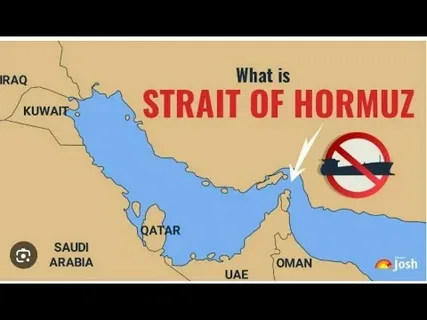
The ongoing conflict launched by the United States and Israel against Iran has deeply unsettled the geopolitical status quo across the Gulf region, putting GCC countries in a difficult position.GCC states appear trapped between two difficult options confronting Washington during an active war would carry enormous risks, while being seen by Iran as passive participants in aggression makes them potential targets under Iran’s increasingly assertive military posture. The Strait of Hormuz is the world’s most critical oil shipping chokepoint. Roughly 20% of global oil trade passes through this narrow waterway daily. Any disruption to the Strait directly threatens the economies of all GCC countries and global energy markets.
Iran’s demonstrated ability to disrupt maritime traffic using low-cost drones gives it significant leverage, and Iranian officials have stated their intent to use that leverage to forge a new order for Hormuz.
A “Congress for Hormuz” The Proposed Solution
The opinion piece proposes convening a “Congress for Hormuz,” a multilateral platform where regional states including GCC countries and Iran could collectively design a security architecture, fill the existing legal vacuum around the Strait, and ensure stability for both the region and the global economy.Unlike the Bosporus and Dardanelles regulated by the Montreux Convention, the Strait of Hormuz operates without a dedicated international regulatory treaty, making it uniquely vulnerable to superpower interference throughout history.
This proposal draws inspiration from Europe’s post-war integration models. Just as the Congress of Vienna stabilized Europe after the Napoleonic Wars, a similar framework could bring lasting peace to the Gulf. Every Gulf Cooperation Council citizen stands to benefit from such a stable arrangement.
Quotes
Writing in Al Jazeera, analyst Sina Emami argued: “The future of Hormuz belongs in the hands of its inhabitants, not the superpowers who have exploited it and are currently destabilising it to pursue their own, or Israel’s, interests.”He further warned: “Should the GCC states choose to prioritise the requests of their Western allies over regional integration, Iran will undoubtedly proceed to forge this new order unilaterally and the resulting framework would be an imposed order, born of strategic necessity rather than consensus.”
Impact: What This Means for GCC Countries
The stakes for all GCC countries are enormous. The Gulf Cooperation Council, with its headquarters in Riyadh, has historically relied on Western particularly American security guarantees. However, this reliance is increasingly being questioned.
The current situation demonstrates the limits of US security patronage, especially as Washington appears committed to an unconditional alliance with Israel in which Israeli interests increasingly override American regional interests.
For every Gulf Cooperation Council citizen, the economic consequences of a prolonged Hormuz crisis would be severe from disrupted oil exports to rising import costs. The GCC countries full form represents not just six nations but a combined GDP of over $2 trillion, making regional stability an economic imperative, not just a political one.
The Gulf Cooperation Council Logo has come to symbolize unity and shared prosperity. But that unity now faces its sternest test. How many GCC countries will step forward with a coherent, collective strategy remains to be seen.
Conclusion: A Historic Choice for the GCC
GCC states must now decide whether they wish to be the architects of this new regional era or passive observers who allow others to shape their future.
The Gulf Cooperation Council headquarters in Riyadh is expected to be the center of intense diplomatic consultations in the coming weeks. Analysts believe that a proactive GCC approach one that brings Iran to the table for a structured Hormuz agreement could offer the most durable path to peace.
The Gulf full form has always been about cooperation. Now, that cooperation must extend beyond trade and economics into the realm of genuine regional security architecture. The GCC countries full form represents six nations with the collective will, wealth, and strategic position to make that happen if their leaders choose to act.
FAQs
Does the USA have a military base in Saudi Arabia?
Yes. The United States maintains a significant military presence in Saudi Arabia, most notably at Prince Sultan Air Base, which has been used for regional operations. The US-Saudi defense relationship is one of the most important strategic partnerships in the Gulf, though it has evolved significantly since the Gulf War era.
Is the GCC a military alliance?
The GCC is primarily a political and economic union, not a formal military alliance like NATO. However, it does have a joint defense framework called the Peninsula Shield Force, established to coordinate military responses among GCC countries. It is better described as a cooperative security arrangement rather than a full military alliance.
Is Saudi Arabia allies with Iran or the USA?
Saudi Arabia has traditionally been a close ally of the United States, relying on American security guarantees and arms deals for decades. However, Saudi-Iranian relations have seen a surprising diplomatic shift in recent years, including a Chinese-brokered rapprochement in 2023. Today, Saudi Arabia maintains a complex balancing act it is strategically tied to the US but is also cautiously engaging Iran diplomatically, especially given the shared concern over Strait of Hormuz stability.