The Islamabad High Court has taken serious notice of a major CDA environmental violation in Islamabad, restraining the Capital Development Authority from further tree cutting in the federal capital. The IHC issued the directive after a petition was filed by Muhammad Naveed Ahmad of the Centre for Justice and Rights, invoking Article 199 of the Constitution and challenging the legality of large-scale tree felling operations carried out by the CDA across Islamabad.The case has drawn national attention, with citizens, legal experts, and environmental groups demanding accountability from the civic authority.
Background: The CDA Environmental Violation That Shook Islamabad
For months, residents of Islamabad have raised serious concerns about the rapid disappearance of trees across the capital. What began as a government-approved drive to remove paper mulberry trees quickly escalated into a full-blown CDA environmental violation controversy. According to the petition filed before the IHC, approximately 29,000 paper mulberry trees were removed across Islamabad in 2025, including around 8,700 trees in Shakarparian alone, ostensibly to address pollen-related concerns.
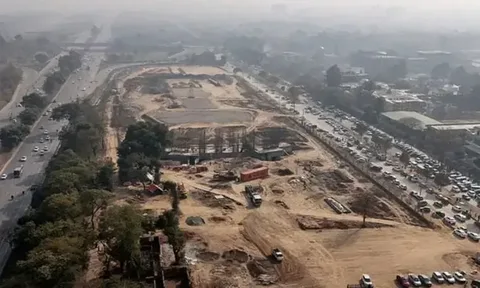
The scale of removal alarmed citizens and environmental watchdogs alike. The petitioner maintained that the scale and manner of cutting had rendered large portions of Shakarparian barren, resulting in loss of biodiversity, increased urban heat, deterioration of air quality, and a violation of citizens’ fundamental right to a clean and healthy environment under law.Images of stripped green areas spread across social media, intensifying public pressure on the authorities.
Details: What the CDA Environmental Violation Case Involves
The CDA environment complaint filed before the court paints a troubling picture of institutional failure. Petitioner’s counsel, Advocate Muddasir Latif Abbasi, contended that massive tree felling was being carried out across Islamabad in violation of rules and regulations, and that the indiscriminate cutting had led to serious environmental changes, posing dangers to public health and ecology, amounting to a violation of the Pakistan Environmental Protection Act.
The CDA environmental violation in Islamabad did not stop at paper mulberry trees. While CDA had publicly claimed that the exercise was limited to invasive paper mulberry trees in compliance with Supreme Court orders passed in 2023 and 2025, the petition stated that eyewitness accounts and public outcry suggested that native and non-allergenic trees were also felled indiscriminately.This significantly worsened the nature of the CDA environmental violation complaint.
Court Action on CDA Environmental Violation Islamabad
The IHC moved swiftly once the CDA environmental violation letter and petition were formally placed before it. Justice Khadim Hussain Soomro issued directives, restrained the CDA from cutting trees, and sought a detailed report on the ongoing tree felling drive.Notices were issued to multiple government bodies requiring formal responses.
The court’s action follows growing public concern over large-scale tree removal in Islamabad. At the hearing, the petitioner’s counsel argued that trees were being cut in violation of existing laws, causing environmental degradation and breaching the Pakistan Environmental Protection Act.The court also directed the Pakistan Environmental Protection Agency and the Ministry of Climate Change to submit para-wise replies.
Quotes: What Officials and Experts Are Saying
The government has defended its actions while the judiciary and civil society have pushed back hard.
Minister for Climate Change and Environmental Coordination Dr. Musadik Malik stated that the removal of paper mulberry trees was carried out in line with Supreme Court orders issued in 2023, describing the species as invasive and non-indigenous and linking it to allergies and deaths among chronic asthma patients.However, opposition voices have been vocal. Senator Sherry Rehman declared the felling of 50-year-old trees unacceptable and warned that Islamabad could not be allowed to turn brown under the pretext of paper mulberry removal, stressing that protecting Islamabad’s greenery is a national responsibility and that violations of environmental laws would not be tolerated.
Environmental organizations have also weighed in. A report by WWF-Pakistan said recent tree removal and land clearing in the capital went beyond eliminating allergenic species and was also driven by unchecked infrastructure development.This finding adds independent credibility to the CDA environment complaint raised before the court.
Impact: Why This CDA Environmental Violation Matters
The CDA environmental violation in Islamabad has consequences that go far beyond the loss of trees. Urban greenery is directly linked to air quality, temperature regulation, groundwater recharge, and biodiversity. The removal of tens of thousands of mature trees in a short span threatens all of these ecological functions.
Environmental experts and activists highlighted that, during the cutting process, other environmentally beneficial and human-friendly trees were damaged or removed, further worsening the ecological impact.This confirms that the CDA environmental violation was not surgical or targeted, but broad and damaging.
The petitioner argued that the manner and scale of cutting had left large swathes of Shakarparian barren, leading to loss of biodiversity, rising urban temperatures, deterioration of air quality, and a violation of citizens’ fundamental right to a clean and healthy environment.Shakarparian is designated as a protected green area under the Master Plan of Islamabad, making any unauthorized clearing there a direct CDA environmental violation.
How to File a CDA Environmental Violation Complaint
Citizens who witness environmental violations in Islamabad have several channels available to them. The CDA Environment Directorate operates under the civic authority and is responsible for environmental oversight in the capital. To file a CDA environment complaint or reach the CDA Environment Wing, the following contact details are available:
For formal written complaints, citizens may approach the Public Grievance and Complaints Cell at CDA Secretariat, Block-V, Sector G-7/4, Islamabad. The cell is headed by the Chief Complaint Officer and is available to receive public queries and complaints from 8:30 am to 4:30 pm on working days, Monday through Friday.
For serious CDA environmental violation complaints in Islamabad involving tree felling, illegal construction, or breaches of environmental law, citizens may also approach the Pakistan Environmental Protection Agency (Pak-EPA) or file a petition directly before the Islamabad High Court, as has been done in the current case.
Conclusion: What Comes Next
The CDA environmental violation case is far from over. With a contempt petition now filed against the CDA Chairman, the court will scrutinize whether the civic authority has genuinely halted its tree-cutting operations or continued them in defiance of judicial orders. The outcome of this case could set a landmark precedent for environmental accountability in Pakistan.
The petitioner urged the IHC to order the CDA to compensate for the cut trees by immediately transplanting mature, grown-up native trees in the affected areas and planting additional new trees at a ratio of at least ten for every one tree removed.Whether the court will enforce such a sweeping remedy remains to be seen.
Citizens, legal advocates, and environmental organizations are expected to continue monitoring the case closely. Anyone wishing to submit a CDA environmental violation letter or file a CDA environmental violation complaint in Islamabad is encouraged to use the official channels listed above. The CDA Environment Wing and CDA Environment Directorate remain key bodies through which civic pressure on this issue can be channelled legally and constructively.
Frequently Asked Questions (FAQs)
What are the environmental crimes in Pakistan?
Environmental crimes in Pakistan include illegal tree felling, unauthorized land clearing, industrial pollution, illegal dumping of waste, encroachment on protected green areas, and construction without environmental impact assessments. These offenses are punishable under the Pakistan Environmental Protection Act 1997, which empowers authorities including Pak-EPA to take legal action against violators, including government bodies.
What is a CDA condition?
A CDA condition refers to a requirement or restriction imposed by the Capital Development Authority on any construction, development, or land-use activity in Islamabad. These conditions typically include environmental approvals, building codes, public hearings, and impact assessments. Any activity that proceeds without meeting CDA conditions including tree removal or new construction is considered a regulatory violation and can be challenged in court.
Is the Bahria enclave illegal?
Bahria Enclave in Islamabad has faced multiple legal challenges related to land use and encroachment. The Supreme Court of Pakistan has previously ordered investigations into Bahria Town’s land acquisition practices in various locations. Certain portions of Bahria Enclave were found to have been developed on land that fell within protected or regulated zones. Court cases concerning Bahria-related land violations have involved the CDA and the Supreme Court, and some matters remain under judicial review. Citizens are advised to consult recent court orders for the most current legal status.