

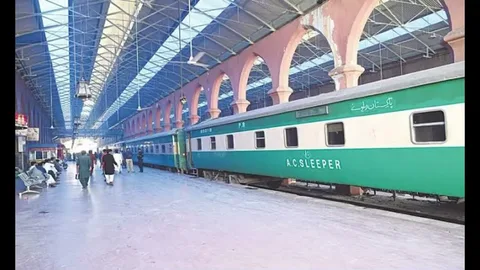

Pakistan Railway’s own inquiry committee has confirmed that 60 percent of the Shalimar Express coaches involved in the latest accident did not have functioning brakes — exposing the Shalimar Express brakes issue as a systemic maintenance failure that runs far deeper than any single incident or individual negligence. The Shalimar Express brakes issue finding — that more than half of the passenger coaches on one of Pakistan’s oldest and most used long-distance trains were operating without working brake systems — has shocked passengers, transport safety advocates, and parliamentarians who are demanding immediate accountability. The Shalimar Express brakes issue is the most damaging official admission in Pakistan Railways’ recent history — and has triggered urgent calls for a full safety audit of every train in the national fleet.
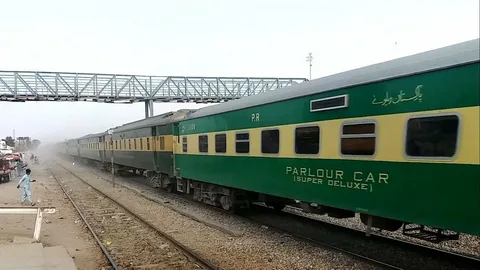
Background: What Is the Shalimar Express and Why Is the Brakes Issue So Serious?
The Shalimar Express is one of Pakistan’s iconic long-distance passenger trains — a service that has operated for decades connecting Karachi to Lahore and onwards to Peshawar on the main spine of Pakistan’s railway network. The Shalimar Express timetable today covers one of the longest and most heavily used intercity passenger routes in the country — with the Shalimar Express carrying thousands of passengers daily across Pakistan’s Punjab and Sindh provinces.
The Shalimar Express ticket price has traditionally made it one of the most accessible long-distance travel options for Pakistan’s lower and lower-middle income passengers — offering air-conditioned, economy, and sleeper class options at prices that undercut bus and air travel significantly on the same routes. For millions of Pakistanis who cannot afford air travel and find long bus journeys uncomfortable, the Shalimar Express ticket price makes it the preferred choice for intercity travel.
The Shalimar Express brakes issue therefore carries particular public significance — it is not an elite service but a mass-market passenger train used by Pakistan’s most economically vulnerable travellers. The Shalimar Express brakes issue revelation means that millions of ordinary Pakistanis have been travelling on trains where the coaches physically could not stop properly in an emergency — a safety failure of the most fundamental kind.
The Shalimar Express accident today coverage has already generated national alarm — but the Pakistan Railway inquiry finding that the Shalimar Express brakes issue affected 60 percent of its coaches transforms a single accident story into a systemic crisis narrative about the entire state of Pakistan’s railway safety infrastructure.
Details: Shalimar Express Brakes Issue — Full Story
Shalimar Express Brakes Issue — What the Pakistan Railway Inquiry Found
The Pakistan Railway inquiry committee was constituted immediately following the latest Shalimar Express accident — a derailment that caused injuries to multiple passengers and damage to coaches along the route. The inquiry committee was tasked with determining the immediate cause of the Shalimar Express accident today and identifying any systemic factors that contributed to it.
The Shalimar Express brakes issue emerged as the inquiry committee’s most alarming finding. Committee members conducted a physical inspection of all coaches attached to the Shalimar Express at the time of the accident — checking brake hoses, brake cylinders, brake shoes, and the brake control systems in each coach. The Shalimar Express brakes issue inspection found that 60 percent of the coaches — the majority of the train — did not have functioning braking systems.
The Shalimar Express brakes issue finding was presented to the Ministry of Railways by the inquiry committee chairman who told a press conference that the coaches had either defective brake components, disconnected brake lines, worn brake shoes below minimum functional thickness, or brake cylinder pressure failures. The Shalimar Express brakes issue was not a uniform technical failure — it was a pattern of different brake defects across multiple coaches, all resulting in the same outcome: coaches that could not provide safe braking force in an emergency.
The Shalimar Express brakes issue inquiry found that the coaches with brake failures had not been properly inspected before departure — meaning that the standard pre-departure safety check that should catch Shalimar Express brakes issues had either not been conducted or had been conducted without properly testing brake function on each coach individually.
Shalimar Express Brakes Issue — The Accident That Triggered the Inquiry
The Shalimar Express accident that led to the Shalimar Express brakes issue revelation occurred on the main Karachi-Lahore railway line. The Shalimar Express derailed when the braking system failed to provide sufficient retardation at a curve or descent point — causing coaches to run at excessive speed and leave the track. Multiple coaches derailed in the Shalimar Express accident. Several passengers sustained injuries ranging from minor cuts and bruises to more serious injuries requiring hospitalisation.
The Shalimar Express accident today emergency response involved Pakistan Railways rescue teams, local rescue services, and district administration officials who reached the Shalimar Express accident site within approximately 45 minutes. The injured passengers were transported to nearby hospitals. The Shalimar Express was halted on both directions of the affected track until inspection teams could clear the derailed coaches and restore the line.
The Shalimar Express timetable today was disrupted for several hours following the accident — with services in both directions along the Karachi-Lahore corridor suspended until the track was cleared. Passengers travelling on other trains using the same corridor faced delays ranging from two to six hours depending on their origin and destination. The Shalimar Express timetable today has since resumed, but with additional safety inspections required at each departure point under new emergency protocols issued following the Shalimar Express brakes issue revelation.
Shalimar Express Brakes Issue — Systemic Maintenance Failure
The Shalimar Express brakes issue is not an isolated finding — it reflects a documented pattern of Pakistan Railways maintenance failures that safety experts and railway engineers have been warning about for years. Pakistan Railways operates a fleet of passenger coaches, many of which are decades old and were manufactured by foreign suppliers whose spare parts are no longer readily available. The Shalimar Express brakes issue is a direct consequence of a maintenance deficit that has been building across the Pakistan Railways fleet for years.
Pakistan Railways has approximately 1,700 passenger coaches in its fleet — of which only a fraction are regularly maintained to functional safety standards. The Shalimar Express brakes issue finding of 60 percent non-functional brakes on a single train raises the immediate question: if 60 percent of Shalimar Express coaches have Shalimar Express brakes issues, what percentage of coaches on Pakistan’s other major trains — the Hazara Express, the Green Line, the Khyber Mail, the Karakoram Express — have equivalent or worse maintenance deficiencies?
Railway safety engineers who have reviewed Pakistan Railways’ maintenance records have previously noted that the pre-departure inspection system — the last line of defence against a Shalimar Express brakes issue reaching the track — is systematically undermined by staff shortages, time pressure to maintain the Shalimar Express timetable today, and the absence of digital brake testing equipment that would allow objective measurement of brake function at each departure point.
Shalimar Express Ticket Price — Affordability vs Safety Funding
The Shalimar Express ticket price is one of the most sensitive political dimensions of the Shalimar Express brakes issue crisis. Pakistan Railways has historically kept the Shalimar Express ticket price artificially low — below the full cost of operating the service — as a social policy commitment to affordable long-distance mobility for lower-income passengers. The Shalimar Express ticket price subsidy is funded through cross-subsidies from higher class passengers and through government budget allocations.
The Shalimar Express brakes issue is a direct consequence of the Shalimar Express ticket price policy — in the sense that insufficient revenue from Shalimar Express ticket price sales, combined with inadequate government funding for maintenance, creates a resource gap that results in deferred maintenance, ageing components, and eventually the Shalimar Express brakes issue that the inquiry committee has now documented. The Shalimar Express ticket price question is therefore not separate from the Shalimar Express brakes issue — it is structurally connected to it.
The Shalimar Express ticket price for an economy class seat currently ranges from approximately Rs800 to Rs1,400 depending on the full route distance. The Shalimar Express ticket price for air-conditioned business class ranges from approximately Rs2,500 to Rs4,000. These Shalimar Express ticket price points have not kept pace with inflation, fuel costs, or maintenance cost increases over the past decade — creating the maintenance funding shortfall that the Shalimar Express brakes issue investigation has now confirmed.
Shalimar Express Timetable Today — Operational Status Following the Brakes Issue Revelation
The Shalimar Express timetable today has resumed following emergency brake inspections at departure points — but with modifications. Pakistan Railways announced that all Shalimar Express coaches will undergo mandatory brake testing before each departure for the next 30 days, adding approximately 45 to 60 minutes to pre-departure preparation time. The Shalimar Express timetable today therefore reflects modest delays at origin stations — Karachi and Lahore — while the enhanced inspection regime is implemented.
Passengers checking the Shalimar Express timetable today should verify departure times directly with Pakistan Railways or through the Pakistan Railways mobile application — as the Shalimar Express timetable today remains subject to adjustment while the emergency inspection regime is in place.
Quotes
Pakistan Railway inquiry committee chairman, on the Shalimar Express brakes issue finding: “Our inspection found that 60 percent of coaches did not have functioning brakes. This is an unacceptable safety failure. The Shalimar Express brakes issue reflects a systemic maintenance deficit that cannot be attributed to any single individual — it is an institutional failure.”
Railways Minister, on accountability following the Shalimar Express brakes issue revelation: “I have directed immediate suspension of all officials responsible for pre-departure inspection on the day of the Shalimar Express accident. The Shalimar Express brakes issue will not be treated as routine negligence — it will be treated as a criminal safety failure.”
Pakistan Railways spokesperson, on the Shalimar Express timetable today and emergency inspections: “All Shalimar Express departures will undergo mandatory brake testing for the next 30 days. The Shalimar Express timetable today may show minor delays at origin stations. Passenger safety is the absolute priority.”
Railway safety engineer, on the broader implications of the Shalimar Express brakes issue: “If 60 percent of Shalimar Express coaches have non-functioning brakes, we must immediately ask the same question about every other train in Pakistan Railways’ fleet. The Shalimar Express brakes issue is almost certainly not unique to this train.”
Passenger injured in the Shalimar Express accident, speaking from hospital: “We trusted Pakistan Railways to get us safely from Karachi to Lahore. The Shalimar Express ticket price is not cheap for our family. We paid for a safe journey. How could 60 percent of the coaches have no brakes? How is this possible?”
Transport policy analyst, on the Shalimar Express brakes issue and Pakistan Railways reform: “The Shalimar Express brakes issue is the result of decades of deferred maintenance funded by artificially low ticket prices and inadequate government allocations. You cannot run a safe railway on a broken funding model. The Shalimar Express brakes issue is a funding crisis that has become a safety crisis.”
Impact: What the Shalimar Express Brakes Issue Means
For Passenger Safety on Pakistan Railways
The Shalimar Express brakes issue finding has immediate implications for passenger safety across Pakistan’s entire railway network. If the most visible and heavily scrutinised train in Pakistan’s fleet — the Shalimar Express — can operate with 60 percent brake failure rates, the safety standard across less scrutinised trains is likely to be no better and possibly worse. The Shalimar Express brakes issue has triggered demands for a nationwide fleet safety audit that Pakistan Railways has confirmed it will conduct.
For the Shalimar Express Timetable Today and Service Reliability
The Shalimar Express brakes issue will affect the Shalimar Express timetable today for at least the next 30 to 60 days as emergency inspection regimes add pre-departure time and as coaches with confirmed Shalimar Express brakes issues are withdrawn from service for repair. Passengers relying on the Shalimar Express timetable today for time-sensitive journeys should plan for potential delays and should verify the latest Shalimar Express timetable today information through Pakistan Railways official channels.
For the Shalimar Express Ticket Price and Railway Funding
The Shalimar Express brakes issue will intensify the debate about Pakistan Railways’ funding model and whether the Shalimar Express ticket price can remain at its current subsidised level while funding the safety maintenance the Shalimar Express brakes issue has shown is urgently required. Railway economists note that every rupee not invested in maintenance today becomes ten rupees of accident liability, compensation cost, and infrastructure repair tomorrow.
For Pakistan Railways Reform
The Shalimar Express brakes issue has given Pakistan’s Parliament, civil society, and media the clearest possible evidence that Pakistan Railways’ reform agenda — repeatedly announced and repeatedly delayed — cannot be deferred any longer. The Shalimar Express brakes issue is not a management failure that can be fixed by suspending a handful of inspectors. It is a systemic institutional failure that requires sustained investment, independent safety oversight, and a fundamental revision of Pakistan Railways’ maintenance, inspection, and accountability frameworks.
Conclusion
Sixty percent of Shalimar Express coaches didn’t have functioning brakes. Pakistan Railway’s own inquiry committee said so. That finding is both a specific Shalimar Express brakes issue and a systemic indictment of Pakistan Railways’ safety culture — a culture that allowed the majority of coaches on one of the country’s most used passenger trains to operate without the basic mechanical capability to stop.
The Shalimar Express ticket price is already a stretch for millions of Pakistani families who travel on this train. They deserve a service where the coaches have functioning brakes. That should not be a radical expectation. It should be the minimum standard.
The Shalimar Express timetable today continues. The Shalimar Express ticket price is still being charged. The Shalimar Express brakes issue has been identified. The question Pakistan Railways must now answer is whether the Shalimar Express brakes issue was the worst case in the fleet — or whether the Shalimar Express accident today is a preview of tragedies on other trains where no inquiry committee has yet been sent to count the brakes.
Pakistan Railways has the Shalimar Express brakes issue finding. Now it needs the institutional will to act on it — before the next Shalimar Express accident today becomes the next national catastrophe.
FAQs
What are the facilities of Shalimar Express?
Shalimar Express currently consists of seven economy, two AC lower, one parlour car, one dining car, one power van and one luggage van coaches.
Does Shalimar Express run daily?
The 14645 / 14646 Shalimar Express is a daily train between Jaisalmer and Jammu Tawi.
Can I travel on an earlier train than I booked?
Inflexible: Advance tickets are non-refundable and cannot be used on a different train or time (unless the train has been cancelled or delayed, in which case, customers are entitled to a refund or journey adjustments). Limited availability: Tickets are subject to availability, so book early for the best prices.