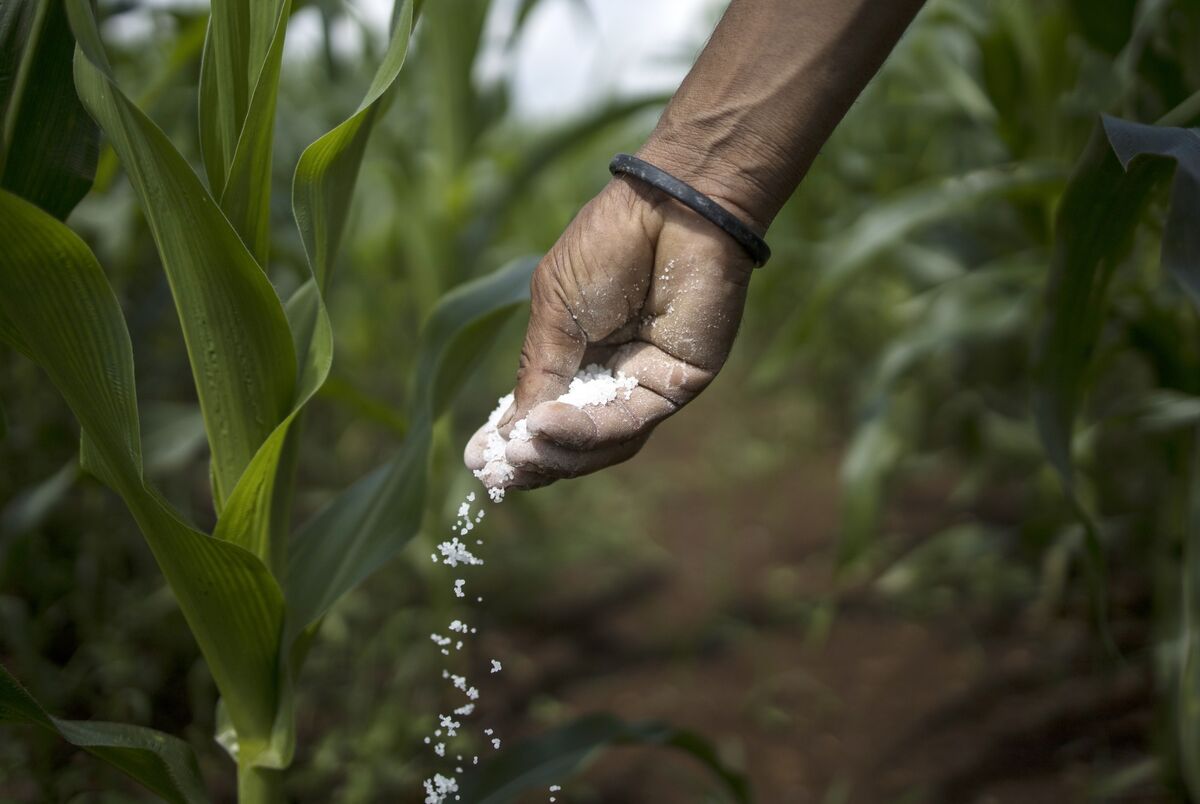
The world is facing a severe fertilizer shortage in 2026, and urea fertilizer prices have skyrocketed to levels not seen in years. Since the U.S. and Israel launched strikes on Iran on February 28, the price of fertilizer much of which is produced in the Middle East has skyrocketed, with the cost of granular urea in Egypt jumping to around $700 per metric ton, up from $400 to $490 before the war began.The fertilizer shortage 2026 is now threatening global food supplies and putting enormous pressure on farmers worldwide.
Background: What Started the Fertilizer Crisis?
The fertilizer shortage did not come out of nowhere. It is rooted in a geopolitical earthquake that shook global supply chains. Shipping traffic through the Strait of Hormuz has been largely blocked by Iran since February 28, 2026, when the United States and Israel launched an air war against Iran and assassinated its supreme leader Ali Khamenei. In retaliation, Iran launched missile and drone attacks on Israel, US military bases, and US-allied Gulf states.
This conflict immediately disrupted the world’s most critical maritime route for fertilizer trade. Since the escalation of the conflict, shipping activity through the Strait has fallen dramatically daily transits dropped from an average of 103 vessels in the last week of February to single digits within weeks, effectively bringing flows close to a standstill.
The result was an instant and devastating Strait of Hormuz fertilizer disruption that sent shockwaves through global agricultural markets.
Details: Why Is There a Fertilizer Shortage in 2026?
So why is there a fertilizer shortage this year? The answer lies in geography, energy, and supply chain dependency.
Around one-third of the global seaborne fertilizer trade passes through the Strait of Hormuz, according to the United Nations.The Middle East is not just a transit zone it is also one of the world’s largest producers of urea fertilizer and nitrogen products.
The near-complete halt of shipping traffic disrupted 38% of global nitrate-based fertilizer supply and 20% of phosphate-based fertilizers. The Strait of Hormuz led to a 33% contraction in the global fertilizer supply chain, while the region’s annual urea exports of 22 million tons halted
Making matters worse, QatarEnergy announced it would stop downstream production of urea following its decision to bring liquefied natural gas production to a halt. Meanwhile, China another large exporter of fertilizers has put restrictions on exports to protect its domestic market from shortages.
The fertilizer shortage 2026 is therefore a combination of blocked shipping routes, halted production, and export restrictions all hitting at the same time.
Fertilizer Price Surge: How High Have Prices Gone?
The fertilizer price spike has been historic in scale and speed. Urea prices increased by 50% since the start of the war, as of late March 2026, while other fertilizer prices, such as diammonium phosphate, also rose sharply.
According to the Center for Strategic and International Studies, urea prices at the New Orleans import hub jumped from $516 per metric ton on February 27, 2026, to $683 on March 5, 2026 a 32% increase in a single week.That kind of fertilizer price movement in days, not months, is extraordinary even by historical standards.
As of March 17, 2026, DAP and MAP have risen above $700 per metric ton, urea has moved above $600 per metric ton, and UAN has surpassed $400 per metric ton.Farmers across the world are now calculating whether they can even afford to plant their crops this season.
Fertilizer stocks are also critically low. Nearly a million metric tons of fertilizer cargo are physically stranded in the Gulf, and major producers have declared force majeure.This means that even if prices fall, the physical supply simply is not moving.
The Strait of Hormuz Fertilizer Disruption: A Deeper Look
The Strait of Hormuz fertilizer disruption is not just about shipping it is about the entire production ecosystem of the Middle East. The damage extends beyond nitrogen to another key crop nutrient, phosphorus. Gulf countries produce around 20% of phosphate fertilizers, as well as a quarter of global sulfur, which is largely an oil and gas byproduct. Fertilizer producers need sulfur to turn phosphate rock into a liquid that plants can absorb.
This means the crisis is cascading. When Gulf sulfur stops flowing, phosphate fertilizer factories outside the Middle East also struggle to operate. The Gulf produces 44% of global sulfur supply, and a shortage is cascading into phosphate fertilizer production worldwide, compounding the nitrogen disruption.
G7 countries don’t maintain strategic fertilizer reserves to match their oil stockpiles. The pipeline that Saudi Arabia built to enable exports through the Red Sea rather than the Strait of Hormuz is for oil, not ammonia products.This structural gap is now painfully visible.
Fertilizer Production by Country: Who Holds the Cards?
Understanding fertilizer production by country is key to grasping this crisis. China remains the largest producer of urea in the world by a significant margin, followed by India, Russia, the Middle East (Saudi Arabia, Qatar, Iran), and the United States. Together, these regions control more than 80% of global urea supply in 2026.
However, concentration at the top creates fragility at the bottom. China and India together comprise more than 40% of the world’s total fertilizer production.China’s export restrictions and India’s own supply pressures mean that the two biggest producers are largely keeping their output for domestic use, leaving the rest of the world scrambling.
In terms of global fertilizer production by country affected by the crisis: Saudi Arabia, Qatar, the UAE, and Bahrain are among the largest suppliers in the global nitrogen fertilizer market, alongside Iran. With the start of the planting season in the northern hemisphere, any disruption in shipping routes can affect agricultural productivity and food supply.
Some countries are in extreme distress. Australia expects current stocks to run out by mid-April as the country sources over 60% of its urea from the Middle East, while efforts to seek alternatives are hindered by high logistics costs.
Fertilizer Stocks: The Buffer Is Running Low
Global fertilizer stocks were not in great shape even before the crisis. Roughly half of the over 2.1 million tons of urea stockpile in the past two years could not be loaded onto vessels due to logistical disruptions.
India lost around 800,000 tons in its monthly urea production of 2.6 million due to limiting industrial gas supply to the 70-75% range, while ammonia import disruptions brought local production to a standstill, as the country sources 80% of its ammonia needs from the Gulf region.
It is estimated that global fertilizer prices could average 15–20% higher during the first half of 2026 if the crisis continues.With spring planting season underway in the northern hemisphere, the window to fix the fertilizer stocks problem is closing rapidly.
Pakistan’s Fertilizer Sector: Local Impact of a Global Crisis
Pakistan is not immune to the fertilizer shortage 2026. The country’s agricultural sector depends heavily on affordable urea fertilizer, and rising fertilizer price levels are already biting local farmers.
Fauji Fertilizer Company Limited (FFC) is the largest urea manufacturer in Pakistan, incorporated in 1978 as a joint venture between Fauji Foundation and Haldor Topsoe A/S of Denmark. The company operates three world-scale urea manufacturing plants with an aggregate design capacity of over 2 million metric tonnes per annum.
Pakistan’s two largest fertilizer producers, Fauji Fertilizer Company and Engro Fertilizers, are expected to further increase urea prices by Rs. 75 to Rs. 100 per bag.FFC’s current urea price stands at Rs. 4,286 per bag while Engro’s rate has already been pushed upward in recent weeks. For Pakistani farmers especially those growing wheat, rice, and cotton this is a serious additional financial burden.
Quotes: Experts Sound the Alarm
One fund manager told CNBC: “I’m a lot more concerned about the current crisis than I was when Russia-Ukraine happened four years ago.”
Chris Lawson, vice president of market intelligence at CRU, said: “With the Strait of Hormuz essentially cut off, there’s a big chunk of global trade that isn’t able to move right now. There’s a lot of traded supply that is at risk 30% of global urea trade comes out of Iran and the Hormuz-constrained countries. If farmers aren’t able to get the urea that they need, crop yields will inevitably go lower.”
Fitch Ratings raised its 2026 ammonia and urea price expectations by around 25% due to uncertainties over how long the conflict and the disruptions will last, warning that the prolonged closure of the Strait of Hormuz could push fertilizer price expectations even higher.
Impact: Food Security at Risk Globally
The biggest fear is not just higher fertilizer price levels it is what follows. Analysts working in the sector say that if agricultural yields were hypothetically impacted by 5% this year, “I don’t think we’ll be looking at starvation, but it would certainly cause food inflation,” noting that emerging market countries are more likely to feel the brunt of the impact.
The price shock and the shortage of fertilizer during the spring planting season could reduce the planting and yields of corn in the US the main feedstock for US beef, poultry, and dairyand potentially increase global food prices into 2027
With the U.S. Agency for International Development now shuttered, the safety net of foreign aid to vulnerable nations may no longer be available during this fertilizer and food crisis.Developing nations that already struggle with food insecurity are at greatest risk.
Conclusion: What Happens Next?
There are some early signs of cautious relief. Iran agreed to a request by the UN to allow humanitarian and fertilizer shipments through the strait on March 27, to address the disruption to the fertilizer supply during the spring planting season.However, this partial opening is fragile and subject to the broader dynamics of the ongoing conflict.
The fertilizer shortage 2026 has exposed a structural weakness in global food systems — the world relies on a narrow set of shipping lanes and producing nations for something as essential as crop nutrition. Without strategic fertilizer reserves, without alternative supply routes, and without coordinated global responses, the next disruption could be even more damaging.
For now, farmers across the world are watching fertilizer stocks, monitoring fertilizer price movements daily, and hoping that the Strait of Hormuz fertilizer disruption comes to an end before the planting window closes entirely.
FAQs
Why is there a shortage of fertilizer?
The fertilizer shortage 2026 is primarily caused by the closure of the Strait of Hormuz following the U.S.-Israeli military strikes on Iran in late February 2026. The near-complete halt of shipping traffic disrupted 38% of global nitrate-based fertilizer supply and 20% of phosphate-based fertilizers.Combined with China’s export restrictions and halted Gulf production, global fertilizer stocks have tightened sharply, driving fertilizer price levels to record highs.
Which is the largest fertilizer company in Pakistan?
Fauji Fertilizer Company Limited (FFC) is the largest urea manufacturer in Pakistan, incorporated in 1978 as a joint venture between Fauji Foundation and Haldor Topsoe A/S of Denmark.It operates three large-scale urea fertilizer plants and markets nearly 3.5 million metric tonnes of fertilizer annually. Engro Fertilizers and Fatima Fertilizer are the other two major players in the sector.
What is the main problem with fertilizers?
The main problem with fertilizers today is supply concentration and geopolitical vulnerability. China, India, Russia, the Middle East, and the United States together control more than 80% of global urea supply in 2026.When one region faces conflict or imposes export restrictions, the fertilizer shortage cascades globally. Additionally, urea fertilizer production is heavily dependent on natural gas, meaning energy price spikes directly translate into higher fertilizer price levels and reduced fertilizer stocks worldwide.