

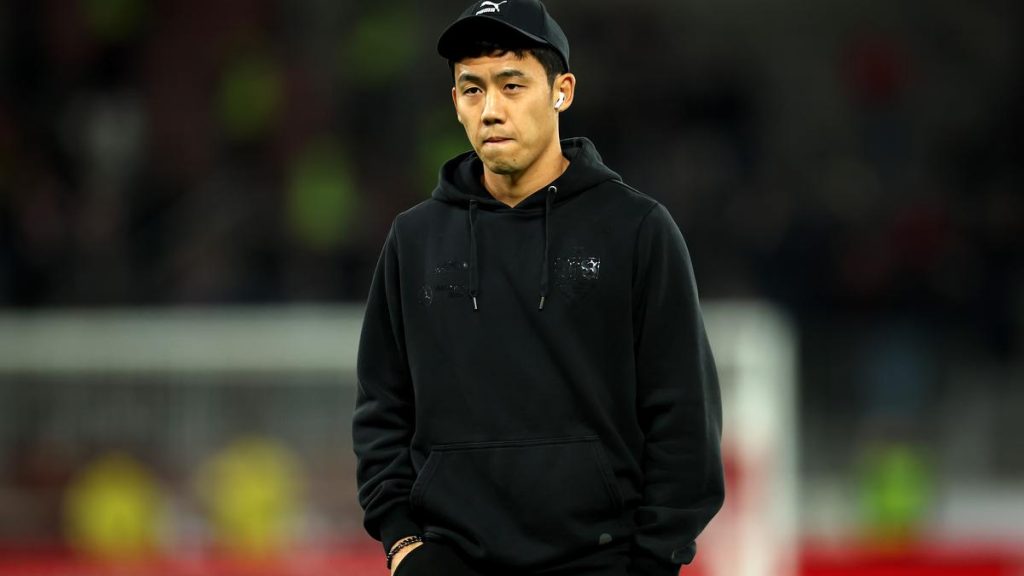
The Wataru Endo injury has effectively ended one of Japanese football’s most important international careers at the worst possible moment. With World Cup 2026 on the horizon, Japan has lost the player who anchored its midfield not just in a positional sense, but as the presence the team organized itself around.
The Endo injury has hit the fan community hard, and the reaction goes beyond disappointment about a tournament. It reflects how much one player came to represent what Japan could be at international level composed, intelligent, and relentless.
Background
Wataru Endo built his career on things that do not always show up in highlight reels. Tactical positioning, defensive discipline, the ability to read a game a second ahead of most players these qualities made him the kind of midfielder coaches rely on without always getting credit for.
His move to European football validated what Japanese fans already knew. The step up did not diminish him. If anything, the higher level brought out his best qualities more clearly. He became a reference point proof that Japanese players could hold their own in elite competition, not by mimicking European styles, but by being excellent at what they already did.
Before the Wataru Endo injury changed the picture, there was a reasonable expectation that he would be central to how Japan approached World Cup 2026. His experience in major tournaments, his leadership standing in the squad, and the trust that the coaching setup had built with him over years all of that was part of Japan’s actual competitive plan.
How the Endo Injury Changed Everything
The Endo injury is not a story about bad luck alone. At his level of the game, the physical demands accumulate over long seasons that combine club commitments with international duty, without adequate recovery windows between them. The system produces these outcomes regularly. When they land on someone this important to a team’s plans, the consequences are felt far beyond the medical room.
The reported impact on Endo’s ability to compete at the highest international level means the World Cup 2026 dream is gone. That is a hard sentence to write about a player of his quality, but the situation does not appear to leave room for a different reading.
Experienced players recovering from serious injuries face a different calculation than younger ones. The body does not respond the same way. The rehabilitation timeline is longer, the return to match sharpness takes more time, and the decisions around whether to push through or step back become more weighted with each passing week. For Endo, that calculation appears to have shifted against a return to international football.
Japan Faces a Major Leadership Void
Squads lose players to injury all the time. What makes the Wataru Endo injury different is what it removes beyond his technical contribution.
Endo was the person in the dressing room and on the pitch who held things together when matches got difficult. That role is not replaceable through a transfer window or a tactical adjustment. It is built over years of shared experience, and the players around him had learned to look for him in tight games, under pressure, when clarity was needed.
Japan’s younger midfielders are talented. Several of them have genuine quality and have been developing in good club environments. What they do not have yet is what Endo accumulated over a decade of high-stakes international football. The gap is not in ability. It is in the particular composure that only comes from having been in those situations repeatedly and come through them.
Japan’s coaching staff will need to create that experience in a compressed timeframe, which is not an ideal preparation for a World Cup.
Reaction From Fans and Football Community
The reaction to the Wataru Endo injury ran across social media platforms within hours. Japanese fans led it, but the responses came from further out supporters from other Asian countries, European football followers who had watched him at club level, analysts who had covered his international career.
What came through consistently was not just sympathy about the injury. It was appreciation. The messages focused on specific performances, on what his style represented, on the consistency he brought across a career that stretched through several different Japanese squads and football eras.
Football observers described the Endo injury as the kind of loss that is hard to articulate precisely because his value was not reducible to statistics. Defensive midfielders who make the game work for everyone around them tend to be undervalued while present and fully recognized only once absent.
Career Achievements of Wataru Endo
The career record that precedes the Wataru Endo injury is worth stating clearly:
- Extensive international appearances for Japan, including major tournament campaigns
- Senior leadership role in the national team setup over multiple coaching regimes
- Successful transition to European club football, including his time with Liverpool
- Consistent recognition as one of Asia’s top midfielders across multiple seasons
- A lasting influence on how Japan approached the position and the role it played in the team
The injury does not rewrite any of that. What Endo accomplished was already built. The frustration is that there was more left to add.
What the Injury Means for Japan’s World Cup Ambitions
Japan is genuinely competitive at international level and has a talented enough squad to go deep in World Cup 2026. That remains true after the Endo injury. The tournament has not been lost on the training pitch.
What has changed is the shape of the challenge. Japan will now go into the tournament with a midfield that needs to grow into its leadership structure rather than entering with one already established. That is a real difference, particularly in the knockout stages where composure and experience matter most.
Coaches will restructure. Tactical plans will adjust. Younger players will be asked to carry more. Some of them will rise to it. The Endo injury creates genuine space for that development but it also removes the safety net that his presence provided.
Expert Analysis
The Wataru Endo injury has prompted broader commentary about the physical demands on international footballers. The calendar structure that runs club seasons into international windows without meaningful rest creates compounding wear on players who perform at the highest level year-round.
Older players carry that load differently. Their technical quality often remains intact longer than their physical recovery capacity, which creates a specific kind of vulnerability the player looks fine until the injury that was building quietly arrives all at once.
The football community has largely framed Endo’s career in terms of what he gave to the game over a long period rather than what the injury took away. That framing is accurate and deserved. His consistency across a long career at high level is its own statement about the kind of professional he was.
Impact on Asian Football
The Endo injury matters beyond Japan. Endo was one of the players younger footballers across Asia pointed to when arguing that Asian players could succeed in European football not as an exception, but as a standard.
His career said something specific: tactical intelligence, defensive discipline, and leadership are qualities that produce results at the highest level regardless of where you developed them. That message shaped how a generation of Asian players approached their careers.
His absence from the World Cup stage will be felt across the continent. But the model he created does not disappear with him. It has already influenced the players who watched him.
Looking Ahead
Whatever comes next for Wataru Endo further recovery, adjusted playing goals, or an eventual transition into coaching or mentoring his standing in Japanese football is established. Players who shaped how a country approaches the international game do not require active careers to maintain that influence.
Japan will compete at World Cup 2026. The squad has quality. The Endo injury is a setback, not a collapse. But the team that takes the pitch will be different from the one that had him available, and anyone following Japan closely knows that difference is real.
Conclusion
The Wataru Endo injury closes a chapter in Japanese football before it was ready to close. The World Cup 2026 dream is gone for a player who had earned the right to another campaign. The Endo injury is a reminder of how quickly professional sport can shift the terms of a career, regardless of what the player has given or how much they had left to offer.
His legacy in Japan is not in question. What he built over the course of his career as a player, as a leader, as a reference point for what Japanese football could be internationally will stay intact long after the injury has faded from the headlines.
FAQs
Did Endo retire?
No formal retirement announcement has been made as of current reporting. What has been confirmed is that the Wataru Endo injury significantly affected his ability to pursue his international goals, including World Cup 2026. Whether he continues playing at any level, steps back entirely, or moves into a different football role will become clearer once his medical situation is fully resolved. Official confirmation should come directly from Endo or his representatives.
At what age will CR7 retire?
Cristiano Ronaldo has not named a retirement age, and at this stage of his career that question is largely irrelevant to how he talks publicly about his future. He has consistently said he will play as long as his body allows him to perform at a level he finds acceptable. His current club situation at Al Nassr and his continued international involvement with Portugal both suggest he is not close to making that decision. Age has become less predictive of elite footballer longevity than it used to be.
Why isn’t Wataru Endo playing?
The Endo injury is the primary reason. The details of the specific injury have not been fully disclosed publicly, but reports indicate it has affected his capacity to compete at the international level required for World Cup participation. Rehabilitation from serious injuries takes time, and experienced players often face longer and more complicated recovery processes than younger ones. Any update on his playing status should come from official sources.