

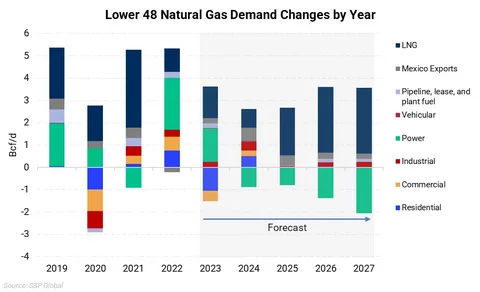

The growing US natural gas surplus highlights a striking contradiction in global energy markets. While regions like Asia and Europe are scrambling to secure gas supplies, the United States is facing an oversupply with limited export capacity.
This imbalance reflects structural challenges in global energy distribution rather than a lack of demand.
Why the US Has Excess Natural Gas
The us natural gas surplus today is largely driven by strong domestic production. Advances in shale extraction and increased drilling have significantly boosted output in recent years.
However, infrastructure limitations—especially in liquefied natural gas (LNG) export terminals—have made it difficult to send excess supply overseas where demand is high.
US Natural Gas Prices Under Pressure
The us natural gas surplus price trend shows that excess supply often pushes prices downward. When production exceeds domestic demand, prices fall, impacting producers and energy companies.
Lower prices may benefit consumers but can discourage further investment in exploration and production, creating long-term uncertainty in the market.
Natural Gas Inventory Report Trends
Recent natural gas inventory report today updates indicate that storage levels in the United States remain elevated. High inventories signal that supply continues to outpace consumption.
This situation is unusual at a time when global markets are experiencing tight energy conditions, especially due to geopolitical tensions and supply disruptions elsewhere.
Global Demand vs US Supply Gap
Despite the US surplus, countries in Europe and Asia are competing for limited LNG shipments. Transportation costs, long-term contracts, and export capacity constraints prevent the US from fully capitalizing on its excess gas.
This disconnect means that while global prices rise, domestic US prices remain relatively low—creating a fragmented energy market.
Economic and Strategic Implications
The US natural gas surplus has broader implications for global energy security. It highlights the need for better infrastructure, diversified supply chains, and strategic energy planning.
If export capabilities expand, the US could play a larger role in stabilizing global energy markets. Until then, the surplus will continue to reflect inefficiencies in global energy distribution.
Conclusion
The US natural gas surplus underscores a key challenge in modern energy markets: supply and demand are not always aligned geographically. While the US has abundant resources, limitations in infrastructure and logistics prevent those resources from reaching areas in need.
Bridging this gap will be essential for achieving global energy stability in the coming years.
FAQs
How much natural gas is left in the USA?
The US has vast proven reserves of natural gas, enough to last several decades at current production levels.
Who is the largest buyer of U.S. LNG?
Major buyers include countries in Europe and Asia, particularly Japan, South Korea, and several European nations.
How much CNG is left in the world?
Globally, natural gas reserves are estimated to last over 50 years, depending on consumption rates and new discoveries.