

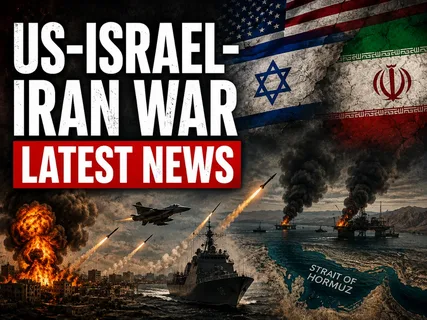

The US Israel Iran war latest news continues to dominate international headlines as the conflict reaches the symbolic milestone of 100 days. What began as a series of military confrontations and retaliatory strikes has evolved into one of the most significant geopolitical crises in the Middle East in recent years.
The Iran US conflict 2026 has drawn global attention due to its impact on regional stability, energy markets, international diplomacy, and humanitarian conditions. Governments around the world are closely monitoring developments as fears grow that the war could expand beyond its current boundaries.
Background: How the Conflict Escalated
The roots of the current conflict stretch back years, with tensions between Iran, Israel, and the United States steadily increasing through disputes over regional influence, military alliances, sanctions, and security concerns.
Throughout 2025 and early 2026, several incidents heightened tensions. Military operations, intelligence activities, and confrontations involving regional allies contributed to an increasingly volatile environment.
When direct attacks and counterattacks intensified, many analysts warned that a broader confrontation could emerge. Those concerns became reality as military operations expanded and diplomatic efforts struggled to keep pace with rapidly changing events.
The Iran US conflict 2026 is now viewed by many experts as one of the most dangerous security crises facing the international community.
Latest Developments in the Conflict
Recent reports indicate that military operations remain active across multiple areas. Both sides continue to exchange accusations regarding responsibility for attacks and regional instability.
The latest Iran attack on Israel today update has generated significant discussion among military analysts and political observers. Officials have reported increased defensive operations, while security agencies remain on high alert.
At the same time, reports about Israel attacks Iran today continue to emerge, reflecting the ongoing cycle of retaliation that has characterized the conflict for months.
As international media provide constant coverage, searches for Israel attacks Iran today live and breaking news on Iran war have surged as people seek real-time information about developments.
Military experts note that both sides possess significant capabilities, making the situation difficult to predict. While neither side appears willing to make major concessions, international pressure for de-escalation continues to grow.
Diplomatic Efforts Face Major Challenges
Despite ongoing military activity, diplomatic channels remain active.Several countries have attempted to mediate between the parties involved. Regional powers, international organizations, and major global actors have all expressed concern about the possibility of wider escalation.
Diplomats argue that continued fighting increases the risk of unintended consequences. Even a single miscalculation could draw additional countries into the conflict.The United Nations has repeatedly called for restraint and renewed dialogue. However, negotiations remain difficult due to deep disagreements over security guarantees, military operations, and long-term regional arrangements.
Many observers believe meaningful progress will require direct engagement among key stakeholders, something that has proven difficult to achieve so far.
Humanitarian Consequences Continue to Grow
One of the most serious aspects of the conflict is its humanitarian impact.Thousands of civilians have faced displacement, disruptions to daily life, and economic hardship. Infrastructure damage has affected transportation networks, public services, and local economies.
Humanitarian organizations continue to express concern regarding access to affected communities. Relief efforts face logistical and security challenges that complicate the delivery of aid.
Families across the region are dealing with uncertainty as military operations continue. Schools, businesses, and healthcare facilities have experienced varying levels of disruption.
The longer the conflict persists, the greater the burden on civilian populations caught in the middle of geopolitical tensions.
Economic Impact Reaches Global Markets
The conflict is not only a regional issue. It has significant implications for the global economy.
Energy markets remain particularly sensitive to developments in the Middle East. Investors closely monitor shipping routes, production facilities, and regional security conditions.
Any threat to major energy corridors can influence oil prices and create uncertainty in international markets. Businesses and governments worldwide are therefore paying close attention to military and diplomatic developments.
Financial analysts warn that prolonged instability could increase inflationary pressures in some countries while affecting trade and investment flows.
These concerns help explain why governments far from the Middle East continue to follow the crisis closely.
Military Analysts Debate Future Scenarios
Security experts have proposed several possible outcomes for the conflict.One possibility involves a gradual reduction in hostilities through diplomatic engagement. Another scenario envisions continued low-intensity confrontation without a comprehensive settlement.
A more concerning possibility is further escalation involving additional regional actors. Such a development could significantly expand the scale of the conflict and complicate efforts to restore stability.
Analysts studying the Iran US war Al Jazeera coverage and other international reporting platforms generally agree on one point: uncertainty remains exceptionally high.
Military planners throughout the region continue preparing for multiple contingencies while governments seek ways to reduce risks.
Regional Reactions and Strategic Calculations
Countries across the Middle East are carefully evaluating the implications of ongoing hostilities.Many governments support efforts aimed at preventing a broader regional war. Stability remains a priority for states concerned about economic development, energy security, and domestic political conditions.
Regional leaders recognize that prolonged conflict could have consequences extending far beyond the immediate battlefield. Trade routes, foreign investment, tourism, and diplomatic relationships may all be affected.As a result, calls for restraint continue to emerge from various capitals throughout the region.
Iran War: When Will It End?
One of the most frequently asked questions remains: Iran war when will it end?Unfortunately, there is no clear answer.
Wars involving multiple actors, complex political interests, and deep historical grievances rarely end quickly. The duration of this conflict will likely depend on military developments, diplomatic initiatives, and decisions made by political leaders.
Some experts believe a negotiated settlement remains possible if sufficient international pressure is applied. Others argue that the conflict may continue in various forms even if major military operations decrease.
What is clear is that the path toward peace will require difficult compromises and sustained diplomatic engagement.
Conclusion
The US Israel Iran war latest news reflects a conflict that has already reshaped regional politics and international security discussions. After 100 days of confrontation, military operations continue while diplomatic efforts struggle to produce a breakthrough.
The Iran US conflict 2026 remains one of the most closely watched international crises. From humanitarian concerns to economic consequences, its effects extend far beyond the immediate region.
As governments, analysts, and citizens seek breaking news on Iran war developments, attention now turns to whether diplomacy can succeed before the conflict enters an even more dangerous phase.
FAQs
Is the US military still attacking Iran?
The United States has maintained military operations related to regional security objectives and force protection measures. The scale, nature, and frequency of operations can change depending on developments on the ground. Official statements from government and defense authorities remain the most reliable source for current operational information.
Who is stronger, Iran or Israel?
Comparing military strength is complex because both countries possess different advantages. Israel is widely regarded as having advanced military technology, intelligence capabilities, and strong defense systems. Iran, meanwhile, has significant missile capabilities, regional partnerships, and considerable manpower. Military effectiveness depends on strategy, objectives, geography, and international support rather than numbers alone.
Is the United States officially at war?
Whether the United States is officially at war depends on legal and political definitions. Military operations can occur without a formal declaration of war. Government officials, legal experts, and policymakers often debate the distinction between military engagement, armed conflict, and formally declared war under domestic and international law.