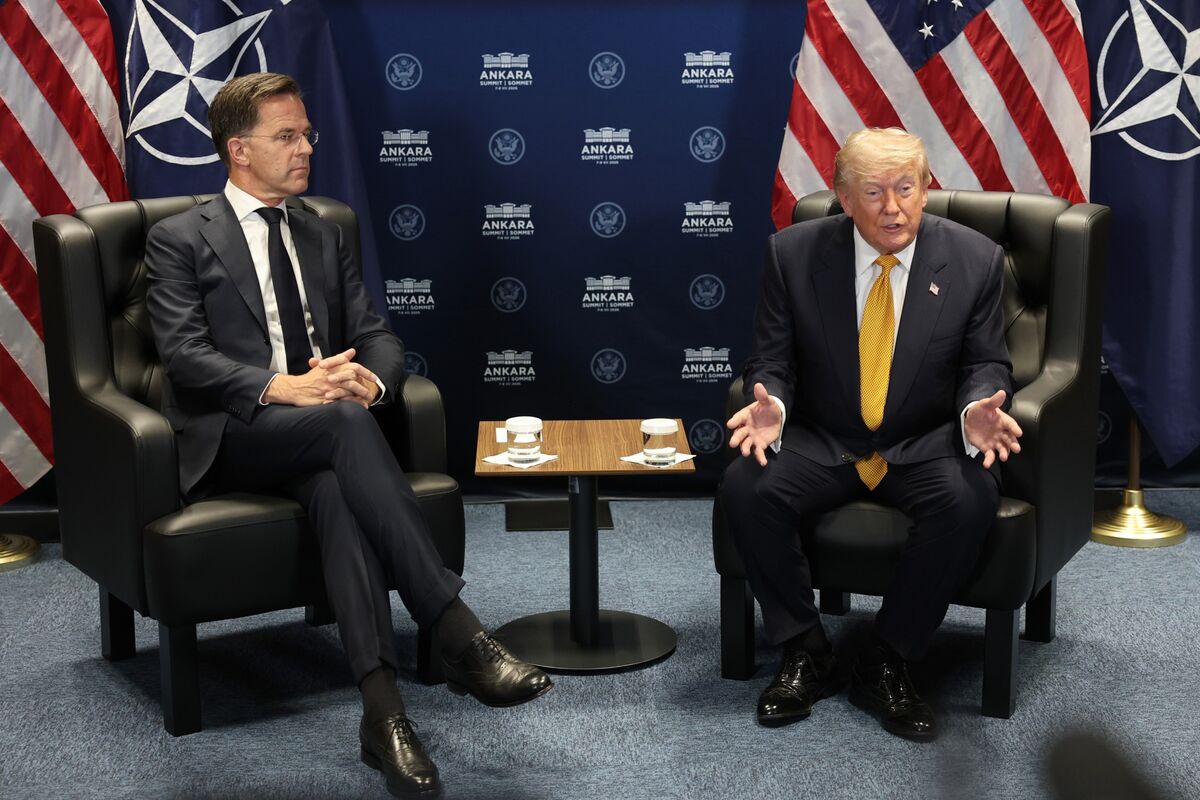
President Donald Trump has delivered a sharp US-Iran conflict update, declaring that the memorandum of understanding (MoU) underpinning the fragile ceasefire with Tehran is “over.” Speaking from the NATO summit in Ankara, Turkiye, Trump said continued engagement with Iran was “a waste of time.” His remarks followed fresh American strikes on Iranian territory after Tehran allegedly attacked three commercial vessels in the Strait of Hormuz.
The renewed hostilities mark one of the most dangerous escalations in the ongoing Iran US conflict 2026, a conflict that has already reshaped alliances, oil markets, and security postures across the Middle East. This article offers a full US-Iran conflict explained breakdown, covering the background, the latest developments, expert reactions, and what may come next.
Background: How the Iran US Conflict 2026 Began
To understand the current situation, a short U.S.-Iran conflict history is necessary. The 2026 Iran war was triggered on February 28, 2026, when the United States and Israel launched a coordinated military campaign against Iranian targets. The operation escalated rapidly, drawing in regional players and disrupting global shipping routes through the Strait of Hormuz and the Red Sea.
Israeli strikes in early March destroyed a facility linked to Iran’s Assembly of Experts, complicating the process of selecting a new supreme leader after Ali Khamenei was killed<cite index=”6-1″>.</cite> Iran moved quickly to maintain internal stability, and hardline figures consolidated control despite the leadership vacuum.
A ceasefire was eventually reached, and a formal memorandum of understanding was signed on June 17 by Trump and Iranian President Masoud Pezeshkian<cite index=”6-1″>. The deal set a 60-day timeline for resolving the unresolved nuclear issue, with Iran reaffirming it would not pursue a nuclear weapon as part of the agreement</cite>. The MoU also called for a halt to hostilities in Lebanon, an end to restrictions on the Strait of Hormuz, easing of sanctions, and a reconstruction package for Iran<cite index=”6-1″>.</cite>
This background is essential to any U.S.-Iran relations timeline, since it shows how quickly a negotiated truce can unravel once new incidents occur on the ground.
Details: What Triggered the Latest Escalation
The most recent flashpoint began when three commercial ships, including Qatari and Saudi-flagged tankers, were struck in the Strait of Hormuz between Monday and Tuesday this week<cite index=”1-1,7-1″>. A U.S. official confirmed the vessels were hit, reigniting tensions just days after Washington had given Tehran what Trump called “a week off” during funeral ceremonies for the slain Supreme Leader</cite>.
In response, U.S. Central Command carried out what it described as offensive strikes inside Iran, hitting more than 80 targets in the latest wave of operations<cite index=”7-1″>.</cite> Iran responded by claiming it had targeted 85 US military installations, with air raid sirens sounding in Bahrain and Kuwait<cite index=”1-1″>.</cite>
Washington also moved to reverse economic concessions. The United States revoked an oil sanctions waiver that had allowed Iran to sell crude as part of the earlier framework deal, leaving large volumes of Iranian oil without a clear buyer<cite index=”7-1″>.</cite>
Speaking to reporters in Ankara, Trump said he believed the agreement was finished, using unusually blunt language toward Iranian leaders. He described them as “sick people” led by “sick people,” and said they were “vicious, violent people,” adding that if Iran had a nuclear weapon, “they’d use it”<cite index=”1-1″>.</cite> He further remarked that dealing with Tehran had become pointless, calling it a waste of time<cite index=”3-1,4-1”>.</cite>
Despite the fiery rhetoric, Trump indicated that negotiations could still technically continue, saying he would loop in envoy Steve Witkoff and adviser Jared Kushner, while insisting it was now up to Tehran to return to the table<cite index=”1-1″>.</cite> Iran’s foreign minister, Abbas Araghchi, pushed back publicly, referencing a clause in the MoU that bars new negotiations from starting if threats continue, and urging Washington to honor its signature<cite index=”7-1″>.</cite>
Quotes: What Officials and Experts Are Saying
Trump did not hold back in his public remarks at the NATO summit. He said flatly, “To me, I think it’s over,” when asked about the status of the memorandum with Iran<cite index=”3-1″>.</cite> He added that Iranian leaders were “cuckoo” and accused them of misrepresenting the terms of earlier agreements once away from the negotiating table<cite index=”5-1″>.</cite>
A U.S. official told American media that the latest response was a direct result of what Washington called international terrorism carried out by Iran against ships transiting the strait, adding that Iranian officials were aware of the consequences of their actions<cite index=”4-1″>.</cite>
On the Iranian side, an advisor to the new Supreme Leader, Mojtaba Khamenei, said Tehran was fully prepared for further American strikes, describing the country as ready regardless of what Washington decided next<cite index=”7-1″>.</cite>
International diplomats have also weighed in on this US-Iran conflict update. The European Union’s top diplomat said the recent exchange of strikes had further complicated already difficult talks aimed at ending the war<cite index=”5-1″>.</cite> NATO’s Secretary General, meanwhile, defended the American strikes as necessary during discussions at the summit in Ankara.
Impact: Regional and Global Consequences
The renewed fighting has already rattled global markets. Oil prices jumped more than two percent following the latest U.S. strikes on Iran, while world shares pulled back in response to the uncertainty<cite index=”6-1″>.</cite> Airlines operating in and around the Middle East have also faced disruption, with monthly fuel costs for U.S. carriers surpassing six billion dollars in May, an increase of eighty-four percent compared to the previous year<cite index=”6-1″>.</cite>
Shipping through the Strait of Hormuz, one of the world’s most critical energy corridors, remains under threat. The United Kingdom Maritime Trade Operations Centre has warned that the maritime security threat level in the strait remains substantial following the tanker attacks<cite index=”7-1″>.</cite>
Regionally, the conflict continues to spill beyond Iran’s borders. Lebanon has been drawn into the fallout multiple times since the war began, with Israeli strikes hitting Beirut even after ceasefire announcements between the U.S. and Iran<cite index=”6-1″>.</cite> Gulf states including Bahrain and Kuwait have also found themselves directly exposed, with air raid sirens sounding during the latest exchange of strikes<cite index=”1-1″>.</cite>
For anyone asking about US vs Iran war who would win, analysts generally note that the United States holds an overwhelming advantage in conventional military capability, air power, and naval reach. However, Iran’s ability to disrupt global oil shipping through the Strait of Hormuz, its network of regional allies, and its use of asymmetric warfare mean that any prolonged conflict would carry significant economic and humanitarian costs well beyond the battlefield itself.
Historical Context: The US Iran War 1988
This is far from the first direct military confrontation between the two countries. The U.S. Iran War 1988, formally known as Operation Praying Mantis, saw American naval forces strike Iranian military targets and vessels in the Persian Gulf after a U.S. Navy frigate struck an Iranian mine. That episode remains one of the largest surface naval engagements involving the U.S. since World War Two, and it is frequently cited by historians when explaining how many times has the US attacked Iran across the decades, from the 1980s tanker war era through to the current 2026 conflict.
Conclusion: What Comes Next
The coming days are likely to determine whether the current Iran US conflict 2026 escalates further or returns to negotiations. Trump has signaled that talks are not entirely closed, even as he declared the MoU effectively finished, leaving room for renewed diplomacy through intermediaries like Witkoff and Kushner<cite index=”1-1″>.</cite>
For now, both sides appear prepared for further confrontation. Iranian officials have said they expect additional American strikes and claim readiness to respond<cite index=”7-1″>,</cite> while Washington continues to apply economic pressure through sanctions and oil waiver reversals. Regional governments, international diplomats, and global markets will be watching closely for the next US-Iran conflict update, as any further disruption to the Strait of Hormuz could carry consequences far beyond the Middle East.
Frequently Asked Questions
Who helped China get nuclear weapons?
China developed its nuclear weapons program independently, largely without direct foreign assistance, following its first successful nuclear test in October 1964. The program was driven primarily by domestic scientific and engineering efforts during the Mao era, spurred in part by geopolitical tensions with both the United States and the Soviet Union. While the Soviet Union initially offered some technical cooperation with China in the 1950s under a bilateral agreement, that assistance was withdrawn well before China conducted its first successful detonation, meaning Beijing largely achieved nuclear capability through its own research institutions and scientists rather than sustained outside help.
Is China a serious threat to the US?
China is widely regarded by policymakers and defense analysts as one of the most significant long-term strategic challenges facing the United States, spanning military, economic, and technological competition. Tensions frequently center on issues such as Taiwan, the South China Sea, trade practices, and rapid advances in missile and naval capabilities. While outright military conflict between the two nations is not considered imminent by most analysts, the scale of China’s economic size, military modernization, and global influence means the relationship is treated as a top-tier national security priority in Washington.
Does China have an S-400 missile system?
China does not operate the Russian-made S-400; instead, it fields its own domestically produced long-range air defense systems, most notably the HQ-9 and its later variants, which were developed with some early influence from Russian and other foreign air defense technology. China has, however, historically purchased other advanced Russian weapons systems and continues to invest heavily in indigenous missile and air defense development as part of its broader military modernization push, reducing its reliance on imported systems like the S-400 that other countries, such as India and Turkey, have acquired directly from Russia.
Who are allies with Iran?
Iran maintains close relationships with a network of state and non-state actors often referred to as the “Axis of Resistance,” including Syria’s government structures, Lebanon’s Hezbollah, Iraqi Shia militias, and Yemen’s Houthi movement. On the international stage, Iran has deepened strategic and economic ties with Russia and China in recent years, particularly around energy trade, arms cooperation, and diplomatic support at the United Nations, as all three countries frequently find common cause in opposing U.S.-led sanctions and foreign policy positions in the Middle East and beyond.
Can girls wear jeans in Iran?
Jeans themselves are not officially banned in Iran, and many Iranian women do wear them, particularly in urban centers like Tehran. However, dress codes remain strictly enforced under Iran’s mandatory hijab laws, which require women to cover their hair and dress modestly in public regardless of the specific garment worn underneath. Enforcement of these rules has fluctuated over the years depending on the political climate, with periods of stricter morality police crackdowns followed by periods of more relaxed, though still technically illegal, public dress in some areas.
Why is Iran not a US ally?
The rupture between the United States and Iran traces back to the 1979 Islamic Revolution, which overthrew the U.S.-backed Shah and installed a theocratic government hostile to Western influence, followed shortly after by the Iran hostage crisis that severed diplomatic relations entirely. Since then, decades of mutual distrust have been reinforced by Iran’s nuclear program, its support for militant groups across the region, its human rights record, and repeated military confrontations, including the ongoing 2026 conflict, all of which have prevented any lasting normalization of ties between Washington and Tehran.