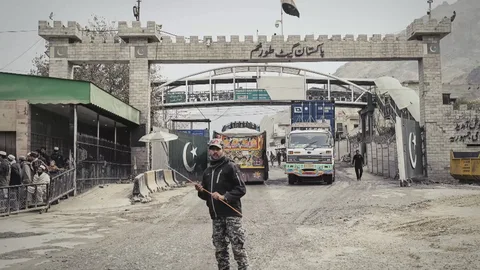
Security along the Pak-Afghan border is back in the headlines. Militant activity, border management disputes, and diplomatic friction between Islamabad and Kabul are all feeding into each other again, and neither side seems close to a fix.
Talk of a broader “Pakistan war situation,” ongoing security operations, and Kabul’s responses to Pakistani pressure shows just how tangled this relationship has become. Most regional analysts still land on the same conclusion, though: without real cooperation and open communication, this doesn’t get better on its own.
Background
Pakistan and Afghanistan have never had a simple relationship. Trade and cultural ties run deep, but so do the security disputes, and the border itself has long been a flashpoint illegal crossings, militant movement, and periodic violence keep it that way.
Pakistan has repeatedly accused groups based in Afghan territory, particularly the Tehreek-e-Taliban Pakistan (TTP), of carrying out attacks inside the country. Kabul, for its part, points to its own security burden and calls for diplomacy rather than blame.
That back-and-forth has put both governments under pressure to sort things out through actual dialogue instead of letting tensions build.
Details of the Current Situation
Border security remains a top priority for Islamabad right now. Officials say they’re tightening monitoring in border areas, though how effective that’s been is hard to independently verify.
When people talk about the “Pakistan war situation,” they’re usually referring to counterterrorism operations rather than anything resembling conventional conflict. Officials frame it as a matter of protecting civilians and national security not territorial fighting.
Kabul’s response matters here too. Any statement out of Afghanistan touching on security cooperation, border grievances, or militant activity tends to move the needle on relations, for better or worse.
And then there’s the TTP. Concerns about the group’s attacks inside Pakistan have grown louder. Pakistani officials continue to link the group to a string of incidents, while Afghan authorities maintain they don’t support cross-border violence against neighbors.
Kabul Strike and Regional Security Concerns
References to a “Kabul strike today” have circulated in recent discussions, but claims like this need to be checked against official statements before anyone treats them as fact. Unverified reports spread fast in this space, and not all of them hold up.
What’s clear is that any real incident involving either country tends to ripple outward the two share borders, trade routes, and political entanglements that make isolation impossible.
A functional relationship between Islamabad and Kabul isn’t just a bilateral issue. It matters for South Asian security more broadly.
Ghazab Lil Haq Update and Security Operations
The “Ghazab Lil Haq” operation keeps coming up in security conversations, generally framed as part of the fight against militant networks.
But experts are quick to point out that operations alone rarely solve this kind of problem. Intelligence sharing, tighter border control, political dialogue, and addressing the root causes of instability all matter just as much arguably more.
TTP Attack Concerns in Pakistan
Militant violence tied to the TTP remains one of Pakistan’s biggest security headaches. Law enforcement has stepped up measures in sensitive regions and continues operations meant to disrupt the group’s networks.
The government keeps repeating the same message: protecting civilians comes first. Whether that’s translating into fewer attacks is a separate question analysts are still debating.
Most experts agree that stopping future attacks will take more than military pressure it needs real cooperation between security agencies, local communities, and regional partners.
What Officials and Analysts Are Saying
Pakistani officials keep pushing for stronger action against groups they hold responsible for cross-border violence, along with tighter security cooperation with Kabul.
Afghan officials, meanwhile, insist they want stability and a constructive relationship with their neighbors though critics on the Pakistani side often question how much that rhetoric translates into action.
Security analysts generally agree on one thing: sustained diplomatic contact is the only real way to avoid misreading each other’s intentions. A calmer border, they argue, would open the door to more trade and regional connectivity but that’s still a ways off.
Impact on Pakistan and Afghanistan
This isn’t just a border issue. It touches politics, trade, and public confidence on both sides.
For Pakistan, unresolved security concerns complicate economic planning and regional partnerships. For Afghanistan, staying on decent terms with its neighbors is tied directly to how much international engagement and economic support it can attract.Neighboring countries are watching closely too instability here rarely stays contained to just Pakistan and Afghanistan.
International and Regional Impact
Because both countries carry weight in regional security, the international community keeps a close eye on how this plays out.
Regional partners continue backing counterterrorism cooperation and diplomatic solutions over confrontation. Whether that pressure actually changes behavior on the ground is another matter.
Most analysts think that easing tensions would open up real gains more trade, tighter security coordination, and a more stable region overall. But “would” is doing a lot of work in that sentence; nobody’s betting on a quick resolution.
What to Expect Going Forward
Where this goes next depends largely on diplomatic effort, security cooperation, and how each government handles the next flashpoint along the border.
Expect more of the same for now: statements, operations, occasional diplomatic friction, and periodic claims that need fact-checking before they’re repeated.
The long-term fix if there is one will come down to sustained dialogue rather than any single operation or announcement.
Conclusion
The Pak-Afghan border situation remains messy, tangled up in security disputes, political mistrust, and competing narratives from both capitals. Border security, TTP-related violence, and Kabul’s shifting positions are all part of the same unresolved picture.
Nothing here gets fixed overnight. It’ll take consistent cooperation, reliable communication, and follow-through from both governments none of which has been easy to sustain so far.
FAQs
What’s happening in Peshawar right now?
Peshawar sits close to the Afghan border and stays high on Pakistan’s security radar because of it. Authorities are monitoring the situation, but any specific incident should be confirmed through official channels before you take it as fact a lot of unverified claims circulate about this city specifically.
Is there a bomb blast in Pakistan?
Pakistan has seen its share of security incidents over the years, but any new report needs to be checked against trusted news sources and official statements before it’s treated as confirmed.
How many casualties were there in the Peshawar blast? Casualty figures shift as investigations proceed. Early numbers are often wrong wait for official confirmation rather than trusting the first report you see.