Antalya talks collapse over fossil fuel commitments and climate financing as deep divisions emerge between developed and developing nations
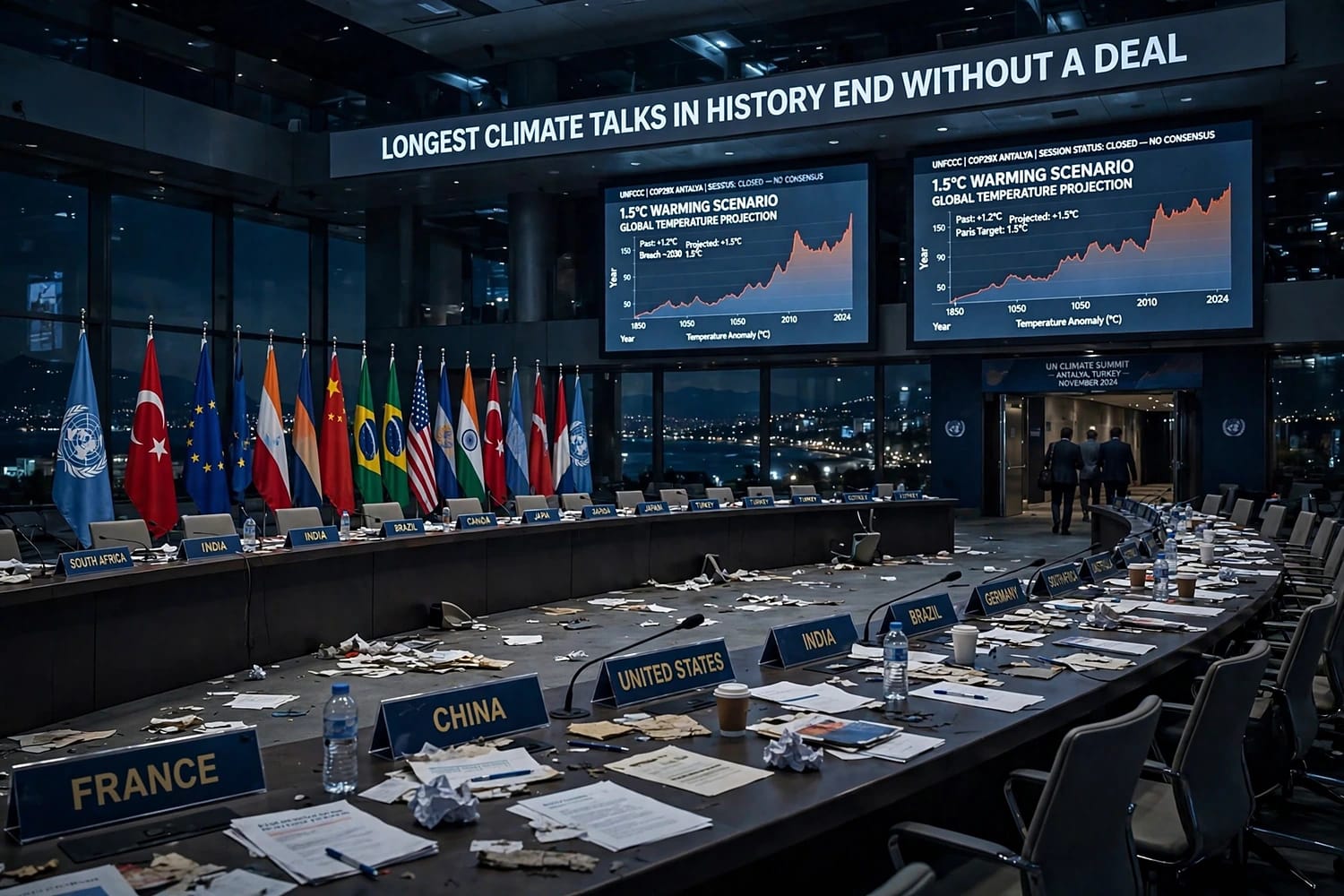
ANTALYA, TURKEY: The longest United Nations climate negotiations have ended without a global agreement after more than two weeks of intense discussions, exposing deep divisions among participating countries over fossil fuel reduction and financial assistance for climate-vulnerable nations.
The negotiations continued two days beyond their scheduled deadline but failed to produce a compromise on key climate commitments. Disagreements over the inclusion of fossil fuels in the final declaration emerged as one of the biggest obstacles to reaching an agreement.
The final draft reportedly made no direct reference to fossil fuels, drawing strong criticism from the European Union, Pacific island nations and other countries demanding stronger action against climate change.
Irish Minister Darragh O’Brien, speaking on behalf of the European Union, criticized the proposed text as greenwashing, saying it failed to reflect the urgency of the climate crisis. Panama and the Marshall Islands also rejected the draft, warning that delays in international action would further threaten vulnerable communities.
Dispute Over Fossil Fuels
Saudi Arabia, supported by Russia and other oil-producing countries, opposed including direct references to coal, oil and natural gas in the final agreement. Their position contributed to the removal of explicit fossil fuel commitments from the proposed text.
The disagreement highlighted continuing divisions between countries demanding a faster transition towards cleaner energy and nations concerned about the economic consequences of reducing dependence on fossil fuels.
Developing Countries Demand Financial Support
Developing nations, particularly those in Africa, expressed disappointment over the absence of clear new financial commitments from wealthier countries.
They argued that countries with limited resources are increasingly facing the consequences of rising temperatures, extreme weather, droughts and other climate-related disasters.
Developing nations called for additional funding to strengthen climate adaptation, protect vulnerable populations and improve resilience against environmental emergencies.
United Nations Secretary-General António Guterres also expressed disappointment over the outcome, criticizing the influence of fossil fuel interests and warning that political and economic considerations continued to delay meaningful climate action.
1.5-Degree Target Faces Growing Challenges
The failure to reach an agreement has raised further concerns about international efforts to limit global warming to 1.5 degrees Celsius above pre-industrial levels.
The breakdown of negotiations has renewed comparisons with the 2009 Copenhagen climate summit, when countries also failed to secure the expected political agreement.
Delegates left Antalya without a new global commitment, highlighting the continuing impact of geopolitical rivalries and competing economic interests on international climate diplomacy.
The outcome has increased pressure on world leaders to strengthen cooperation, address fossil fuel dependence and provide financial assistance to countries most vulnerable to climate change.
With global temperatures continuing to rise and climate-related disasters becoming increasingly severe, the latest setback has underscored the growing gap between international climate commitments and the action required to achieve them.