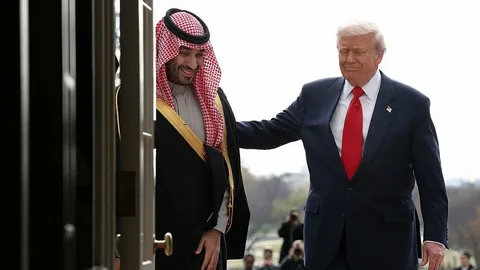
The United States and Saudi Arabia have officially signed a landmark agreement with Saudi Arabia on civilian nuclear cooperation, marking one of the most significant and debated energy and security deals of the Trump presidency. The deal was formally announced by the US Department of Energy on Wednesday, July 22, 2026, and immediately sent shockwaves through diplomatic circles around the world.
US Energy Secretary Chris Wright and Saudi Minister of Energy Prince Abdulaziz bin Salman signed what is officially known as a “123 Agreement” a reference to Section 123 of the US Atomic Energy Act of 1954. A separate bilateral safeguards agreement was signed alongside it. The Trump administration described the deal as “historic,” saying it would lay the legal and commercial foundation for a decades-long, multibillion-dollar partnership between the two countries in the nuclear energy sector.
Background: What Is a 123 Agreement?
A 123 Agreement is the legal framework that allows the United States to share civilian nuclear technology, material, and expertise with another country. Every such deal must be submitted to the US Congress for a mandatory review period before it can fully take effect.
The agreement is expected to last for 30 years and allow US companies, including Westinghouse, a Pittsburgh-based nuclear energy giant, to help develop Saudi Arabia’s civilian nuclear sector. This gives American firms a significant commercial foothold in one of the world’s fastest-growing energy markets.
The original framework for this agreement dates back to the Biden administration. A Trump administration framework for civil nuclear cooperation had been publicly announced in the fall of 2025, with Energy Secretary Chris Wright describing it as including bilateral safeguard agreements to bring US nuclear technology to the kingdom, while stipulating a firm commitment to nonproliferation.
In 2009, the United Arab Emirates signed a so-called “123 Agreement” with Washington before opening its Barakah nuclear power plant, agreeing not to enrich uranium or reprocess spent nuclear fuel a model that non-proliferation experts have often described as the “gold standard.” The Saudi deal, critics argue, falls well short of this benchmark.
The Uranium Enrichment Controversy
The most controversial element of the Trump Saudi Arabia nuclear deal is what it does not include. Unlike the UAE agreement, the Saudi deal does not require Riyadh to permanently give up uranium enrichment on its own soil a capability that experts warn could one day be redirected toward building nuclear weapons.
The administration, in its 2025 waiver report to Congress, said that the draft bilateral US-Saudi safeguards agreement “employs additional safeguards and verification measures to the most proliferation-sensitive areas enrichment, conversion, fuel fabrication, and reprocessing.” Without providing specific details, the waiver report said the IAEA would play a role in safeguarding the Saudi nuclear program but would not have standardized IAEA oversight via the Additional Protocol.
The agreement would not require the enhanced International Atomic Energy Agency safeguards known as the Additional Protocol, which gives inspectors broader access to nuclear facilities and is designed to help detect undeclared nuclear activities. Instead, it would rely on a bilateral US-Saudi verification arrangement that critics say offers far weaker guarantees.
This has triggered sharp concerns on Capitol Hill. Democrats and some Republicans have raised alarms about creating a double standard, given that the United States simultaneously struck Iran for its own uranium enrichment activities.
What the Deal Actually Means
The agreement between the US and Saudi Arabia is fundamentally about energy. Saudi Arabia has long sought to develop nuclear power for domestic electricity generation, partly to free up more of its oil and gas reserves for export a commercially rational calculation for a country sitting atop some of the world’s largest hydrocarbon reserves.
The deal will provide US companies with access to Saudi Arabia’s nuclear energy program, boosting exports of American technology in the sector. For the Trump administration, this is partly a jobs and trade story keeping American nuclear companies competitive against Russian and Chinese rivals who have aggressively expanded their global nuclear export businesses.
The Department of Energy announced the agreement’s signature on Wednesday afternoon. It will next go to Congress for a mandatory review period. Congress has 90 days to review the deal. Lawmakers could, in theory, block it though that remains a high bar given the administration’s strong backing.
Official Statements and Reactions
Energy Secretary Chris Wright celebrated the signing, calling it a turning point in US-Saudi energy relations. He stated that the deal reflects a shared commitment to peaceful nuclear energy and brings American expertise to one of the world’s most strategically important countries.
“Together, with bilateral safeguard agreements, we want to grow our partnership, bring American nuclear technology to Saudi Arabia and keep a firm commitment to nonproliferation,” Wright said in a statement accompanying the announcement.
Critics, however, were far less enthusiastic. Congressman Joaquin Castro and Senator Edward Markey previously warned: “Saudi Arabia has, on numerous occasions, expressed its interest in acquiring nuclear weapons. Such a development would be highly destabilizing for the Middle East and could lead other states to reconsider their nuclear options. Giving Saudi Arabia nuclear technology without the strongest safeguards is a recipe for disaster.”
Regional and Global Impact
The signing of this agreement with Saudi Arabia carries consequences well beyond energy policy. The Middle East is already one of the world’s most volatile regions, and the introduction of uranium enrichment capabilities in a Gulf state raises the stakes considerably.
Iran, which has long been at loggerheads with Saudi Arabia over regional influence, ideology, and proxy conflicts across Yemen, Syria, and Lebanon, will almost certainly view the deal with deep suspicion. Tehran has consistently demanded that other countries in the region remain nuclear-free while pursuing its own enrichment program a position that now looks increasingly untenable.
Israel, meanwhile, finds itself in an awkward position. Historically, it has relied on US pressure to keep its neighbors from acquiring nuclear capabilities. The Saudi deal, approved by a US administration that is simultaneously Israel’s closest ally, forces Jerusalem to reckon with a shifting regional calculus.
For the broader international nonproliferation regime, the deal sets a worrying precedent. If the world’s most powerful country is willing to offer nuclear technology without demanding the highest verification standards, it becomes far harder to insist that others meet those standards.
Saudi Arabia’s Nuclear Ambitions: A Long History
Saudi Arabia’s desire for nuclear capability did not begin with this agreement. Crown Prince Mohammed bin Salman made headlines in 2018 when he publicly stated that if Iran developed a nuclear bomb, Saudi Arabia would follow suit “as soon as possible.” That statement was widely interpreted as a direct declaration of Saudi nuclear intent.
Saudi Arabia has also maintained a long and murky relationship with Pakistan’s nuclear program. Saudi Arabia had helped fund Pakistan’s nuclear programme since the early 1970s, and Pakistan had reciprocated by providing troops to defend the holy cities of Mecca and Medina. During the 1970s and 1980s, Pakistan received Saudi financial backing to develop nuclear weapons, with the assumption that Pakistani missiles would give the kingdom a “nuclear umbrella.”
This historical relationship adds another layer of complexity to the current US-Saudi nuclear deal. Critics worry that Riyadh’s pursuit of domestic enrichment is not purely about electricity it is also about strategic positioning in an increasingly unstable region.
What Comes Next
The deal now heads to the US Congress, where it faces a 90-day mandatory review. The administration has framed the agreement as a commercial and strategic win, but significant congressional scrutiny is expected particularly from members with strong nonproliferation credentials.
Saudi Arabia, for its part, is expected to move quickly to capitalize on the agreement. With US companies like Westinghouse now formally authorized to engage with the Saudi nuclear program, project planning and commercial negotiations are likely to accelerate rapidly.
The broader question whether Riyadh will ultimately seek to enrich uranium domestically and what safeguards will govern that process remains open. The deal provides a legal framework, but the details of implementation will determine whether the Trump Saudi Arabia nuclear agreement becomes a model for responsible civilian nuclear cooperation or a cautionary tale about the erosion of nonproliferation norms.
Frequently Asked Questions (FAQs)
Who financed Pakistan’s nuclear program?
Pakistan’s nuclear weapons development was largely financed through a combination of internal government funding, Chinese technical and material assistance, and significant financial support from Saudi Arabia. Saudi oil is widely believed to have financed the initial development of Pakistan’s uranium enrichment plant in the 1970s, and Riyadh is believed to view Islamabad as a potential quick source of atomic bombs if it ever feels sufficiently threatened. During the 1970s and 1980s, Pakistan received Saudi financial backing to develop nuclear weapons, with the assumption that Pakistani missiles would give the kingdom a “nuclear umbrella.” In exchange for financial support over the decades, Saudi Arabia is widely believed to have sought assurances of Pakistani nuclear protection in the event of an existential threat. Libya also provided financial assistance to Pakistan’s program in earlier years, though Tripoli later abandoned its own nuclear ambitions and handed over relevant equipment to the United States.
Which 7 countries have nuclear power as weapons states?
The world currently recognizes nine countries as possessing nuclear weapons, though the commonly cited “Big 7” or founding nuclear states refers to those acknowledged under the Nuclear Non-Proliferation Treaty (NPT) and beyond. The United States was the first to develop and use nuclear weapons in 1945. Russia inherited the Soviet arsenal and remains the world’s largest nuclear power by warhead count. The United Kingdom developed its own independent deterrent and maintains a submarine-based nuclear force. France operates a fully independent nuclear arsenal and has never integrated it into NATO command structures. China has undergone rapid modernization of its nuclear forces in recent years and is now estimated to possess several hundred warheads. India tested nuclear devices in 1974 and again in 1998, declaring itself a nuclear weapons state outside the NPT framework. Pakistan followed with its own tests in 1998, becoming the seventh declared nuclear state.
Why is Saudi Arabia against Iran?
The rivalry between Saudi Arabia and Iran is one of the defining conflicts of the modern Middle East, rooted in religion, history, politics, and competition for regional dominance. At its core, the two countries represent competing visions of Islamic governance and authority Saudi Arabia as the custodian of Sunni Islam and the holy cities of Mecca and Medina, and Iran as the center of the Shia Islamic revolution that swept to power in 1979. The Iranian Revolution was a direct ideological challenge to the Saudi monarchy, and relations have been adversarial ever since. Both countries have fought proxy wars across the region for decades in Yemen, where Saudi Arabia backs the internationally recognized government against Iran-supported Houthi forces; in Syria, where Tehran backed Bashar al-Assad while Riyadh supported opposition factions; in Lebanon, where Iran funds and arms Hezbollah; and in Iraq, where both countries compete for political influence over the Shia-majority government.