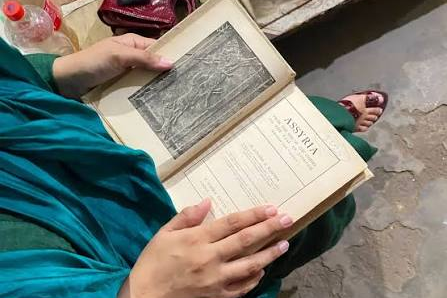
Introduction: A Forgotten Art Surviving in the Streets of Lahore
In the narrow streets of Lahore, some traditions continue quietly despite the rapid changes taking place around them. Behind an old workshop door, a skilled craftsman still works with paper, thread, glue and traditional tools, carefully repairing and binding books by hand. His work represents a generation of artisans whose knowledge has been developed through years of patience and experience.
However, traditional bookbinding in Lahore is facing an uncertain future. As modern printing technology, automated machinery and mass production become more common, the demand for handmade books has declined. For experienced craftsmen, keeping this traditional profession alive is becoming increasingly difficult.
The story of Saeed Ahmed, a Lahore-based bookbinder who has dedicated decades to this profession, highlights the challenges facing traditional craftsmanship in Pakistan.
Background: A Family Tradition Passed Through Generations
Traditional bookbinding has long played an important role in the publishing and literary culture of Lahore. Before modern printing facilities became widely available, skilled bookbinders were essential to producing, repairing and preserving books.
Many craftsmen learned the profession within their families. Knowledge was transferred from fathers to sons through practical experience rather than formal education. Each generation developed its own techniques for handling paper, stitching pages and creating durable covers.
One such family tradition began with Abdul Aziz, who established a bookbinding workshop in Lahore in 1972. He had started learning the profession at the age of 22 and later worked at a government printing press for more than three decades.
His son, Saeed Ahmed, gradually learned the same skills by working alongside his father. Although he also trained as a motor mechanic, his attachment to the family profession encouraged him to continue the workshop.
Today, the workshop represents more than a small business. It carries decades of experience and traditional knowledge that could become difficult to recover if the profession disappears.
Saeed Ahmed and His Lifelong Commitment to Bookbinding
Saeed Ahmed has spent nearly five decades working with books. His experience includes traditional binding as well as the restoration of old and damaged publications.
His decision to continue his father’s work was influenced by a personal connection with the craft. In an interview, he explained his motivation:
“I had an attachment to the craft and wanted to continue what my father had started.”
This statement reflects the emotional connection many traditional artisans have with their professions. For them, craftsmanship is not simply a source of income. It is also a family identity and a responsibility to preserve knowledge inherited from previous generations.
Saeed’s father, now 90, has stopped regularly visiting the workshop. His declining health has made it increasingly difficult for him to continue the work he practised for most of his life.
As a result, Saeed has become responsible for maintaining the family tradition almost entirely on his own.
How Traditional Bookbinding Works
Handmade bookbinding requires concentration, technical understanding and considerable patience. Unlike automated production, every stage is completed carefully by the craftsman.
The process begins with arranging and folding individual sheets of paper. These sheets are then organised into sections before being stitched together to create the central structure of the book.
The spine is strengthened to ensure that the pages remain securely attached. Finally, the craftsman measures and prepares the covers before assembling the complete volume.
Even a small mistake can affect the durability and appearance of the finished book. This is why experienced bookbinders depend on years of practice to achieve consistent results.
The Importance of Handmade Book Restoration
Book restoration is another important part of Saeed Ahmed’s work. Unlike ordinary binding, restoration requires an understanding of the original condition and structure of a damaged publication.
Some books arrive with loose pages, broken spines, torn covers or paper weakened by age. In certain cases, only fragments of the original binding remain.
The craftsman must examine each publication and decide which parts can be repaired and which materials need replacement. The objective is to preserve as much of the original book as possible.
Saeed has also restored a 60-year-old Bible that had suffered serious damage from insects and ageing. Such projects demonstrate how traditional skills can protect historical and religious publications from further deterioration.
Why Traditional Bookbinding Is Disappearing
The biggest challenge facing traditional bookbinders is the increasing use of modern machinery. Automated equipment allows publishers and printing businesses to produce large quantities of books quickly and at comparatively lower costs.
For commercial publishers, machine-based production offers speed, consistency and the ability to handle large orders. However, these advantages have reduced opportunities for independent craftsmen who specialise in handmade binding.
Changing Reading and Publishing Habits
The way people access information has also changed. Digital publications, electronic books and online reading platforms have created alternatives to traditional printed material.
Although printed books continue to attract readers, the market for certain types of handmade publications has become smaller.
Small workshops struggle to compete with large printing businesses that have greater production capacity and access to modern equipment.
Financial Difficulties for Independent Artisans
Another major concern is the financial sustainability of traditional workshops. Handmade work requires time, specialised knowledge and considerable attention to detail.
However, customers do not always recognise the value of the labour involved. This makes it difficult for independent craftsmen to charge prices that adequately support their work.
Saeed has also faced difficulties finding an apprentice willing to spend years learning the profession. Even if someone is interested, paying a trainee while maintaining a small workshop can create additional financial pressure.
He has considered selling some of his machinery and continuing restoration work from home to reduce operating expenses.
Lahore’s Cultural Heritage and the Importance of Traditional Crafts
Lahore is widely recognised for its literary, artistic and historical traditions. Its old neighbourhoods, educational institutions, publishing businesses and book markets have contributed to a strong reading culture over generations.
The preservation of traditional craftsmanship is closely connected to this wider cultural identity.
Readers interested in the city’s historical character can also explore Pakistan Chronicle’s feature on Lahore Food Street and its historical heritage.
Similarly, the importance of preserving books and historical knowledge can be understood through the country’s wider literary activities. Pakistan Chronicle has also covered the sixth annual book fair in Attock, which brought together writers, literary figures and book lovers.
These activities demonstrate that books remain an important part of cultural and intellectual life in Pakistan.
Why Traditional Crafts Deserve Recognition
Traditional artisans contribute to society in ways that often remain unnoticed. Their work preserves techniques, knowledge and practical skills that cannot always be reproduced through automated processes.
Book restoration is particularly valuable because old publications may contain historical information, family records, rare illustrations and literary material that cannot easily be replaced.
Preserving these objects allows future generations to access knowledge and understand the experiences of earlier periods.
Pakistan’s wider historical and intellectual heritage also deserves attention. Readers can explore the story of Syed Babar Ali and his contribution to Pakistan to understand another aspect of the country’s institutional and educational development.
Impact: What Could Be Lost If Traditional Bookbinding Disappears?
The decline of handmade bookbinding is not only an economic concern. It also raises questions about cultural preservation, employment opportunities and the survival of specialised knowledge.
Impact on Cultural Preservation
When an experienced bookbinder retires without training another generation, years of practical knowledge may disappear.
Techniques for repairing fragile paper, stitching old pages and reconstructing damaged covers require experience. If workshops close, these skills may become increasingly difficult to find.
Impact on Small Businesses and Employment
Traditional workshops provide livelihood opportunities for independent artisans. Their decline can affect families that have depended on these professions for generations.
Supporting small craftsmen can help maintain local employment while encouraging younger people to explore specialised technical careers.
Impact on Future Generations
Young people often choose professions that offer better financial security and more predictable career opportunities. Traditional craftsmanship may appear less attractive when training takes years and income remains uncertain.
Without apprenticeships, financial support and greater public recognition, the gap between older craftsmen and younger generations could continue to grow.
How Can Pakistan Preserve Its Traditional Bookbinding Industry?
Preserving traditional bookbinding requires cooperation between artisans, educational institutions, publishing businesses and cultural organisations.
First, workshops should receive greater public attention through exhibitions, cultural festivals and demonstrations. These activities can introduce younger audiences to the skill and effort involved in handmade book production.
Second, technical institutions and vocational training centres could develop short courses in bookbinding and restoration. Experienced craftsmen could participate as instructors and share practical knowledge.
Third, libraries, universities and collectors could support local restoration specialists by providing regular work for repairing old publications.
There is also an opportunity to promote handmade binding as a specialised service for rare books, personal collections, historical documents and premium publications.
Digital platforms can help artisans display their work, reach new customers and explain the value of traditional techniques.
Most importantly, craftsmen should receive fair payment for their time and expertise. Cultural preservation cannot depend entirely on personal dedication when artisans are struggling to earn a sustainable income.
Conclusion: Keeping the Pages of History Alive
The story of Saeed Ahmed is a reminder that some of Pakistan’s most valuable traditions survive through the dedication of ordinary people working far from public attention.
For nearly five decades, he has continued a profession inherited from his father, preserving books and practising techniques that require patience and experience. Yet the future of this family workshop remains uncertain as modern machinery changes the publishing industry.
Traditional bookbinding in Lahore deserves recognition not simply as an old profession but as an important part of the country’s cultural and literary heritage.
The survival of this craft will depend on whether younger generations are encouraged to learn it and whether customers, institutions and businesses are willing to support skilled artisans.
Books preserve stories, knowledge and memories. The craftsmen who repair and protect them deserve to have their own stories remembered as well.
Frequently Asked Questions (FAQs)
1. What is traditional bookbinding in Lahore?
Traditional bookbinding in Lahore is a handmade process in which individual sheets of paper are arranged, folded, stitched and covered to create complete books. Skilled artisans use specialised tools and techniques to produce durable bindings. The profession has historically supported publishers, libraries, educational institutions and private book collectors across the city.
2. Who is Saeed Ahmed, the Lahore bookbinder?
Saeed Ahmed is an experienced bookbinder from Lahore who has spent nearly five decades practising traditional binding and book restoration. He learned the profession from his father, Abdul Aziz, who established their family workshop in 1972. Saeed continues the family tradition while facing difficulties caused by declining demand and modern production methods.
3. Why is traditional bookbinding becoming less common in Pakistan?
Traditional bookbinding is becoming less common because modern machinery can produce large quantities of books more quickly and at lower commercial costs. Digital reading habits have also changed the publishing market. As a result, independent craftsmen receive fewer orders, making it difficult to maintain their workshops and attract new apprentices.
4. What is the difference between bookbinding and book restoration?
Bookbinding involves assembling loose sheets of paper, stitching them together and attaching protective covers to create a finished book. Book restoration focuses on repairing existing publications that have become damaged through age, handling or environmental conditions. Restoration requires additional knowledge because the craftsman must preserve original materials wherever possible.
5. Why is handmade book restoration important?
Handmade restoration helps protect rare, old and valuable publications from permanent damage. Historical books, religious texts, family records and literary collections may contain information that cannot easily be replaced. Skilled restoration allows these materials to remain accessible to researchers, collectors and future generations.
6. What challenges do traditional bookbinders face today?
Traditional bookbinders face several challenges, including competition from automated machinery, declining customer demand, rising workshop expenses and limited opportunities for apprentices. Many experienced artisans also struggle to receive fair payment for their labour. These difficulties make it challenging to continue a profession that requires years of practical training.
7. How can young people learn traditional bookbinding skills?
Young people can learn bookbinding through vocational training programmes, apprenticeships and direct instruction from experienced craftsmen. Educational institutions and cultural organisations can also arrange workshops where students learn paper handling, stitching, cover preparation and basic restoration techniques. Such opportunities can help introduce traditional craftsmanship as a practical career.
8. How can people help preserve traditional bookbinding in Lahore?
People can support traditional bookbinding by purchasing handmade products, choosing skilled artisans for book restoration and recommending their services to libraries and collectors. Educational institutions can commission restoration projects and organise training opportunities. Greater public awareness and sustainable financial support can help ensure that these valuable skills continue into future generations.