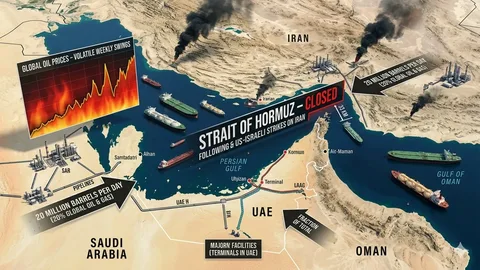
The Strait of Hormuz the world’s most critical oil shipping lane remains at the center of a dangerous geopolitical standoff in April 2026. Iran effectively closed the Strait of Hormuz following US and Israeli military strikes in late February. Now, with a US naval blockade in place and peace talks ongoing, the question on the world’s mind is: will the strait reopen?
Pakistan has emerged as a key mediator, with Pakistani Army Chief Asim Munir traveling to Tehran on April 15–16, 2026 to relay messages between Washington and Iran. Pakistani sources have described expectations of a “major breakthrough” in the coming days.
Background
The Strait of Hormuz is a narrow waterway located between Iran to the north and Oman and the UAE to the south. Looking at any Strait of Hormuz map, its strategic importance becomes instantly clear it is the only sea passage connecting the Persian Gulf to the open ocean.
Until the US–Israeli war against Iran, the Strait of Hormuz was open and about 25% of the world’s seaborne oil trade and 20% of the world’s liquefied natural gas (LNG) passed through it. This makes the Strait of Hormuz importance impossible to overstate for global energy security.
Shipping traffic through the Strait of Hormuz has been largely blocked by Iran since February 28, 2026, when the United States and Israel launched an air war against Iran and assassinated its Supreme Leader Ali Khamenei
Details: The Strait of Hormuz Blockade What Is Happening Now?
The Strait of Hormuz conflict has escalated in layers. First, Iran closed the Strait of Hormuz to most international shipping in retaliation for the US-Israeli war. Then, after a temporary ceasefire on April 8, Iran began controlling traffic through the strait and charging tolls of over $1 million per ship.
Following the failure of talks in Islamabad, Trump announced that the US Navy itself would blockade the strait from April 13 and clear it of mines. According to US Central Command, only ships entering and leaving Iranian ports will be blockaded, while freedom of navigation will remain for other vessels.
The United States’ blockade of Iranian ports has been “fully implemented” and put a halt to most of Tehran’s economic activity in just a day and a half, the head of US Central Command said Wednesday.There were six total transits of the Strait of Hormuz on Monday, although there could be additional “dark transits” where ships sail without their automatic identification systems.This is a dramatic drop from the normal flow of dozens of vessels per day.
The blockade applies to any ship that visits Iranian ports, regardless of country of ownership or flag, including China, which does purchase Iranian oil.
Strait of Hormuz Open for Which Countries?
Iran has selectively allowed some nations to use the waterway. Iran’s Foreign Minister Abbas Araghchi announced that ships owned by five nations including China, Russia, India, Iraq, and Pakistan would be allowed to transit the Strait of Hormuz.
Malaysian and Thai vessels were also granted access after successful talks with Iran’s President Masoud Pezeshkian. Iran also agreed to allow Philippine-flagged vessels and Filipino seafarers to cross the strait following separate negotiations.
Additionally, Iran agreed to a UN request to allow humanitarian and fertilizer shipments through the strait to address disruptions to the fertilizer supply during the spring planting season.However, with the new US naval blockade now in effect, even these exemptions face uncertainty. The Strait of Hormuz conflict has made the legal and practical status of shipping deeply complicated for all nations.
Pakistan’s Mediation: Hopes for Permanently Opening the Strait of Hormuz
Pakistani officials are expecting a “major breakthrough” in talks between Iran and the United States on Tehran’s nuclear programme, as Islamabad steps up diplomatic efforts to end a war that has killed thousands of people.
A high-level Pakistani delegation, headed by Army Chief Asim Munir, arrived in Tehran to deliver a message from the US to the Iranian leadership, according to Iran’s Press TV broadcaster.
The three core issues on the negotiating table are Iran’s nuclear programme, control of the Strait of Hormuz, and compensation for wartime damages. Iran has effectively closed the Strait of Hormuz, causing a surge in global oil prices, and mediators are pressing for a compromise.Trump himself has claimed he is focused on permanently opening the Strait of Hormuz. Trump said China is “very happy that I am permanently opening the Strait of Hormuz,” after Beijing labeled the US blockade “dangerous.”
Quotes
Al Jazeera’s correspondent covering the US-Iran talks said Pakistani officials were expecting “a major breakthrough on the nuclear front” and that delegates were continuing to relay messages back and forth between Washington and Tehran.
Iran’s armed forces threatened to block shipping from the Persian Gulf, the Sea of Oman, and the Red Sea if the US “creates insecurity for Iranian commercial ships and oil tankers.”White House Press Secretary Karoline Leavitt said that further negotiations would likely be held in Islamabad, calling Pakistan-mediated discussions “productive and ongoing.” She added: “We feel good about the prospects of a deal.”
Impact: Global Consequences of the Strait of Hormuz Conflict
The economic damage from the Strait of Hormuz blockade has been severe and widespread. The restriction of shipments by more than 90% around 10 million barrels per day of oil production raised energy and agricultural input costs worldwide. Brent crude prices jumped 10–13% in early trading, with analysts warning they could reach $100 per barrel or higher if disruptions persist.
This will impact inventories of things like shoes, furniture, and electronics, according to Gene Seroka, the executive director of the Port of Los Angeles.
The Strait of Hormuz importance goes beyond oil. LNG, petrochemicals, and container goods all pass through this narrow corridor. Nations from Japan and South Korea to India and Germany depend on it for energy imports. A prolonged Strait of Hormuz blockade could trigger a global recession.
Oman’s deep-water ports of Duqm, Salalah, and Sohar in the Arabian Sea outside the strait allow tankers to bypass the choke point, but these routes are longer, costlier, and unable to handle the full volume of normal Hormuz traffic.
Conclusion: What Comes Next?
The situation around the Strait of Hormuz update today remains fluid. A deal could come within days if Pakistan’s mediation succeeds or the conflict could escalate further if either side walks away.
The central sticking point remains the duration of any enrichment freeze by Iran and the country’s stockpile of 440 kilograms of highly enriched uranium, with both sides currently stuck between five years and twenty years of no enrichment.
If a deal is reached, permanently opening the Strait of Hormuz will be the top priority for global markets. If talks collapse, Iran has threatened to extend disruptions to the Red Sea and the Sea of Oman which would be catastrophic for world trade.
The world is watching the Strait of Hormuz map very closely. The next 48–72 hours may determine whether diplomacy or further conflict defines the fate of this irreplaceable global waterway.
FAQs
Q1: Which countries control the Strait of Hormuz?
The Strait of Hormuz passes through the territorial waters of both Iran and Oman. Iran controls the northern shore, while Oman and the UAE border the southern side. Under international maritime law, it is classified as an international strait open to all nations though Iran disputes this and has repeatedly sought to leverage control over it.
Q2: Did Iran close the Strait of Hormuz?
Yes. Iran effectively closed the Strait of Hormuz beginning February 28, 2026, following US and Israeli military strikes. The IRGC issued warnings forbidding passage, launched attacks on merchant ships, and reportedly laid sea mines in the strait. Iran has since selectively allowed certain nations’ vessels to pass, while charging tolls exceeding $1 million per ship for others.
Q3: Which countries will be affected if the Strait of Hormuz is closed?
Nearly every major economy in the world would be affected. The most directly impacted countries include Japan, South Korea, India, China, and European nations that rely on Persian Gulf oil and LNG. Gulf states like Saudi Arabia, Kuwait, UAE, and Iraq depend on the strait to export their oil. A permanent closure would spike global energy prices, disrupt supply chains, and risk a worldwide economic slowdown.