Pakistan is intensifying its role as the key mediator in the US-Iran war, with Army Chief Field Marshal Asim Munir traveling to Tehran to arrange a second round of peace talks in Islamabad. The diplomatic push comes as a fragile two-week ceasefire, brokered by Pakistan, edges closer to its expiration date.
Background
On February 28, 2026, the United States and Israel launched an air war against Iran, killing its Supreme Leader and many other senior officials, while destroying a large number of military and government targets. Iran responded with missile and drone strikes against Israel, US bases, and US-allied countries in the Middle East, and shut down the Strait of Hormuz disrupting global trade.
The conflict rapidly escalated into a regional crisis, threatening energy supplies worldwide. Tehran’s decision to effectively shut down the Strait of Hormuz through which 20 percent of the world’s oil and gas passes during peacetime rattled global markets and drove energy prices to record highs.
Pakistan Steps In: Building the Case for Mediation
As other potential mediators stepped back, Pakistan positioned itself as a credible bridge between Washington and Tehran. Pakistan managed what others could not, owing to its geography, religion, and regional relations. It has close ties with Gulf states, including Saudi Arabia and Qatar. It shares a long and sensitive border with Iran. And its relationship with China adds another layer of strategic relevance.
Pakistan’s role in the current diplomacy draws on relationships built over time. When Army Chief Munir visited the White House for an unprecedented lunch meeting with Trump in June 2025, Trump publicly said that Pakistan “knows Iran very well, better than most.”
On March 23, Pakistan formally offered to host negotiations. Pakistani Prime Minister Shehbaz Sharif echoed the offer publicly on X, tagging Trump, Araghchi and Witkoff, signaling Islamabad’s readiness to facilitate direct engagement.
The Islamabad Talks: Historic But Inconclusive
The Pakistani capital woke up on April 11 to a lockdown roads were sealed, checkpoints appeared, and more than 10,000 security personnel were deployed ahead of the ceasefire talks between the United States and Iran.It was the highest-level direct meeting between Washington and Tehran since the 1979 Islamic Revolution.
More than 12 hours of face-to-face negotiations between the United States and Iran ended without agreement in Islamabad, leaving a fragile two-week ceasefire as the only barrier between diplomacy and a return to war.
US Vice President JD Vance, who led the American delegation, told reporters that Iran chose “not to accept our terms” at the talks. He said the US needs to see a “fundamental commitment” from Tehran not to develop nuclear weapons.Despite the impasse, Pakistan’s mediation role remained intact and respected by both sides.
Quotes From Key Officials
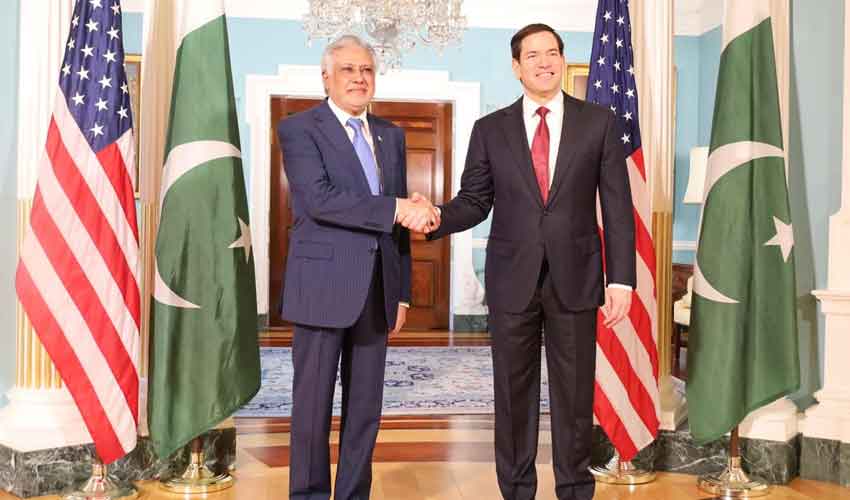
Pakistani Deputy Prime Minister and Foreign Minister Ishaq Dar said after the conclusion of the talks: “Pakistan has been and will continue to play its role to facilitate engagements and dialogue between the Islamic Republic of Iran and the United States of America in the days to come.”
Professor Ishtiaq Ahmad of Quaid-i-Azam University said: “The talks did not collapse; they concluded without agreement but with a defined US offer on the table and the channel still intact. Pakistan’s role was to move the crisis from escalation to structured engagement, which it achieved.”
US President Donald Trump praised Pakistan’s Army Chief, saying his negotiators were likely to return to Pakistan thanks largely to the “great job” Munir was doing to moderate the talks.
Pakistan’s Army Chief Flies to Tehran
In the most significant development of the latest diplomatic push, Pakistan Army Chief Asim Munir traveled to Tehran on Wednesday evening, heading a high-level delegation focused on arranging a fresh round of negotiations between Iran and the United States, a week before their fragile truce is due to expire.
Pakistani mediators are reportedly optimistic about a potential major breakthrough on Iran’s nuclear programme, which is cited as the reason for Munir’s rare diplomatic trip.
At the same time, Pakistan’s Interior Minister Mohsin Naqvi is also joining mediation efforts in Tehran, while Prime Minister Shehbaz Sharif is in Saudi Arabia for the first stop in a four-day Gulf tour. This multi-front diplomatic blitz underlines how seriously Islamabad is taking its mediator role.
The Three Core Sticking Points
Mediators in the conflict are pushing for a compromise on three main sticking points: Iran’s nuclear programme, control of the Strait of Hormuz, and compensation for wartime damages.
Iran’s Foreign Ministry spokesman said Iran is open to discussing the type and level of its uranium enrichment, but stated that the country “based on its needs, must be able to continue enrichment.”The war, now in its seventh week, has jolted markets and rattled the global economy as shipping has been cut off and airstrikes have torn through military and civilian infrastructure across the region.
Pakistan’s Balancing Act: Mediator and Defence Partner
Pakistan’s diplomacy is not without its contradictions. On April 11, Pakistani Prime Minister Shehbaz Sharif hosted US Vice President JD Vance for talks on the sidelines of the US-Iran negotiations. At almost the same time, Saudi Arabia’s Ministry of Defence confirmed the arrival of a Pakistani military force at King Abdulaziz airbase under the Strategic Mutual Defence Agreement signed last year.
On the one hand, Islamabad has been a central mediator between the US and Iran. On the other hand, the SMDA represents a commitment from Pakistan to militarily assist a key Gulf ally that was repeatedly hit by Iran before the ceasefire.
Pakistani officials insist they can manage both roles. A Pakistani official, speaking on condition of anonymity, said Islamabad remains committed to facilitating the process for as many rounds as required, adding that diplomatic contact between all sides continues.
Regional and Global Impact
Pakistan shares a 900-kilometer border with Iran and has close ties with both Iran and Saudi Arabia. It has adopted a policy of official neutrality while engaging in shuttle diplomacy, and faces domestic protests and an energy crisis linked to the conflict.
Pakistan launched Operation Muhafiz-ul-Bahr on March 9, 2026, deploying naval assets to protect Pakistani merchant ships and ensure the smooth flow of sea trade, as the country relies on the Gulf for about 90 percent of its oil imports.
Domestically, the Pakistani government announced a record-breaking increase in fuel prices, with petrol rising to PKR 458.40 and diesel reaching PKR 520.35 per litre a surge of over 40% within a single month resulting in massive protests and political criticism.
Conclusion: Diplomacy Still Alive
Despite the failure to reach a final agreement in Islamabad, Pakistan’s diplomatic role has drawn praise from both Washington and Tehran. Trump said the world should brace for an “amazing two days” as the war with Iran is close to ending, and White House press secretary Karoline Leavitt confirmed that additional talks with Iran would likely go forward in Islamabad.
Pakistan has proposed a second round of US-Iran talks, with Islamabad and Geneva being considered as possible host cities, though the location, timing, and composition of delegations had not yet been finalized.
The next few days will be pivotal. If Pakistan’s shuttle diplomacy succeeds in bringing both parties back to the table, Islamabad could cement its place as one of the most consequential mediators in modern geopolitical history.
FAQs
Does Pakistan support the US or Iran?
Pakistan has officially adopted a position of neutrality in the US-Iran war. It has condemned attacks by all sides, while simultaneously maintaining strong ties with both Washington and Tehran. Islamabad’s goal is to serve as a credible mediator rather than align with either power. However, Pakistan’s Strategic Mutual Defence Agreement with Saudi Arabia a key US ally places certain limits on that neutrality.
How is Pakistan involved in the Iran-Israel war?
Pakistan has emerged as the primary mediator between the US and Iran since the war began in February 2026. It brokered a two-week ceasefire, hosted the first-ever direct US-Iran peace talks in Islamabad on April 11–12, 2026, and is now pushing for a second round of negotiations. Pakistan Army Chief Asim Munir has personally traveled to both Washington and Tehran to advance the diplomatic process.
How did Pakistan respond to the attack on Iran?
Pakistan condemned the joint US-Israeli strikes on Iran that began on February 28, 2026. Islamabad called for immediate de-escalation and offered to host peace talks. At the same time, Pakistan launched Operation Muhafiz-ul-Bahr to protect its own shipping interests in the Strait of Hormuz. Domestically, the government dealt with large-scale protests, particularly from Pakistan’s Shia community, which strongly condemned the killing of Iran’s Supreme Leader.