Pakistan sits at a rare geographic crossroads on the world map. It borders China, Afghanistan, Iran, and India making it a natural hub for transcontinental trade. For decades, analysts have argued that Pakistan’s true economic power lies not just in its exports but in its potential as a transit and trade corridor nation.
That potential is now being activated. From the China-Pakistan Economic Corridor (CPEC) to a new Pakistan to Russia train route map, Islamabad is signing agreements, opening borders, and building infrastructure that could transform how goods move across Eurasia.
Pakistan Trade Routes: The Full Picture
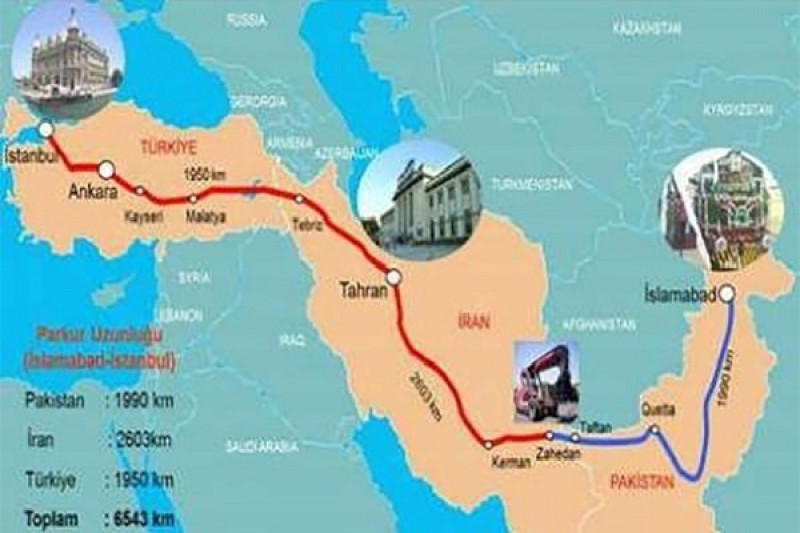
If you look at any Pakistan trade routes map today, several major corridors stand out. Each one connects Pakistan’s ports and cities to a different corner of the world and each one tells a different strategic story.
The most well-known is CPEC, a roughly 3,000-kilometre infrastructure project. Its goal is to connect the deep-sea ports of Gwadar and Karachi to China’s Xinjiang region by overland routes, reducing transit time for Chinese goods and energy imports.For Pakistan, CPEC is the backbone of its trade route ambitions on the world map.
But CPEC is only the beginning. Pakistan has now identified six key trade corridors linking Central Asia, Europe, and Russia through China, Afghanistan, and Iran with the aim of becoming an economic bridge, not just a transit point.These corridors include road networks from Karachi to Moscow via China and Kazakhstan, and from Gwadar to Moscow via Afghanistan, Turkmenistan, Iran, and Azerbaijan.
The Afghan Transit Trade Route Map
One of the most critical and contested sections of Pakistan’s trade route network is the Afghan transit trade route. This route has been central to regional commerce for decades and remains strategically vital today.
Under the Afghanistan-Pakistan Transit Trade Agreement (APTTA), Afghan trucks enter Pakistan via border crossings at Torkham, Ghulam Khan, and Chaman to transit goods across Pakistani territory, and to import goods from Pakistani ports in Karachi, Port Qasim, and Gwadar. Any Afghan transit trade route map must include these three key crossing points.
The transit routes begin and end at ports and border crossings including Peshawar-Torkham, Chaman-Spin Boldak, Ghulam Khan, Sost-Tashkurgan, Port Qasim, Karachi, and Gwadar port. These nodes form the core of Pakistan’s overland trade architecture with its western neighbour.
The trade volumes at these points are significant. In 2022–2023, Torkham border handled 55,530 TEUs with a trade value of nearly $1.99 billion, while Ghulam Khan border handled 15,444 TEUs worth approximately $827 million.
Ghulam Khan Border: Google Map’s Most Strategic Crossing
The Ghulam Khan border crossing in North Waziristan has emerged as one of the most discussed points on any Pakistan trade routes map. Search for “Ghulam Khan border Google map” and you will find a crossing that sits at the intersection of trade, security, and diplomacy.
Pakistan’s Foreign Ministry has described the opening of the Ghulam Khan border crossing terminal and allowing imports from Afghanistan as reflecting Pakistan’s resolve to help Afghanistan and facilitate its trade.The crossing serves Khost province in Afghanistan and provides a crucial alternative to the more congested Torkham route.
However, the route has also faced repeated disruptions. The Ghulam Khan route was shut by Pakistan after Afghan forces launched retaliatory attacks on Pakistani military installations, with all types of movement halted for days and hundreds of trucks loaded with fresh fruits and vegetables stranded on the Afghan side. These closures underscore how politics and security directly affect trade on Pakistan’s most sensitive corridors a fact that any serious analysis of the Afghan transit trade route map must acknowledge.
Pakistan to Russia Train Route Map: The New Silk Road
Perhaps the most exciting new development on any Pakistan to Russia train route map is the launch of a direct freight rail service connecting Karachi to Moscow. This is not a future dream it is happening now.
The route, established under the 9th Intergovernmental Commission (IGC), connects Karachi Port to Moscow through Iran, Turkmenistan, and Kazakhstan, with Pakistan Railways and Russian Railways (RZD) having signed a contract in May 2025 to lay the foundation for this landmark corridor.
The new overland corridor covers more than 7,000 kilometres, with freight expected to reach Moscow within 20–25 days at a cost of about USD 5,600 per container compared to sea transport which takes 35–45 days.The pilot train carries rice, one of Pakistan’s leading export commodities.
This inaugural freight service represents Pakistan’s formal entry into the International North-South Transport Corridor (INSTC) a bold alternative to Western-dominated maritime trade routes.It is a route that places Pakistan firmly on the world map of transcontinental logistics.
Pakistan’s Six Trade Corridors: A New World Map
Pakistan’s Federal Minister for Communications, Abdul Aleem Khan, outlined the six corridors at the Kazan Forum, highlighting Gwadar Port’s operational cargo services and Pakistan’s role in providing Central Asia access to warm waters.
The Gwadar-to-Central Asia corridor is also linked to CPEC, as China seeks to connect the route with Central Asian markets.This makes Gwadar not just a Pakistani asset but a regional one, serving Chinese, Afghan, and Central Asian trade simultaneously.
Since 2023, the National Logistics Cell (NLC) has been providing cargo services to Uzbekistan and Kazakhstan, giving Pakistan a working model to scale up its Central Asian trade ambitions.
Expert Quotes and Official Statements
Pakistan’s trade stakeholders have voiced clear optimism. Khyber Pakhtunkhwa Frontier Customs Agents Association President Zia-ul-Haq Sarhadi praised the government’s efforts at key border points, warning however that trade volume between Pakistan and Afghanistan has fallen from less than $2.5 billion to less than $1 billion over the last couple of years, largely due to hurdles at crossing points and policies of both countries.
On the Russia rail link, officials emphasized that the project reflects Pakistan’s growing focus. The new corridor reflects Pakistan’s focus on diversifying trade routes and reducing reliance on sea transport, making Pakistani goods more competitive in Russian and Central Asian markets.
Regional and Global Impact
The stakes of Pakistan’s trade route strategy go well beyond economics. On the world map, Pakistan’s network now intersects with China’s Belt and Road Initiative, Russia’s INSTC, and Central Asia’s need for warm-water port access all at once.
The Lahore-Moscow Railway Route complements Beijing’s Belt and Road Initiative by opening alternative routes to the West, potentially easing China’s overreliance on maritime supply chains. With Pakistan, Iran, Russia, and Central Asian republics all part of the Shanghai Cooperation Organization (SCO), regional security and trade cooperation are closely interlinked.
When Pakistan imposes restrictions on Afghan transit trade, Afghanistan also imposes restrictions on Commonwealth of Independent States (CIS) transits through Afghanistan meaning disruptions ripple outward and impact Pakistan’s transit agreements with CIS countries indirectly.This interdependence demands a stable and cooperative approach to all trade corridors.
Conclusion
Pakistan’s trade routes are at an inflection point. From the Afghan transit trade route map to the Pakistan to Russia train route map, from the Ghulam Khan border on Google map to CPEC on the world map every corridor tells the same story: Pakistan is positioning itself as the region’s indispensable trade bridge.
The coming years will determine whether Islamabad can convert this geographic advantage into durable economic growth. The infrastructure is being built. The agreements are being signed. What remains is consistent policy, border security, and regional diplomacy to keep these vital arteries open and flowing.
FAQs
Which major international trade route passes through Pakistan?
The most significant international trade route passing through Pakistan is the China-Pakistan Economic Corridor (CPEC), which connects Gwadar and Karachi ports to China’s Xinjiang region. Pakistan also lies on the International North-South Transport Corridor (INSTC) connecting South Asia to Russia via Iran and Central Asia, as well as the Afghanistan-Pakistan Transit Trade route linking landlocked Afghanistan to global markets.
What is Pakistan’s top 10 export?
Pakistan’s top exports include textiles and garments, rice, surgical instruments, leather products, sports goods, carpets and rugs, chemicals, cement, pharmaceutical products, and fresh fruits and vegetables. Textiles alone account for over 60% of total export earnings. Rice has recently gained attention as the first commodity on the new Pakistan-Russia freight train route.
What are the four major trade routes?
The four major global trade routes are: (1) the Maritime Silk Road through the Indian Ocean and South China Sea; (2) the Overland Silk Road / Belt and Road Initiative across Central Asia and Europe; (3) the International North-South Transport Corridor (INSTC) linking South Asia to Russia through Iran and Central Asia; and (4) the Trans-Siberian and Eurasian rail corridors connecting East Asia to Europe. Pakistan now has active access to or participation in all four of these.