The Strait of Hormuz remains at the center of the world’s most serious energy and security crisis in decades. Shipping traffic through the Strait of Hormuz has been largely blocked by Iran since February 28, 2026, when the United States and Israel launched an air war against Iran and assassinated its Supreme Leader Ali Khamenei. President Trump has repeatedly issued ultimatums, most recently threatening total destruction of Iran’s infrastructure. The crisis has now pulled in Pope Leo XIV, global energy markets, and international diplomacy all at once.
Background: How Did the Strait of Hormuz Crisis Begin?
The roots of this crisis go back to a dramatic military escalation. On February 28, 2026, the United States and Israel initiated coordinated airstrikes on Iran under Operation Epic Fury, targeting military facilities, nuclear sites, and leadership, resulting in the death of Supreme Leader Ali Khamenei.
Iran’s response was swift and severe. Iran responded with missile barrages on Israeli cities and US bases in the Gulf, including in the UAE, Qatar, and Bahrain, causing casualties and infrastructure damage. The conflict quickly spread beyond borders.
On March 4, Iran announced that the Strait of Hormuz was “closed,” and threatened to attack any ship that attempted to pass through it. This single act sent shockwaves across the entire global economy.
Trump’s 48-Hour Ultimatum: What Exactly Did He Say?
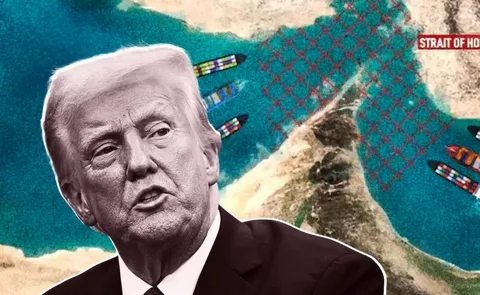
The Strait of Hormuz update today centers on a dramatic escalation from the White House. Trump threatened to attack Iran’s power plants if freedom of navigation was not fully restored at the Strait of Hormuz within 48 hours, a dramatic escalation as the US-Israeli war on Iran entered its fourth week.
Speaking directly on Truth Social, Trump warned of devastating consequences. Trump wrote: “Remember when I gave Iran ten days to MAKE A DEAL or OPEN UP THE HORMUZ STRAIT. Time is running out – 48 hours before all Hell will reign down on them.”
Senator Lindsey Graham, after speaking with Trump, said he was “completely convinced that he will use overwhelming military force against the regime if they continue to impede the Strait of Hormuz and refuse a diplomatic solution.”
Iran’s military did not back down quietly. Iran’s central military command responded, with General Ali Abdollahi Aliabadi calling Trump’s threat a “helpless, nervous, unbalanced and stupid action.”
Is the Strait of Hormuz Open or Closed Right Now?
This is the question the world is asking: is the Strait of Hormuz closed again? The answer is complex and troubling.
While a conditional ceasefire is in place, almost no shipping has used the strait and it remains effectively closed. The US has since announced a counter-blockade on ships seeking to use Iranian ports.
Even during brief periods when both sides claimed the waterway was “open,” the reality on the ground told a different story. Real-time maritime traffic only shows evidence of a near collapse, with vessel traffic levels sometimes as low as three vessels per day, compared to well over 120–140 in normal conditions.
About 2,000 ships remain stranded in the Gulf, waiting to be allowed through. And even if the strait is reopened to all traffic, the United States has said it will take six months to clear mines it believes have been laid by Iran.
A dual blockade has now formed. Since April 13, the US has blockaded Iranian ports, leading to a “dual blockade” of the strait with the US Navy blockading Iran and Iran blockading the Gulf.
Trump’s Peace Plan: What Is He Proposing?
Behind the aggressive rhetoric, diplomacy has also been happening quietly. Indirect negotiations have been led by Vice President Vance and Iran’s Speaker of Parliament Mohammad Bagher Ghalibaf, with the mediation of Pakistani military chief, Field Marshal Asim Munir.
Mediators from Pakistan, Turkey, and Egypt are working to bring the US and Iran back to the negotiating table. They are working on a compromise to bridge the gap between the two sides’ demands to stop the war and reopen the Strait of Hormuz.However, talks in Islamabad collapsed, and the US responded with escalation. Following the failure of the Islamabad Talks, the US Navy itself began to blockade Iranian ports from April 13, as Iran had until then been able to ship its own exports through the passage.
On April 17, Iran announced that the Strait of Hormuz would be open to commercial shipping during a truce connected to a ceasefire in Lebanon. But experts remain cautious about whether this will hold.
Global Impact: Energy Prices and Economic Shock
The human and economic cost of this crisis cannot be overstated. The halting of traffic in the Strait of Hormuz has caused “the largest oil supply disruption in the history” of the global market bigger than the 1970s oil shocks according to the International Energy Agency.
The closure of the strait has impacted 10% of global oil volumes and knocked offline 20% of global liquified natural gas (LNG) supplies, Baker Hughes CEO Lorenzo Simonelli confirmed, warning this will result in “persistent risk premiums for oil and LNG prices.”
Industry forecasters are not optimistic about a quick resolution. A Dallas Fed Energy survey of nearly 100 oil and gas executives found that nearly 80% believe the strait will not reopen until August or later.
Pre-conflict, around 3,000 vessels used the strait each month. Their numbers now stand at around 5% of this level, pushing up global oil and gas prices and benefiting both Russia and, temporarily, Iran.
Trump vs. Pope Leo: A Religious and Political Battle
Alongside the military conflict, Trump faces an unusual adversary Pope Leo XIV, the first American pope.
Pope Leo “appealed to Trump directly and, in a sense, pointed the finger to say: ‘You started this war, you have the power to end this war.’
Trump responded harshly. Trump called Pope Leo “weak on crime, and terrible for foreign policy,” adding: “If I wasn’t in the White House, Leo wouldn’t be in the Vatican.”
The Vatican has since escalated its pushback. Pope Leo XIV appointed three new US bishops who have expressed criticism of Trump’s actions, placing outspoken clerics in influential roles at a moment of strained relations between the Vatican and the White House.
Now Washington is trying to patch things up. Secretary of State Marco Rubio is reportedly planning to travel to the Vatican and Italy this week for meetings aimed at steadying relations after public spats between Trump, Pope Leo, and Italian Prime Minister Giorgia Meloni.
Hinglaj Mata Temple: Why It’s in the News
Amid global conflict, one story of peace stood out. The Hinglaj Mata Temple, recently seen in news, is located in Lasbela district, Balochistan, Pakistan, inside the Hingol National Park on the Makran coast.
Hinglaj Mata, also known as Hinglaj Devi and Nani Mandir, is a Hindu temple in Hinglaj, a town on the Makran coast in the Lasbela district of Balochistan. It is one of the 51 Shakta Pithas in Hinduism and lies in the middle of the Hingol National Park.
The temple made headlines in April 2026 for its massive annual festival. The three-day annual festival of the historic Hinglaj Mata Temple concluded successfully, with the gathering considered the third-largest Hindu religious congregation after similar festivals in India and Nepal. Around 300,000 pilgrims attended this year, with nearly a million devotees visiting the shrine in a year.
Senator Daanesh Kumar described the temple as one of the most sacred sites in Hinduism, saying: “The arrival of three times more pilgrims than last year is proof of interfaith harmony and Pakistan being a safe country.”
The Balochistan government had previously recognized the site’s global significance. The Balochistan government declared the historic Hinglaj Mata Temple a world tourism site, with special funds for its renovation and infrastructure development allocated in the provincial budget.
Quotes from Officials and Experts
“Time is running out 48 hours before all Hell will reign down on them.” President Donald Trump, Truth Social
“This regime has been severely crippled through Operation Epic Fury. Their reign of terror against the region and the world needs to come to an end, hopefully through a peace deal.” Senator Lindsey Graham
“The reopening of a chokepoint does not restore a system. It merely exposes how deeply it has already been broken.” OilPrice.com analysis
“The arrival of three times more pilgrims is proof of interfaith harmony and Pakistan being a safe country.” Senator Daanesh Kumar, on Hinglaj Mata festival
Conclusion: What Happens Next?
The Strait of Hormuz crisis is far from over. The events of 2026 have demonstrated that chokepoints are no longer passive geographic features they have become active instruments of power.
Negotiations continue in fits and starts, but trust between Washington and Tehran remains shattered. The world is watching whether diplomacy or military force will ultimately reopen one of the most vital waterways on earth. Meanwhile, energy markets, global food prices, and international alliances hang in the balance waiting for a resolution that experts say may not come before late 2026.
On the sidelines, stories like the Hinglaj Mata festival in Balochistan serve as a reminder that amid war and political fury, communities still find moments of peace, faith, and unity.
FAQs
Who controls the Strait of Hormuz?
The Strait of Hormuz is shared between the territorial waters of Iran and Oman. Iran has effectively been blocking the passage since February 28, 2026, while the US Navy has imposed a counter-blockade on Iranian ports since April 13, 2026. Neither side has full uncontested control at this time.
Is the Strait of Hormuz closed?
As of May 2026, the Strait of Hormuz remains effectively closed to normal commercial shipping. While a conditional ceasefire has been in place and Iran briefly announced it was open during a truce, real-time vessel traffic remains at roughly 5% of pre-conflict levels. Mines laid in the waterway also pose an ongoing danger, with the US saying clearance could take six months.
What exactly is Trump’s peace plan?
Trump’s peace plan involves demanding that Iran fully and unconditionally reopen the Strait of Hormuz in exchange for halting US military strikes on Iranian infrastructure. Indirect talks have been mediated by Pakistan, Turkey, and Egypt, with Vice President Vance engaging Iran’s parliamentary speaker. However, no final agreement has been reached, and the US has backed its demands with threats to strike Iran’s power plants and energy facilities if Iran does not comply.