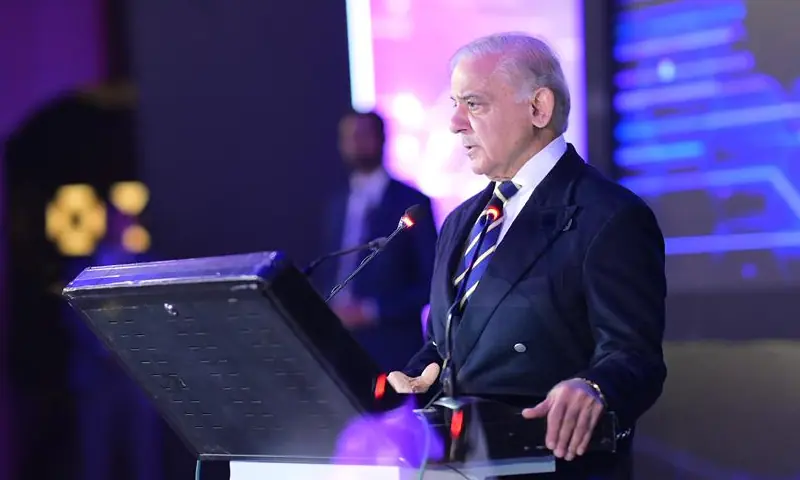
Prime Minister Shehbaz Sharif has directed commercial banks and the State Bank of Pakistan to design a comprehensive strategy that improves SMEs access to financing Pakistan wide. The directive came during a high-level review meeting on government measures for the development of small and medium enterprises. Officials briefed the premier on 48 ongoing initiatives across eight strategic sectors aimed at expanding credit access for SMEs and women entrepreneurs.
Background
Small and medium enterprises form the backbone of Pakistan’s economy, contributing significantly to employment and exports. For years, SME owners have struggled with limited collateral, slow loan approvals and restricted access to formal banking channels.
The government has repeatedly acknowledged that SMEs access to financing Pakistan wide remains one of the biggest hurdles to industrial growth. This latest meeting builds on earlier efforts by the Small and Medium Enterprises Development Authority (SMEDA) and the Ministry of Industries and Production.
Prime Minister Shehbaz Sharif chaired the session in Islamabad, where SMEDA presented its roadmap for the next phase of reforms. The plan focuses on easy credit, digital financing and formal economic inclusion for small businesses across the country.
Details
During the meeting, the prime minister said the SME sector holds vast potential for strengthening the national economy and boosting exports. He praised the efforts of Special Assistant to the Prime Minister on Industries and Production, Haroon Akhtar Khan, and the SMEDA team.
Officials informed the forum that SMEDA and the Ministry of Industries and Production are implementing 48 initiatives across eight strategic sectors. These measures are designed to unfold over the next two to four years in a phased manner.
State Bank of Pakistan Governor Jameel Ahmad told the meeting that private sector lending stood at Rs1.1 trillion during the last fiscal year. He added that loan disbursements had already crossed the target of Rs904 billion during the first three quarters of the current fiscal year.
This included a notable 28 percent increase in financing directed specifically toward SMEs. Based on this growth, authorities have raised the SME financing target for fiscal year 2028 from Rs1.1 trillion to Rs1.5 trillion.
A separate export financing window has also been established on the prime minister’s directives. According to officials, 41 new SMEs have already joined this scheme to access export-related credit facilities.
The prime minister further directed that agriculture processing sectors be granted SME status. This move is expected to support value addition and boost industrial growth in the agriculture-linked economy.
Officials also briefed the meeting on plans to improve SMEs’ access to domestic and international markets. These include roadshows, trade exhibitions and stronger value chains through vendor profiling and a dedicated SME database.
Broader Financing Landscape
Beyond the government’s central initiatives, several other financing avenues remain relevant for small business owners and young entrepreneurs in Pakistan. The Prime Minister Youth Program online apply 2026 cycle continues to attract applicants seeking interest-free or low-markup loans for startups and small ventures.
Similarly, Islamic banking institutions have expanded their outreach. Albaraka Bank Loan online apply facilities remain a popular choice among entrepreneurs looking for Shariah-compliant financing options for their businesses.
The Albaraka Bank Loan Scheme is structured to support micro and small enterprises through flexible repayment terms. Applicants are advised to verify current eligibility criteria directly with the bank before applying, as terms may be revised periodically.
Provincial governments have also introduced their own credit models. The Qarza Scheme, launched at the provincial level, has been cited by officials as an example of targeted lending that reaches low-income entrepreneurs and first-time borrowers.
These parallel schemes complement the federal government’s broader push to strengthen SMEs access to financing Pakistan wide, offering multiple channels through which small business owners can seek support.
Quotes
Prime Minister Shehbaz Sharif said the SME sector “held full potential for the development of the national economy and increasing exports,” according to officials present at the meeting.
State Bank Governor Jameel Ahmad noted that the central bank was “taking additional measures to encourage commercial banks to expand lending to SMEs,” highlighting the 28 percent rise in SME-specific financing.
Special Assistant to the Prime Minister Haroon Akhtar Khan has separately emphasized coordinated efforts to expand credit access, particularly in underserved regions such as Balochistan, Khyber Pakhtunkhwa and Azad Jammu and Kashmir.
SMEDA CEO Nadia Sethi reaffirmed her organization’s commitment to strengthening the SME finance ecosystem through coordinated programs with provincial governments, banks and other institutions.
Impact
The push to expand SMEs access to financing Pakistan wide carries significant weight for the national economy. Small businesses account for a substantial share of employment, and easier credit access could accelerate job creation across urban and rural areas.
Raising the SME financing target to Rs1.5 trillion by fiscal year 2028 signals a long-term commitment rather than a short-term policy adjustment. Analysts say sustained implementation will be key to translating these targets into real outcomes for entrepreneurs.
The export financing window, which has already onboarded 41 SMEs, could help diversify Pakistan’s export base beyond traditional sectors. This is particularly relevant as the country seeks to stabilize its foreign exchange reserves and reduce reliance on a narrow set of export goods.
Granting SME status to agriculture processing units may also open new opportunities for value-added exports. This could benefit rural economies where agriculture remains the primary source of livelihood.
International attention toward Pakistan’s SME financing models, including interest from countries such as the Philippines and Bangladesh, further underscores the potential regional significance of these reforms.
Conclusion
The government’s renewed focus on SMEs access to financing Pakistan wide reflects a broader strategy to formalize the economy and support entrepreneurship. With 48 initiatives already under implementation, officials are now expected to present a time-bound action plan with measurable outcomes.
Going forward, banks, provincial authorities and federal institutions will need to coordinate closely to ensure that credit actually reaches small business owners on the ground. The coming months are likely to bring further announcements on loan disbursement targets, export financing expansion and possible revisions to schemes such as the Qarza Scheme and the Prime Minister Youth Program online apply 2026 cycle.
Whether these measures translate into tangible relief for entrepreneurs will depend largely on implementation speed and transparency in the disbursement process.
FAQs
What is NBP easy financing for SMEs?
National Bank of Pakistan offers dedicated financing facilities aimed at small and medium enterprises, designed to provide easier access to working capital and business expansion loans. These facilities typically involve simplified documentation compared to conventional commercial loans, and are part of the broader national push to improve SMEs access to financing Pakistan wide. Applicants are encouraged to check with their nearest NBP branch for updated eligibility requirements, markup rates and processing timelines, as these details can change based on State Bank policy directions.
What is the SME financing strategy?
Pakistan’s SME financing strategy involves a combination of measures including easy credit access, digital financing tools, formal economic inclusion, and dedicated export financing windows. The strategy, driven by SMEDA and the Ministry of Industries and Production in coordination with the State Bank of Pakistan, aims to raise SME lending targets significantly over the coming years. It also includes sector-specific initiatives across eight strategic industries, along with support for women entrepreneurs and underserved regions.
Why do 90% of small businesses fail?
Small businesses often fail due to a combination of factors including limited access to affordable financing, poor cash flow management, inadequate market research and weak business planning. In Pakistan specifically, difficulty in securing collateral-free loans, slow loan processing and limited financial literacy have historically been cited as major obstacles. Government-backed schemes aiming to improve SMEs access to financing Pakistan wide are partly designed to address these structural challenges and reduce failure rates among new ventures