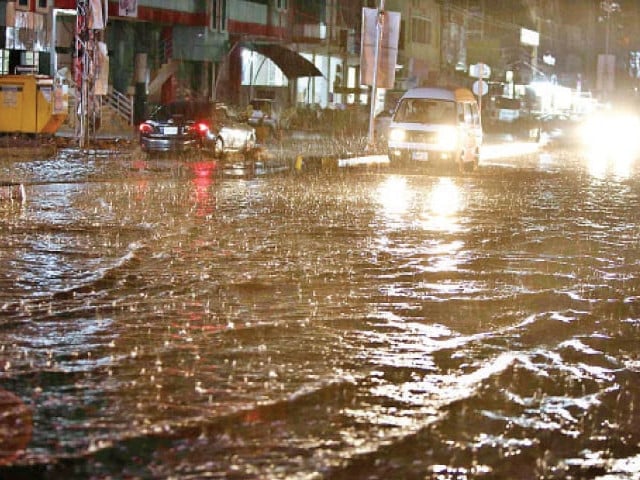
Rawalpindi woke up to one of its heaviest spells of the season on Tuesday morning. Rain that started overnight kept falling into the early hours, and by the time most people were getting ready for work, several neighbourhoods were already underwater.
The district administration didn’t wait around. Schools across Rawalpindi, both government and private, were told to stay shut for the day. Islamabad followed the same route. It’s the kind of call that inconveniences a lot of parents on short notice, but given how fast the water was rising in Nullah Lai, it’s hard to argue with the timing.
Background: Why the Twin Cities Keep Flooding
Rawalpindi and Islamabad have a familiar problem every monsoon. Nullah Lai, the stream that cuts through Rawalpindi, simply isn’t built for the volume of water the city now produces during heavy spells. Add faster urban development, more concrete, fewer places for rainwater to soak in, and you get flash flooding almost every time a serious system rolls through.
The Met Office had already flagged this coming. Last week, it warned that upper parts of the country, including Islamabad and Rawalpindi, would likely see more rain through the first week of September, with a real risk of urban flooding in low-lying pockets of both cities.
Details: How Bad Was the Rain
The numbers from Tuesday’s spell were significant. According to the Pakistan Meteorological Department, Shamsabad recorded close to 200 millimetres of rain, the highest tally in the twin cities. New Kattarian and Golra weren’t far behind, both crossing 150mm, while several other stations across the city logged readings in a similar range.
That kind of rainfall in a few hours is exactly what pushes Nullah Lai toward danger levels. Water at Kattarian rose well past the 25-foot mark, with Gawalmandi following a similar trend. Both are points authorities watch closely, since a sharp rise there usually means trouble for the settlements built along the stream’s edge.
Major roads didn’t fare much better. Rawal Road, the Islamabad Expressway, and Airport Road all saw water pooling badly enough to slow traffic to a crawl. Basements in some buildings that had already been sealed as a precaution still took on water, and rescue teams were called out after a boundary wall collapsed in one of the sectors. No injuries were reported from that particular incident, which is a small mercy given how the morning went.
Quotes: What Officials Are Saying
Water and Sanitation Agency officials confirmed the water level readings at Kattarian and Gawalmandi and said dewatering work was underway in the worst-hit pockets of the city. The agency also said a rain emergency had been declared for Nullah Lai’s catchment area, a step that puts extra staff and machinery on standby along the stream.
Traffic police in Islamabad issued a public advisory asking motorists to slow down, keep extra distance from other vehicles, and build in additional travel time until the water on major roads clears.
Impact: What This Means for Residents
For families near Nullah Lai, mornings like this one are stressful in a very direct way. Sirens went off in some areas to warn people the water was rising, and WASA teams moved into low-lying pockets, including Liaquat Bagh, Committee Chowk, Dhok Khaba, and Sadiqabad, to help manage the flow and clear blockages.
Beyond the immediate flooding, there’s a knock-on effect on daily life. Commuters lost hours to waterlogged roads. Parents had to rework their day around closed schools. Small businesses in flood-prone markets braced for water damage, something that’s become an almost yearly ritual for shopkeepers along the nullah.
The bigger picture is regional too. The same weather system that hit Rawalpindi and Islamabad was expected to bring rain to other parts of upper Punjab, including Gujranwala, Gujrat, Sialkot, and Lahore, along with parts of Mardan and Swabi in Khyber Pakhtunkhwa.
Conclusion: What Comes Next
The Met Office isn’t calling this a one-off. Its forecast points to more rain in the coming days, which means the twin cities aren’t out of the woods yet. Authorities are keeping a close watch on dam levels at Rawal and Khanpur, both of which had already started climbing by Tuesday.
Whether schools reopen depends largely on how the next 24 to 48 hours play out. If the rain eases and water levels along Nullah Lai start dropping, a return to normal routine is likely by midweek. If not, expect the administration to extend precautions rather than take chances with another wave of flooding.
Frequently Asked Questions
How many chances of rain are there in Rawalpindi?
Rawalpindi is currently in an active monsoon spell, and the Meteorological Department has forecast a fairly high chance of continued rain over the next several days, with some spells expected to be heavy enough to trigger urban flooding again. The likelihood tends to shift day by day depending on how the weather system tracks across upper Punjab, so it’s worth checking a same-day PMD update rather than relying on a forecast made a few days out.
Did it ever snow in Rawalpindi?
Rawalpindi itself sits at a low enough elevation that snowfall in the city is extremely rare and, when it happens, tends to be light and short-lived. Nearby hill areas such as Murree, which is only a short drive away, get regular winter snowfall, and that’s usually what people are thinking of when they associate the wider region with snow. Genuine snow settling in Rawalpindi’s urban area is not something that happens most years.
Will it rain in Rawalpindi today?
Based on the current forecast, rain is likely to continue in Rawalpindi today, with the Meteorological Department warning of further spells accompanied by thunderstorms. Conditions can change quickly during an active monsoon system, so residents in low-lying or flood-prone areas should keep an eye on official updates rather than assuming the rain has fully passed after a lull.