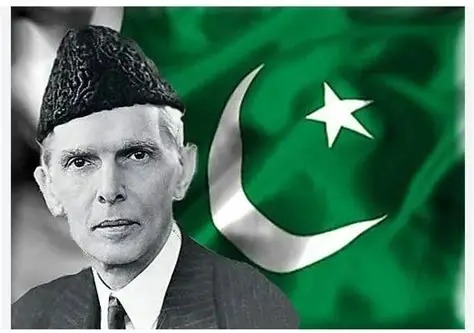
The lamp that continued to shine after being extinguished
by Muhammad Mohsin Iqbal
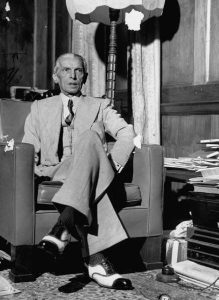
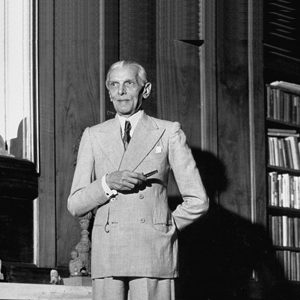
Some deaths merely close the chapter of a life. Others transform an entire existence into an everlasting trust. The passing of Quaid-e-Azam Muhammad Ali Jinnah on 11 September 1948 belonged to that rarer, more solemn kind. On that day Pakistan did not simply lose its first Governor-General; it lost the man of iron whose vision, resolve and political wisdom had turned an impossible dream into living reality. Yet the Quaid’s departure was not the end of his mission—it was its solemn transfer into the keeping of generations yet unborn.
In every human heart lives the dream of a home. A home is never merely bricks and stone; it is the fortress of identity, the sanctuary of love, the dwelling of honour and the quiet promise of a better tomorrow. A father spends his strength raising that home, forgoes comforts, and longs to leave behind a shelter where his children and their children may live in peace and dignity. He may never see every room completed, yet he leaves the foundations firm, the walls standing, and the design clear.
Pakistan, too, is such a home. Quaid-e-Azam was its architect; we are its heirs. He did not inherit a ready-made country—he created it. Rather than take charge of an existing state, he first fought for its very right to exist, midwifed its birth, and, even as his own health failed, guided it through the fragile first days of life.
The Pakistan that emerged on 14 August 1947 was not born into the lap of ease. It rose from the furnace of history and claimed its place upon the map of the world. Its birth was bound to one of the greatest human migrations ever known. Millions left ancestral homes, fields, livelihoods and memories, crossing new frontiers in search of dignity, safety and identity. Families were torn apart, lives were sacrificed, and a sea of sorrow flowed beneath the celebrations of freedom. The newborn state possessed neither the full administrative machinery, the economic strength, nor the institutional depth it needed to survive. Resources were scarce, industry incomplete, and the resettlement of countless refugees demanded urgent care.
It was upon this newborn Pakistan that Quaid-e-Azam accepted the responsibility of Governor-General. The architect had scarcely laid the foundation when the entire unfinished structure was placed in his charge. Born in Karachi on 25 December 1876, Muhammad Ali Jinnah rose as a lawyer and statesman whose character was a rare alloy of intellect, discipline, principle and quiet self-assurance. He could have lived a life of comfort; history chose him for the harder road. He entered politics convinced that constitutional struggle, the supremacy of law and the power of reasoned argument could secure justice. His opposition to the Rowlatt Act revealed the steel of his principles. He was a politician of argument, not of slogans; of sober judgment rather than emotion, of organisation rather than chaos, of enduring principle rather than fleeting popularity. When communal tensions rose and constitutional safeguards grew uncertain, he reached the grave conclusion that the political rights and distinct identity of the Muslims required a separate political arrangement.
Allama Iqbal gave intellectual voice to the political consciousness of the Muslims; Jinnah gave that dream a practical political map. To turn an idea into a state demands a leader who remains steadfast when compromise seems easier, who keeps discipline amid the storm of passion, and who continues the journey even when success seems distant. Quaid-e-Azam possessed this quality in the highest degree. He could stand alone, yet he never stood apart from his people. He negotiated without surrendering principle. He could show flexibility in method, but never in purpose.
The Lahore Resolution of 23 March 1940 marked the decisive milestone. The Muslim League had become a formidable political force, and the demand for a separate homeland had grown into an organised movement. Through negotiation, resistance and pressure, the resolve held firm. The title “Quaid-e-Azam” was no mere honour—it was a certificate earned through struggle.
After freedom came the most astonishing chapter of all. The leader who had spent decades in the fight for independence now had to prove that the infant state could live. He understood that political freedom without national strength and defence remains fragile. The division of military assets, the Kashmir dispute, economic strain and uncertain relations with neighbours confronted him. He faced these realities without illusion. He desired peace, but not through weakness; friendship, but never at the price of sovereignty. The essence of his thought may be gathered in these words: “Peace depends upon strength, yet strength must remain bound by principle.”
His vision of Pakistan was never confined to defence alone. He knew that the true security of a nation resides in its institutions, its economy, its education, its social harmony and its national character. He wished the rule of law, the dignity of the citizen, the sense of public office as a sacred trust, merit and integrity to form the foundations of the state. His address to the Constituent Assembly on 11 August 1947 remains the clearest window into his conception of citizenship. Equal citizenship, religious freedom and the protection of the rights of every citizen showed that he sought a system in which every individual would enjoy honour, safety and equality; where diverse identities could flourish beneath a shared national identity; where the state would be the guardian of rights and the law would hold one standard for all.It is at this point that the anniversary of the Quaid ceases to be mere historical remembrance and becomes a mirror of national self-examination.
We must ask ourselves: Have we built the house according to the plan he dreamed? Have we made faith, unity and discipline the living breath of our national life, or confined them to speeches? Have we honoured constitutional institutions? Is honesty still a mark of honour? Can the poorest citizen stand before the law with the same confidence as the powerful? Have we invested sufficiently in education, science and industry to achieve economic self-reliance? Have political, linguistic and sectarian differences weakened our common identity?
These questions are bitter, yet necessary. A nation that cannot examine itself cannot reform itself. Pakistan has endured instability, crises, wars, terrorism and natural disasters—yet it has lived. The Pakistani people have found courage in every trial. Therefore the story of Pakistan is not merely a catalogue of failures; it is an unfinished dream. Between failure and incompleteness lies a world of difference. An incomplete house can still be finished; weak institutions can be strengthened; an economy can recover; a divided society can return to unity.
For this, hope alone is not enough—character is required. Today’s youth can play the most vital part in this building. They did not witness the birth of Pakistan, yet they have inherited the land for which an earlier generation sacrificed everything. Their responsibility is extraordinary. Patriotism is not a slogan; it is a way of life. Honest study, hard work, respect for the law, payment of taxes, protection of national property, refusal of corruption, respect for the rights of others and preference for the national interest—these, too, are patriotism.
The Pakistan of the future will not be built by speeches. It will rise in classrooms and laboratories, in fields and factories, in courts and hospitals, and in the quiet rooms of ordinary homes. It will be shaped by the young entrepreneur, the scientist, the teacher, the honest civil servant, the legislator who places the nation first, and the ordinary citizen who simply does his duty. Nations become great in no other way.
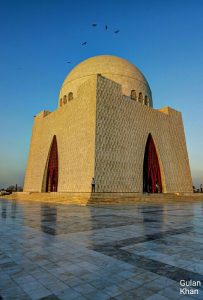
The greatest mausoleum of Quaid-e-Azam is not a building of marble; it is Pakistan itself. Every honest brick strengthens it; every sacrifice protects it; every discovery carries it forward. Every act of corruption opens a crack; every prejudice weakens a wall. This house is now ours. The anniversary is not only a day of mourning; it is a day of reckoning. We must not merely remember the Quaid—we must keep his principles alive. Let there be difference without enmity; strong institutions without confrontation; defence without aggression; progress without the sacrifice of justice; faith without intolerance; democracy without chaos; and a patriotism in which Pakistan stands higher than any personal interest.
In his final days his health declined, yet the pace of his work did not. He knew the foundations had been laid and that the generations to come must complete the building. He left not merely instructions, but the example of his own life. One man, by faith, intellect, discipline and character, can turn the course of history. Nations do not live by the lives of their leaders alone, but by the principles upon which those leaders stood.
Pakistan still stands. It needs a new generation worthy of the Quaid’s dream. The heirs must now become the guardians. The cracks must be filled without weakening the foundations; opportunities widened without erasing identity; institutions modernised without forgetting principle; the economy strengthened without leaving the vulnerable behind. The defence of sovereignty and the pursuit of honourable peace must continue. No difficulty can be greater than the spirit that brought Pakistan into being.
If Quaid-e-Azam were among us today, would he recognise the Pakistan we have built? If the answer is not wholly in our favour, there is no need for despair—only for a fresh beginning. The house still stands, the foundations remain, the design is before us, and the future rests in our hands. Quaid-e-Azam gave existence to Pakistan with a dream larger than his own life. The greatness of a nation is not decided by the circumstances of its birth, but by the character of the generations that follow.
May God grant Pakistan peace, stability, unity and prosperity, and may He grant us the vision, courage, integrity and character to prove ourselves worthy trustees of the Quaid’s sacrifices and of his magnificent dream.