

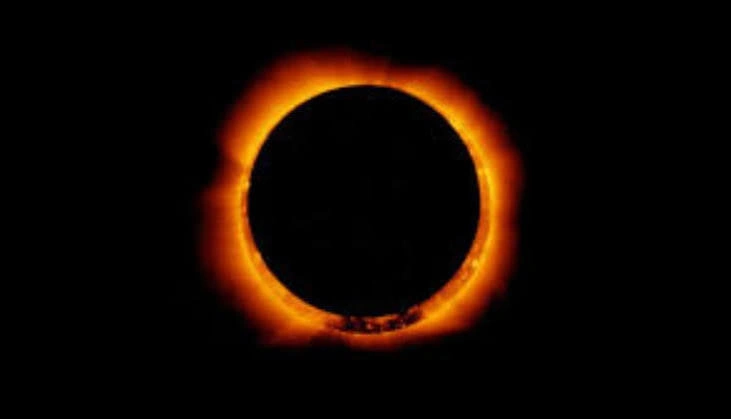

KARACHI: Skywatchers in Pakistan will not be able to witness the last total solar eclipse of 2026, as the Pakistan Meteorological Department (PMD) has confirmed that the rare astronomical event will take place outside the country’s viewing range.
The eclipse is scheduled for the night of August 12-13 and will be one of the year’s most significant celestial events. According to the PMD, it will begin at 8:34 PM PST on August 12, reach maximum eclipse at 10:46 PM PST, and conclude at 12:58 AM PST on August 13.
While Pakistan will miss the event, observers in several countries across Europe and the Arctic region are expected to experience the dramatic spectacle.
Europe Set for a Rare Astronomical Display
The Moon’s shadow will pass across parts of Greenland, Iceland, Spain, and Russia, allowing viewers in those regions to witness a total solar eclipse. In many other areas, including parts of Europe, Africa, North America, and South America, only a partial eclipse will be visible.
Astronomers say the event carries special importance because it marks the first total solar eclipse visible from mainland Europe in nearly two decades, making it a major attraction for scientists, photographers, and eclipse enthusiasts.
How a Total Solar Eclipse Happens
A total solar eclipse occurs when the Moon moves directly between the Earth and the Sun, completely blocking sunlight for people located within the narrow path of totality.
For a few minutes, daylight fades into twilight as the Sun disappears behind the Moon. During this brief period, observers can see the Sun’s glowing outer atmosphere, known as the corona, which is normally hidden by the Sun’s intense brightness.
Because the Moon’s shadow covers only a small section of Earth’s surface, total solar eclipses are considered rare for any specific location.
Scientific Value of the Eclipse
Scientists regard total solar eclipses as more than just breathtaking natural events. They provide researchers with valuable opportunities to observe the Sun’s corona, study solar magnetic fields, and better understand space weather that can influence satellites, communication systems, and power grids on Earth.
Researchers from around the world are expected to conduct observations during the August eclipse using telescopes, imaging equipment, and scientific instruments positioned along the eclipse path.
Upcoming Eclipse Events
Astronomy enthusiasts will not have to wait long for another major celestial event.
On August 2, 2027, another total solar eclipse will travel across southern Spain, northern Africa, and the Arabian Peninsula. The eclipse will feature an exceptionally long totality lasting 6 minutes and 23 seconds, making it one of the longest total eclipses of the 21st century.
Later, on January 26, 2028, southern Spain will also witness an annular solar eclipse, often referred to as the “Ring of Fire”, where the Moon leaves a bright ring of sunlight visible around its edge.
Partial Lunar Eclipse Also to Miss Pakistan
The Pakistan Meteorological Department has also announced a partial lunar eclipse on August 28. Similar to the upcoming solar eclipse, the lunar eclipse will not be visible from Pakistan, although observers in other regions of the world may be able to enjoy the event depending on weather conditions.
Protect Your Eyes During an Eclipse
Experts continue to caution the public against looking directly at the Sun during any phase of a solar eclipse without approved eye protection.
Ordinary sunglasses do not provide adequate protection. Viewing the Sun without ISO-certified eclipse glasses or specialized solar filters can permanently damage the retina and may result in irreversible vision loss.
Astronomers recommend using certified eclipse viewers or indirect viewing methods to safely observe the phenomenon.
A Celestial Event Worth Watching
Although Pakistan will not be part of the viewing zone, the last total solar eclipse of 2026 remains one of the year’s most anticipated astronomical events. Millions of people across Europe and neighboring regions are expected to gather along the eclipse path to witness one of nature’s most extraordinary spectacles, while scientists use the opportunity to advance research into the Sun and its influence on our planet.