
Dewan Yousuf Farooqui Calls for Stronger Bilateral Trade, Proposes 90-Day Action Plan
ISLAMABAD: Pakistan and African countries have identified new opportunities to expand bilateral trade and investment, with Dewan Muhammad Yousuf Farooqui, Patron-in-Chief of the Pakistan SADC Chamber Trade Federation (PSCTF), proposing a 90-day action plan to turn commercial potential into tangible results.
Speaking on the sidelines of the Pakistan-SADC Summit in Islamabad, Farooqui emphasised the importance of reliable trade information, stronger business networks, and mutually beneficial partnerships. He said improved access to market intelligence and direct engagement between businesses could help increase trade volumes and create new investment opportunities for both sides.
Farooqui noted that Pakistan could explore imports of coal, copper, natural gas, liquefied natural gas (LNG), phosphoric acid, precious metals, and other minerals from African markets. In return, Pakistani businesses could expand exports of food products, textiles, cement, minerals, and other commodities.
The summit brought together senior government officials, parliamentarians, diplomats, industrialists, and representatives of the business community to discuss ways to strengthen economic cooperation between Pakistan and African nations.
Prominent participants included Federal Minister for National Health Services, Regulations and Coordination Syed Mustafa Kamal; Senator Mushahid Hussain Syed; Federal Minister for the Board of Investment Qaiser Ahmed Sheikh; Zulfiqar Ali, Additional Secretary and Executive Director General of the Board of Investment; and Syed Hafeezuddin, Member of the National Assembly from NA-245 and Chairman of the National Assembly Standing Committee on Industries and Production.

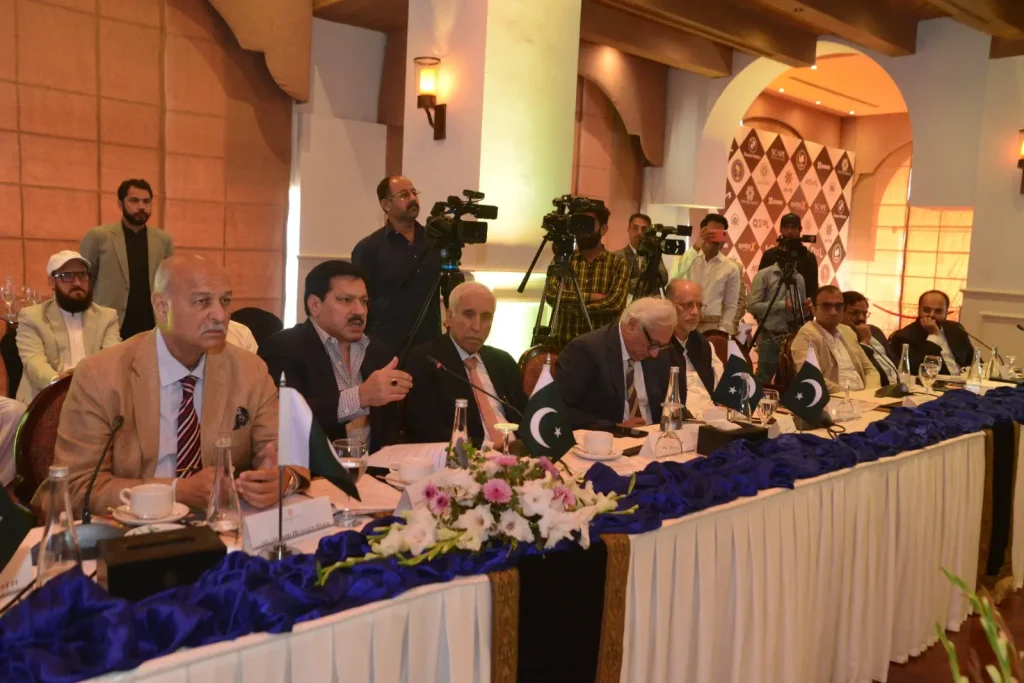
Representatives of the Pakistan SADC Chamber Trade Federation included Chairman Muhammad Rafiq Memon, Pakistan Chapter President Syed Moeeduddin, and Focal Person Bakhtiar Ahmed Farooqui.
Diplomatic participants included the Consul General of Sudan, ambassadors of Kenya, South Africa, and Mauritius, and acting diplomatic representatives of Zimbabwe, Morocco, Tunisia, and Somalia.
Participants proposed a 90-day action plan to translate identified trade and investment opportunities into practical business outcomes. The proposed initiative focuses on market research, verification of trade statistics, and identifying potential buyers and suppliers in selected countries.
The plan also includes reviewing import duties, regulatory requirements, and other commercial procedures that affect cross-border trade. Organising initial business-to-business meetings around selected countries and product categories is another key component.
Farooqui stressed that businesses need a clearer understanding of African and Pakistani markets, including demand patterns, commercial regulations, and investment prospects.
He said direct connections between buyers and suppliers, reliable market information, and structured business meetings could help businesses identify suitable partners and negotiate commercial agreements.
Pakistan-Africa Trade Reaches $4.85 Billion
Figures attributed to the Ministry of Commerce’s annual report, presented at the meeting, showed that Pakistan-Africa trade totalled $4.85 billion in fiscal year 2024–25.
According to the presentation, Pakistan’s exports to African markets amounted to $2.24 billion, while imports reached $2.61 billion. The presentation also cited total bilateral trade of $5.45 billion for fiscal year 2023–24.
These figures highlight the scale of existing commercial relations and the potential to expand cooperation through targeted market development, improved trade facilitation, and stronger business-to-business engagement.
Participants identified several sectors with potential for stronger Pakistan-Africa commercial ties. These include food and agriculture, textiles and apparel, cement, minerals, machinery, electrical equipment, pharmaceuticals, medical and surgical instruments, leather goods, footwear, and sporting goods.
An initial assessment highlighted South Africa, Madagascar, Tanzania, and Mozambique as markets for further exploration of Pakistani exports and potential joint investment projects.
Expanding cooperation in these sectors could help Pakistani exporters reach new customers while enabling African businesses to explore opportunities in Pakistan’s manufacturing, agricultural, and industrial markets.
The discussions underscored the need for sustained institutional cooperation, better access to commercial information, and regular engagement between Pakistani businesses and their African counterparts.
Participants agreed that identifying opportunities is only the first step. Businesses and relevant institutions must also establish reliable contacts, understand market requirements, and follow up on proposed commercial initiatives.
The proposed 90-day action plan offers a framework for advancing these objectives through verified data, targeted business meetings, and practical market assessments.
Effective implementation could help convert the existing trade relationship into stronger investment flows, new export markets, and long-term economic partnerships between Pakistan and African countries.
Note: The trade figures and proposed action plan are attributed to the presentation and discussions described at the summit. Independent verification of the figures and confirmation of the plan’s formal adoption are advisable before publication.