

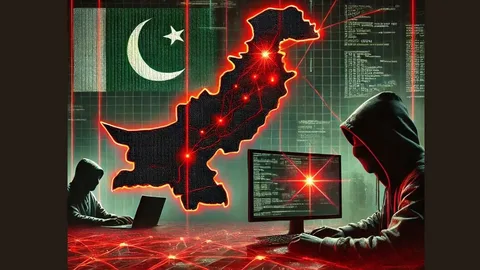
A group of media professionals in Pakistan has pushed back against notices issued by the National Cyber Crime Investigation Agency, and the pushback has landed in the middle of a much larger conversation about digital rights and press freedom. The controversy around NCCIA Pakistan is not really about one set of notices it is about what those notices reveal regarding how cybercrime laws are being applied and whether journalists have adequate protection when they work online.
Public interest in the NCCIA complaint portal, the NCCIA Islamabad contact number, and the agency’s broader mandate has increased sharply as the story has developed. Legal experts, civil society groups, and media organizations are all watching how this plays out.
Background
NCCIA Pakistan handles the country’s cybercrime investigations — online fraud, cyber harassment, identity theft, digital financial crimes, and related offenses. As internet usage has expanded across Pakistan, so has the volume and complexity of what the agency deals with. Regional offices and investigative units receive cases through official channels, with complaints processed through the NCCIA complaint portal.
None of that is controversial in itself. Cybercrime is real, it causes serious harm, and Pakistan needs institutions capable of investigating it. The controversy is not about whether NCCIA Pakistan should exist. It is about where its jurisdiction ends and whether it is being applied in ways that create unacceptable pressure on journalists doing legitimate work.
Pakistan’s media environment has been navigating digital platform regulations, revised cybercrime legislation, and government oversight of online content for years. Each round of regulatory change has brought the same debate: does this protect people from genuine harm, or does it create tools that can be turned against reporters and commentators who publish things that powerful institutions dislike?
Pakistani Journalists Challenge NCCIA Notices
The notices that triggered the current controversy were issued to media professionals in connection with online content and digital communications. Details of specific cases have not been made fully public, but the professional response was fast and organized.
Journalists and media organizations argued that investigative reporting and public-interest journalism cannot function properly if reporters face legal uncertainty every time they publish something that someone in authority objects to. The argument is not that journalists should be exempt from cybercrime law. It is that the law needs to draw a clear line between criminal conduct and journalism, and that line is currently not clear enough.
Members of the Lahore Press Club raised these concerns publicly, as the club has historically done when press freedom issues emerge. The conversations there centered on procedural safeguards what rights do journalists have when notices arrive, what recourse exists, and whether those processes are transparent enough to prevent abuse.
That last question whether processes are transparent enough to prevent abuse is the one that cuts deepest. Investigative powers that can be used appropriately can also be used to intimidate. The lack of clear procedural protections is what turns a legitimate law enforcement mechanism into a press freedom concern.
Understanding the Role of NCCIA Pakistan
NCCIA Pakistan’s mandate covers a wide range of cyber-related offenses:
- Cyber fraud and financial scams
- Online harassment and threats
- Unauthorized account access and hacking
- Digital identity theft
- Violations of applicable cybercrime legislation
Supporters of robust cybercrime enforcement have a reasonable point: the threats the agency deals with are serious and growing. Digital fraud costs Pakistanis billions of rupees annually. Online harassment campaigns have forced journalists and activists offline. Identity theft has ruined people financially. An agency with real investigative capacity is not optional.
The counterargument from critics is not that these problems should go unaddressed. It is that enforcement powers must operate within defined legal boundaries and with meaningful oversight. Without that, the same powers that catch fraudsters can be turned toward silencing critics.
Both arguments are legitimate. The current controversy exists precisely because the institutional design has not resolved the tension between them satisfactorily.
Public Interest in the NCCIA Complaint Portal
The NCCIA complaint portal saw increased traffic as the controversy developed. That is not surprising when an agency becomes prominent in national news, people want to understand how it actually works. Many searches were from citizens trying to figure out how complaints are filed, what documentation is required, and how cases are processed after submission.
The portal is also a transparency mechanism. Effective cybercrime reporting systems depend on public trust, which depends on people believing their complaints will be handled fairly and their information protected. High-profile controversies about how investigative powers are used tend to undermine that trust even among people who have no direct involvement in the dispute.
The current moment is an opportunity to improve that trust through clearer public communication about how cases are handled and stronger procedural protections that apply consistently regardless of who is being investigated.
Why People Search for the NCCIA Islamabad Contact Number
Searches for the NCCIA Islamabad contact number tend to spike during public controversies, and this one is no exception. Citizens looking for official contact information are usually trying to verify something they have seen in media coverage, seek guidance about their own situation, or report something they have experienced.
Access to direct communication channels matters for institutional credibility. An agency that is difficult to contact or slow to respond to routine inquiries creates the impression of opacity, which feeds the kind of distrust that makes controversies harder to resolve.
Legal experts have pointed out that broader public awareness of official reporting mechanisms also helps reduce the spread of misinformation about cybercrime processes which is its own kind of digital safety issue.
Lahore Press Club and Media Concerns
The Lahore Press Club has been a focal point for professional debate around press freedom in Pakistan for decades. When issues affecting journalists surface, the club typically becomes a venue for organized response, and that pattern held here.
The concerns raised at the club were specific: What legal protections apply when a journalist receives a cybercrime notice? What is the process for challenging it? What safeguards exist against notices being used to chill reporting on sensitive subjects? These are procedural questions, and the fact that experienced journalists could not answer them confidently is itself revealing.
The broader point made by media representatives was about legal clarity. Journalism increasingly happens online. Reporters communicate through digital platforms, publish on social media, and use encrypted tools for source protection. If cybercrime law applies to all of that without clear guidance on where protected journalism ends and actionable conduct begins, then every working journalist in Pakistan carries legal uncertainty as a professional condition. That is not workable.
Legal and Policy Questions
The NCCIA Pakistan controversy connects to questions that digital governance debates across the world are wrestling with, but in a context specific to Pakistan’s legal and political environment.
Technology experts argue that effective cyber laws need to do two things at once: give investigators real tools for addressing genuine threats, and establish clear limits that prevent those tools from being used as instruments of political pressure. Pakistan’s current framework has been criticized for leaning too heavily toward enforcement powers without corresponding protections for civil liberties.
Policymakers face genuine difficulty here. Cybercrime is fast-moving and technically complex. Legislation written in one environment becomes outdated quickly as platforms and attack methods evolve. But the answer to that difficulty cannot be giving investigative agencies broad discretionary power with limited procedural oversight. That design produces exactly the kind of controversy currently unfolding.
Impact on Pakistan’s Digital Landscape
The way this controversy resolves will matter beyond the journalists directly involved. Content creators, digital businesses, civil society organizations, and ordinary social media users are all operating in the same legal environment. Ambiguity in how cybercrime law applies to online expression creates a chilling effect that reaches well past any individual case.
A transparent and clearly bounded legal framework for digital governance is also an investment in Pakistan’s digital economy. Businesses considering digital operations in Pakistan whether local startups or international companies factor regulatory predictability into their assessments. Uncertainty around digital rights and press freedom sends a signal that creates friction for that investment.
Future Developments
Legal proceedings connected to the journalist notices are expected to continue. Further clarification on how Pakistan’s cybercrime laws apply to journalistic work may come through court decisions, regulatory guidance, or legislative revision possibly some combination of all three.
Stakeholders from the media, legal community, and civil society are pushing for structured dialogue rather than an adversarial resolution that leaves the underlying ambiguity in place. Whether that dialogue actually happens, and whether it produces durable policy change, will determine how significant this episode turns out to be.
For now, NCCIA Pakistan sits at the center of a national conversation about where digital law ends and democratic rights begin a conversation that Pakistan is going to need to resolve one way or another.
Conclusion
The challenge mounted by Pakistani journalists against NCCIA Pakistan notices is not primarily about those specific notices. It is about what a credible, rights-respecting framework for digital governance looks like in Pakistan and whether the current one qualifies.
Cybercrime enforcement and press freedom are not inherently in conflict. They become conflicted when legal frameworks lack clear boundaries and procedural protections. Resolving that conflict requires political will and institutional design, not just reassuring statements. The current controversy has made the gap between where Pakistan’s digital governance framework is and where it needs to be more visible than it has been for some time.
FAQs
What is the new social media law in Pakistan?
Pakistan has updated its digital and social media regulations multiple times in recent years. The framework generally addresses online content moderation, cybercrime, platform accountability, and data localization requirements. Specific provisions have changed through legislative amendments and regulatory policy, and the details are contested critics argue certain provisions give authorities excessive power to restrict online expression, while supporters say the rules are necessary to address genuine harms including misinformation and harassment. Anyone operating online in a professional capacity in Pakistan should consult current legal guidance, as the framework continues to evolve.
Can police find deleted messages from WhatsApp?
Not reliably, and not always legally. Deleted WhatsApp messages are sometimes recoverable from device backups local phone backups or cloud storage depending on the user’s settings. Forensic tools used by investigators can recover data from device storage in some circumstances. However, WhatsApp’s end-to-end encryption means that messages in transit are not readable by the platform, and WhatsApp does not retain message content on its servers. Any lawful access to digital data requires compliance with applicable legal procedures, including judicial authorization in most jurisdictions.
Can the government track my WhatsApp?
WhatsApp uses end-to-end encryption, which means the content of messages is designed to be readable only by the sender and recipient not by WhatsApp, and not by third parties intercepting the communication. What governments and law enforcement agencies can potentially access depends on what information WhatsApp retains (metadata such as who communicated with whom, when, and for how long), what is stored on devices, and what legal authority investigators have under applicable law. In Pakistan, as elsewhere, the legal boundaries around digital surveillance are actively debated and not always clear in practice.