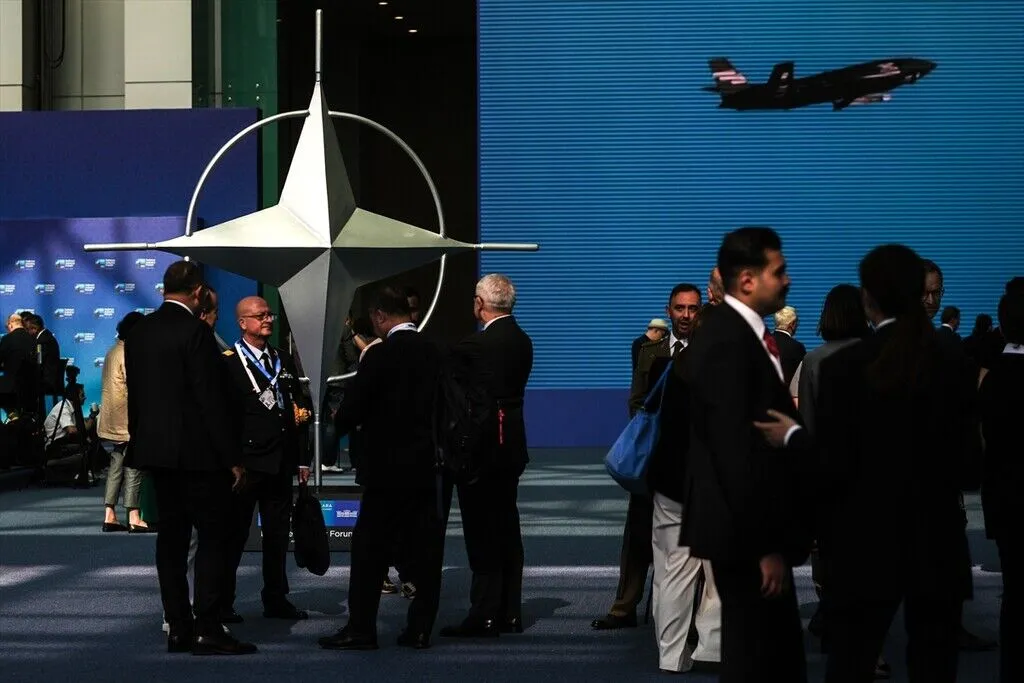
The NATO Summit Ankara 2026 brought together heads of state from all 32 member countries on July 7-8, 2026. The summit was held in Ankara, Turkey, at the Presidential Complex, marking the second time Turkey has hosted a NATO summit after the 2004 Istanbul gathering.
Defence spending, industrial cooperation, and continued support for Ukraine dominated discussions. The Nato ankara summit agenda placed heavy emphasis on turning past commitments into real results.
Background
NATO summits are held periodically to bring alliance leaders together on pressing security matters. This year’s gathering, sometimes referred to informally in relation to the 35th NATO Summit and the upcoming 37th nato summit, represents a critical juncture for the transatlantic alliance.
NATO Secretary General Mark Rutte outlined three core priorities for the summit: continuing to increase allied defense investment, bolstering transatlantic defense industrial production, and supporting Ukraine. These priorities formed the backbone of the Nato ankara summit priorities discussed across two days of meetings.
Allied leaders in Ankara were also expected to address President Donald Trump’s criticisms of NATO and concerns from some member states about the impact on political cohesion and alliance credibility. This tension has shaped much of the broader NATO summit 2026 agenda.
Turkey’s role as host carries symbolic weight. The summit takes place at a moment when the United States is sending increasingly uncertain signals about its long-term role in European security, including a planned drawdown of US forces from Germany that has intensified debates about burden sharing among European allies.
Details
Security around the summit venue was tight from the outset. The Governorship of Ankara announced a comprehensive ban on rallies, demonstrations, and leaflet distribution across the province, effective from late June through mid-July 2026, while several main roads were closed to traffic for the duration of the event.
In the lead-up to the gathering, tensions surfaced across the country. Anti-NATO protests took place in cities including Istanbul, Ankara, and Izmir, with labor unions and non-governmental organizations opposing increased military budgets and NATO’s expansion policies. Rights groups reported that anti-terror operations and crackdowns on protesters led to the detention of more than 200 people, including activists, lawyers, and journalists.
On the diplomatic side, the summit ran alongside a dedicated industry-focused event. The NATO Summit Defence Industry Forum took place on July 7, 2026, in Ankara as NATO’s premier high-level event bringing together officials, industry leaders, and innovators to discuss defence production and investment.
Defence budgets remained a headline issue throughout the two-day meeting. NATO estimates published in March 2026 indicated that all NATO members met the 2%-of-GDP defence spending benchmark in 2025, a sharp rise compared with only three allies meeting that mark back in 2014.
Following a commitment made the previous year to invest 5 percent of GDP in defence, NATO allies have been accelerating their spending, with European allies and Canada increasing core defence investment by roughly 139 billion US dollars in nominal terms during 2025 alone. Some allies are on track to hit the 5 percent target well ahead of the original schedule.
Ukraine’s security needs also remained central to talks. Alliance leaders reaffirmed that Europe’s security is tied to Ukraine’s, pledging to continue unprecedented levels of military assistance as Russia’s war persists, while working to make that support sustainable over the long term.
The first day of proceedings focused heavily on operational matters. Discussions centered on increasing defence spending, strengthening deterrence and collective defence capabilities, continued backing for Ukraine, expanding defence industrial cooperation, and reinforcing security along NATO’s southern flank.
President Trump’s presence drew significant global attention. His bilateral meeting with Turkish President Recep Tayyip Erdoğan, along with wider discussions on defence and security cooperation between the two nations, featured prominently throughout the summit.Regional developments added further complexity to the backdrop of the summit. The United States reportedly struck more than 80 targets in Iran and reimposed oil sanctions while Trump was attending the NATO summit in Turkey, a country that borders Iran.
Media coverage of the event varied widely depending on the outlet. Government-aligned Turkish media portrayed the summit as a diplomatic triumph for President Erdoğan, while independent and international outlets focused more on NATO’s strategic agenda, European security, and concerns about press freedom.
Quotes
NATO’s Secretary General has been vocal about the broader ambitions tied to this year’s meeting. Rutte has said he hopes the summit will “breathe life into the concept of NATO 3.0: a stronger Europe in a stronger NATO,” resulting in an alliance “that is less dependent on the United States, but in which the United States remains firmly rooted.”
Rutte has also highlighted the scale of Europe’s recent defence buildup. He described a “profound sea change” in European allies’ approach to defence spending, noting that from 2016 to 2026 European allies and Canada spent an additional 1.2 trillion US dollars on defence.
Analysts covering the event have offered a more measured assessment of its overall success. One commentary noted that the true measure of the Ankara summit would come from its decisions on defence spending, Ukraine support, and deterrence, not merely the smoothness of its organization.
Impact
The outcomes of the NATO Summit Ankara 2026 carry weight well beyond Turkey’s borders. Increased defence budgets across member states signal a long-term shift in how European nations plan to share the burden of continental security, a shift that will shape the NATO summit 2026 agenda for years ahead.
Turkey’s role inside NATO tends to expand when the alliance faces urgent necessity and contracts when allies view the costs of exclusion as manageable, a pattern likely to continue as debates on burden sharing intensify. This dynamic could influence how the Nato 2026 country host is perceived within the broader alliance moving forward.
For Ukraine, continued military assistance pledges reaffirm Western backing at a critical stage of the ongoing conflict with Russia. Analysts note that a clear membership pathway for Ukraine remains unresolved, an issue expected to resurface at the NATO Summit 2027.
Domestically, the summit also intensified political debate inside Turkey. Independent media coverage focused on media accreditation limits, restrictions on public demonstrations, and the wider domestic political context surrounding the summit.
Conclusion
The NATO Summit Ankara 2026 closed with renewed commitments on defence spending, industrial cooperation, and Ukraine support, even as questions over alliance cohesion and the United States’ long-term commitment to Europe remain unresolved. The summit’s lasting impact will become clearer once the final communiqué is published and concrete policy initiatives begin to roll out in the following months.
Attention now turns toward implementation of the pledges made in Ankara, along with early planning discussions for the NATO Summit 2027. Whether the Nato ankara summit priorities translate into lasting policy shifts will likely define the alliance’s trajectory heading into the next summit cycle.
Frequently Asked Questions
Is the US going to withdraw from NATO?
As of the Ankara summit, the United States has not formally announced plans to withdraw from NATO. However, the Trump administration has pushed hard for European allies and Canada to take greater responsibility for conventional defence in Europe, and reports indicate a planned drawdown of US forces from Germany. These moves have fueled speculation and debate about Washington’s long-term commitment to the alliance, but no formal exit process has been initiated at this time. NATO officials have emphasized building a structure where the US remains “firmly rooted” even as Europe takes on a larger share of responsibility.
Where is NATO summit 2026?
The 2026 NATO Summit was held in Ankara, the capital of Turkey, on July 7-8, 2026. The event took place at the Beştepe Presidential Complex and marked the second time Turkey has hosted a NATO leaders’ summit, following the 2004 Istanbul Summit. Extensive security measures, road closures, and infrastructure upgrades were carried out across the city ahead of the two-day gathering of all 32 member state leaders.
Why does Trump want to withdraw from NATO?
President Trump has repeatedly criticized NATO allies for what he considers insufficient defence spending, arguing that European countries and Canada should shoulder a greater share of the burden for their own security. While he has not formally proposed a US withdrawal from the alliance, his rhetoric and policy shifts, including troop drawdowns from Europe, have raised concerns among allies about long-term American commitment. His administration’s National Defense Strategy has called on European allies to take the lead in supporting Ukraine’s defence, framing continued US involvement as conditional on greater European responsibility.