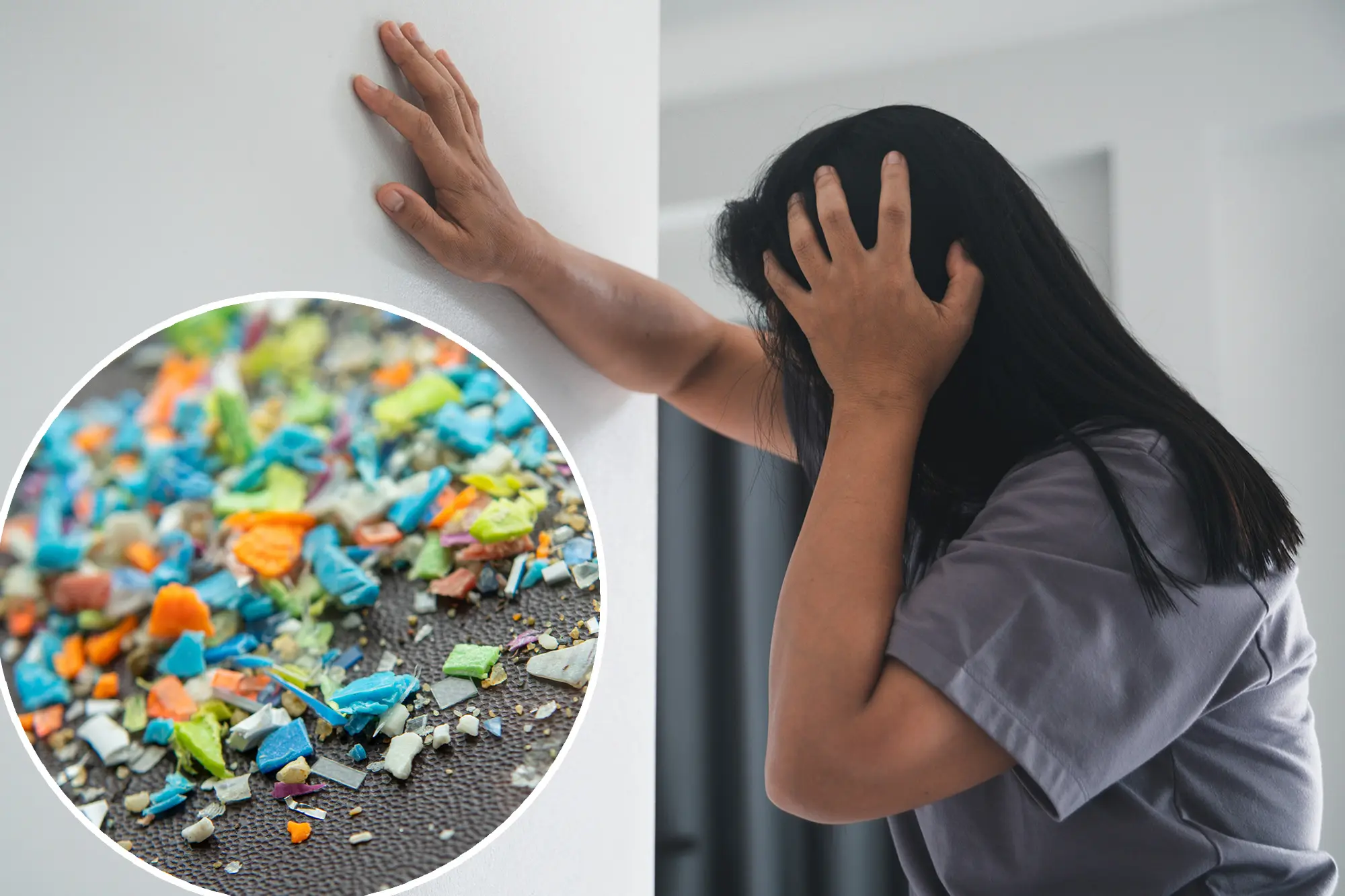
A shocking new scientific study has found that humans inhale as many as 68,000 microplastic particles every single day. The biggest source is not outdoor pollution — it is the air inside your own home. Microplastics in indoor air are now considered a serious and largely underestimated health threat.
Microplastics are tiny plastic particles smaller than 5 millimeters. They come from the slow breakdown of plastic products, synthetic clothing, car interiors, packaging, and more.
Microplastics are defined as tiny plastic particles that can be either added intentionally to consumer goods or produced as a result of the breakdown of larger plastic items. These particles contain a variety of chemicals including up to 16,000 plastic chemicals many of which, such as BPA, phthalates, and PFAS, pose serious health risks.
For years, scientists focused on microplastics in water and food. But recent research has shifted the focus to something far more immediate the air people breathe inside their homes every day.
The 68,000 Particles Study: What Researchers Found
The landmark study on human exposure to PM10 microplastics in indoor air was published in the journal PLOS One by researchers at the University of Toulouse, France.
Air sampling in homes and cars found that adults inhale approximately 68,000 microplastic particles per day in the 1–10 µm range, with over 90% of detected particles small enough to reach deep lung tissue.
This figure is far higher than anyone previously estimated. The findings showed that adults may inhale some 68,000 microplastic particles of 1–10 µm per day an exposure level that is 100 times higher than previously estimated.
Based on standard breathing rates, adults inhale an estimated 68,000 microplastic particles daily, while children inhale about 47,000 daily equivalent to roughly three to four particles per breath.
Types of Microplastics Found in Indoor Air
Not all microplastics in indoor air are the same. The types of microplastics found depend heavily on where you are at home or inside a car.
The predominant polymer type in the residential environment was polyethylene (PE), while polyamide (PA) was the dominant type in car cabin environments. Fragments were the dominant shape, making up 97% of the analyzed microplastics found in indoor air samples.
Indoors, microplastics are most commonly found as microscopic synthetic fibers shed from materials like polyester, nylon, acrylic, and polypropylene materials widely present in clothing, carpets, rugs, and furnishings.
Common plastic polymers found in indoor air microplastic samples include polyethylene, polyester, polyamide, polypropylene, and polystyrene all smaller than 5 mm in diameter.
Why Indoor Air Is Worse Than Outdoor Air
Many people assume outdoor pollution is the bigger danger. But the data on microplastics in the home tells a very different story.
Researcher Nadiia Yakovenko explained that concentration indoors is higher because it is a restricted environment with high levels of plastics in small areas and there is poor ventilation.
Senior study author Jeroen Sonke noted that people spend an average of 90% of their time indoors including homes, workplaces, shops, and transportation and all the while they are exposed to microplastic pollution through inhalation without even thinking about it.
Indoor air can be two to five times more polluted than outdoor air, and research confirms that microplastics contribute significantly to this contamination.
Human Exposure to PM10 Microplastics: The Health Danger
The reason scientists are alarmed by human exposure to PM10 microplastics in indoor air is their size. Smaller particles are far more dangerous than larger ones.
Smaller microplastic particles measuring between 1 and 10 micrometers pose a greater health risk because their size allows them to penetrate the body’s natural defenses and travel deep into the respiratory system and even enter the bloodstream.
A February study found nearly a spoon’s worth of microplastics in human brain tissue. A March 2024 study found that people with microplastics in their carotid artery tissues were twice as likely to have a heart attack, stroke, or die from any cause over the next three years compared to those who had none.
Evidence from toxicological studies links inhalation of microplastics in humans to oxidative stress, inflammation, endocrine disruption, and organ-specific effects on the respiratory, digestive, reproductive, immune systems, and nervous systems.
Microplastics in Water: Another Route of Exposure
Breathing is not the only way microplastics enter the human body. Microplastics in water are also a major concern.
Drinking bottled water can add around six times more microplastics into your system compared to tap water. More recent studies have found excessive amounts of nanoplastics plastic particles even tinier than microplastics in US bottled water.
Recent research estimates that we consume between 74,000 and 121,000 microplastic particles annually when considering both food and air exposure combined significantly higher than earlier estimates.
Microplastics found in food, drinking water, and indoor air together represent a full-spectrum exposure that scientists say demands urgent attention from policymakers and the public alike.
Expert Quotes
Researcher Nadiia Yakovenko of France’s University of Toulouse said: “The size of the particle is small and well-known to transfer into tissue, which is dangerous because it can enter into the bloodstream and go deep into the respiratory system.”
Sherri Mason, one of the first scientists to measure microplastics in bottled water, commented: “The size of these particles is especially concerning the smaller the particle, the bigger the impact on human health.”
Researchers who published the PLOS One study also called for stronger policy action. The team called for further research on the long-term health effects of microplastic inhalation and urged policymakers to address indoor air pollution as a priority.
How to Avoid Breathing Microplastics at Home
While total elimination is not possible, knowing how to avoid breathing microplastics can meaningfully reduce your daily exposure.
Vacuum and dust regularly. Dust in homes can contain microplastics, and cleaning frequently helps prevent microplastic exposure. Vacuuming is found to be more effective at preventing microplastic inhalation than sweeping.
Use a HEPA air purifier. HEPA filters can capture particles as small as 0.3 microns, effectively removing most airborne microplastics from indoor air.
Choose natural fabrics. Switching to clothes made exclusively from natural materials such as cotton, wool, or linen can reduce your exposure to fibrous microplastics shed from synthetic textiles.
Avoid plastic water bottles. Avoiding disposable plastic water bottles especially keeping them out of heat and sunlight reduces microplastic ingestion, as these bottles degrade easily with temperature change or friction.
Filter your tap water. Filtering water can help minimize microplastics, though not all filters are equally effective.
Open windows when possible. Better ventilation reduces the concentration of microplastics that accumulate in the restricted indoor environment of homes and cars.
Global Impact: Why This Matters for Everyone
Microplastics found in humans in lungs, blood, brain tissue, and arteries represent a global health crisis quietly building over decades of plastic use.
Plastic production is projected to triple by 2060 without intervention, meaning current microplastic concentrations in the environment and in human bodies are only set to increase rapidly.
Children are especially vulnerable. Studies show microplastics in humans begin accumulating from a very young age. Given that children inhale 47,000 particles daily just slightly fewer than adults their lifetime exposure will far exceed that of any previous generation.
Governments are beginning to respond. New Jersey Governor Phil Murphy and six other US governors petitioned the Environmental Protection Agency demanding nationwide monitoring for microplastics in drinking water supplies a major step toward future regulation.
Conclusion: The Invisible Crisis in Your Home
The evidence is now undeniable. Microplastics in indoor air, microplastics in water, and microplastics in humans are no longer distant environmental concerns they are a present-day public health emergency inside every home.
The research team described indoor air as a major and previously underestimated exposure route of fine particulate microplastic inhalation, with indoor concentrations up to 100 times higher than previous extrapolated estimates.
The question of how to avoid breathing microplastics is one every household should be asking. Until global regulations catch up with the science, personal action better filters, natural fabrics, cleaner water, and regular cleaning remains the first and best line of defense.
FAQs
What removes microplastics from the air?
HEPA air purifiers are the most effective tool for removing microplastics from indoor air. They can capture particles as small as 0.3 microns. Regular vacuuming with a HEPA-filter vacuum, frequent dusting, and improving home ventilation by opening windows also help reduce microplastic concentrations in indoor environments significantly.
Can microplastics cause autoimmune disease?
Research is still ongoing, but early findings are concerning. Studies have linked microplastic exposure in humans to inflammation, immune system disruption, and oxidative stress all of which are associated with autoimmune responses. Microplastics carry chemical additives like BPA and phthalates that are known endocrine disruptors. Scientists have not yet confirmed a direct causal link to specific autoimmune diseases, but the biological mechanisms suggest a real risk.
What happens if I breathe in microplastics?
When you inhale microplastics, especially those smaller than 10 micrometers, they can bypass your body’s natural defenses and travel deep into the lungs. From there, they may enter the bloodstream and accumulate in organs including the brain, heart, and liver. Health effects linked to microplastic inhalation include lung inflammation, cardiovascular risk, hormonal disruption, and potential neurological damage. Long-term health consequences are still being studied.