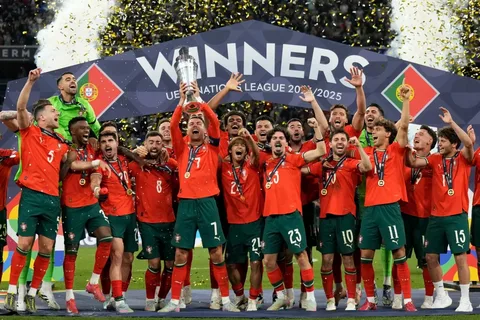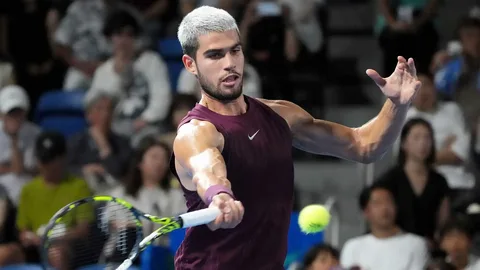
Football’s biggest stage is coming back, and the conversations happening right now tell you everything about why the World Cup generates a level of global attention that no other sporting event can match. Star players, squad selections, potential fixtures, and the tantalizing possibility of one last chapter for some of the game’s greatest ever names all of it is building toward a tournament that is already generating enormous anticipation.
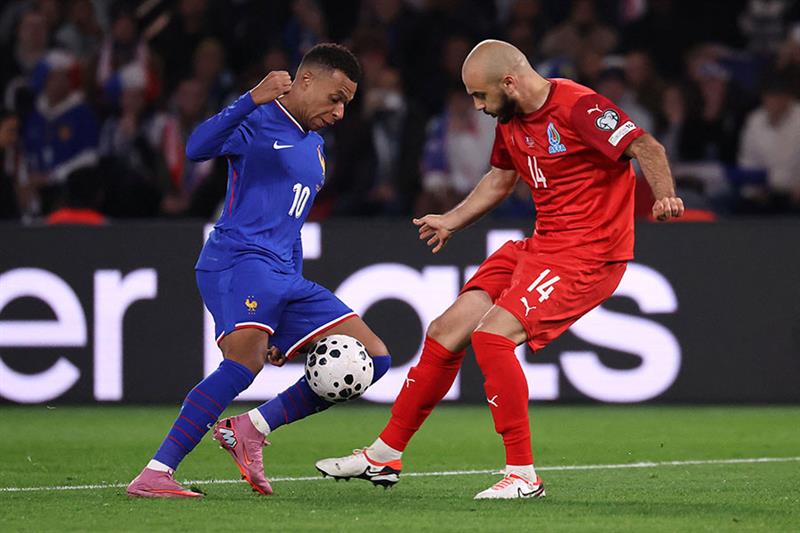
Right at the center of those conversations is Kylian Mbappe. The Mbappe World Cup 2018 performances still live vividly in football memory — a teenager playing with the kind of confidence and quality that older, more experienced players spend entire careers reaching for. That tournament made him a superstar. Everything since has only confirmed it.
Mbappe Continues to Lead France World Cup Hopes
Since the Mbappe World Cup 2018 campaign ended with a winners medal on his chest, Kylian Mbappe has grown into something beyond what even that breakthrough suggested was possible. He is no longer just France’s most dangerous attacking player he is one of the most recognizable footballers on the planet, and increasingly, the leader that the France squad looks to when the matches that matter most arrive.
That leadership evolution is significant. The experienced figures who shaped France’s previous World Cup winning campaigns have moved on, and the responsibility of carrying the team’s ambitions has shifted noticeably toward Mbappe. Football experts who follow the French national setup closely describe the coaching staff’s approach as deliberately structured around his strengths his pace, his finishing ability, his capacity to perform in the moments that define knockout tournaments.
The France World Cup squad coming into 2026 reflects that structure. Experienced defenders who bring organizational quality, creative midfielders who can supply the ball in ways that allow the attack to function efficiently, and enough attacking variety to create problems for teams that focus entirely on stopping Mbappe. On paper, it is one of the more balanced squads in the tournament field.
Is Ronaldo Playing in the World Cup 2026?
The question “Is Ronaldo playing in the World Cup 2026?” has been one of the most searched football phrases globally for months, and the reason is simple Cristiano Ronaldo has not closed the door, and when Ronaldo has not closed a door, his supporters refuse to close it for him.
The Portuguese captain has maintained a level of physical fitness that continues to defy easy categorization for someone at his stage of career. His goal-scoring numbers at club level remain significant. His desire to compete has never looked diminished in any public statement or performance. Whether that translates into a place in Portugal’s World Cup squad depends on a combination of factors — his form, his fitness in the weeks before selection, Portugal’s tactical direction, and the judgment calls of a coaching staff that will be weighing individual brilliance against squad cohesion.
What is certain is that for millions of football supporters, the FIFA World Cup 2026 represents something very specific in terms of Ronaldo’s presence or absence a final opportunity to watch one of the most extraordinary players the sport has ever produced compete on the biggest stage, against the best, with everything at stake.
Is Messi Playing in the World Cup 2026?
The question runs in parallel: “Is Messi playing in the World Cup 2026?” And it carries its own particular emotional weight, because when Lionel Messi lifted the World Cup trophy in Qatar in 2022, he completed the one achievement that had seemed to define what remained unfinished in his career. He had nothing left to prove. Which makes the question of whether he comes back to do it again in 2026 genuinely fascinating.
Messi has not made a definitive public commitment either way, and that ambiguity has allowed the possibility to stay alive in the minds of supporters who are deeply reluctant to accept that they might have already watched his final World Cup. Reports suggest his decision will ultimately be shaped by how his body responds to continued top-level competition and by whether his motivation for another campaign stays high enough to justify the demand it places on him.
For Argentina, the question matters enormously. Messi’s presence does not just add quality to the squad it changes how opposing teams prepare for Argentina, how the younger World Cup players in the squad carry themselves, and how the nation collectively approaches the tournament. His influence is not reducible to what he does with the ball.
Football analysts are consistently clear on one thing: if Messi participates in 2026, global interest in the tournament goes up in ways that are measurable and significant.
Is Neymar Playing in the World Cup 2026?
Brazil’s answer to the same question points in a somewhat different direction. “Is Neymar playing in the World Cup 2026?” is a question shaped heavily by injury history a factor that has made Neymar’s recent career significantly more uncertain than his talent has ever warranted.
The Brazilian federation has been careful not to close the door on Neymar while also acknowledging, implicitly, that the squad’s preparations cannot depend on his availability in the way they once might have. If he is fit, if he is playing regularly, if his form is there — the expectation within Brazilian football is that he would be part of the conversation. His technical quality and his ability to affect games individually have not diminished in the moments when he has been fully fit and playing.
What Neymar’s participation in 2026 would mean for Brazil is not just about what he contributes tactically. It is about what he represents to a Brazilian football identity that has been searching for the kind of totemic figure that previous generations had in abundance. Brazil supporters want to restore the country’s World Cup dominance, and for many of them, Neymar’s involvement is connected to that ambition in ways that go beyond individual statistics.
The prospect of Mbappe, Messi, Ronaldo, and Neymar all appearing in the same tournament is generating excitement that feels almost unprecedented among football audiences worldwide. Whether all four make it to 2026 remains to be seen but the fact that it is genuinely possible is enough to fuel the conversation.
Iran vs New Zealand World Cup 2026 Discussion Grows
Among the fixtures and potential matchups generating discussion in football communities, Iran vs New Zealand World Cup 2026 has emerged as one of the more interesting lower-profile storylines to follow.
Iran have built genuine credibility as one of Asia’s most consistent football nations, with a tactical discipline and squad experience that has allowed them to compete effectively against opponents whose individual quality might appear superior on paper. Their performances in recent international competitions have reinforced that reputation.
New Zealand’s football story is one of steady development and increasing international ambition. The country is investing in infrastructure and coaching with the aim of building a program that can compete meaningfully at World Cup level rather than simply qualifying and surviving.
A potential Iran vs New Zealand encounter encapsulates something important about what the expanded FIFA World Cup 2026 format is designed to produce — more matches between teams from different confederations, more opportunity for football cultures outside the traditional European and South American elite to develop through high-level competitive experience. Asian football’s trajectory over the past decade has been genuinely impressive, and fixtures like this contribute to that development.
France vs Senegal Time Becomes Trending Search
Fans around the world have been searching heavily for France vs Senegal time, and the level of interest reflects what a match between these two teams actually represents.
Senegal has established itself as one of Africa’s most formidable football nations, combining physical intensity with technical quality and a defensive organization that makes life genuinely difficult for attacking teams who approach the fixture without respect. Their performances in previous World Cups including a historic run that produced results against top European opposition have created a reputation that France would be foolish to underestimate.
A France vs Senegal match would attract a specific kind of global attention. Beyond the football itself, it carries cultural weight that connects to diaspora communities across Europe, to the history between the two nations, and to the broader story of African football asserting itself as a genuine force at the sport’s highest level.
The expectation is that tournament organizers will release complete fixture schedules with France vs Senegal time details closer to the competition. When they do, the level of anticipation already visible in search behavior suggests the match will be one of the most widely watched in the group stage.
World Cup Players Under Global Spotlight
Every World Cup creates new football icons, and the pressure that descends on young World Cup players in 2026 will be familiar to anyone who has watched previous tournaments closely. The spotlight arrives suddenly and without gradual adjustment one match can permanently change how a player is perceived globally.
Mbappe’s own story is the most vivid recent example of this dynamic. The Mbappe World Cup 2018 campaign did not just make him famous it restructured expectations for his entire career and created a standard against which his every subsequent performance has been measured. Something similar will happen to players in 2026 whose names are not yet widely known outside their own countries.
Coaches in preparation camps around the world are monitoring their squads against exactly this pressure. Can players who perform consistently for their clubs maintain that level when the stakes are higher, the opposition is better, and the margin for error is smaller? That question is at the heart of every national team selection process right now.
The expanded tournament format increases the number of players who will experience this spotlight and, for some of them, the experience will be career-defining in ways that could not have been predicted beforehand.
Global Impact of FIFA World Cup 2026
The economic and social scale of what is coming is difficult to fully capture in advance, but the projections are significant across every relevant dimension. Tourism in host cities is expected to reach levels that strain infrastructure planning. Broadcasting rights have commanded record-setting fees. Digital and social media engagement during previous World Cups has already been extraordinary 2026, with more teams, more matches, and more potential star players, is expected to push those numbers further.
Technology, stadium infrastructure, and fan experience design have all become major focus areas for the organizers of a tournament that will be spread across three countries and multiple time zones in ways no previous World Cup has attempted.
The possibility of all four of football’s biggest contemporary names Messi, Ronaldo, Neymar, and Mbappe appearing in the same competition is not incidental to these projections. Their combined global audience is enormous, and their potential participation is part of what is already making this tournament feel like a genuinely historic moment for the sport rather than just another edition of a recurring event.
Conclusion
FIFA World Cup 2026 is building toward something that already feels significant before a ball has been kicked. The memories attached to Mbappe World Cup 2018 are part of the emotional foundation a reminder of what these tournaments can produce and what level of performance they can draw from the best players in the world.
France arrive as genuine contenders, built around a player who has only continued to improve since that tournament in Russia. The questions surrounding Messi, Ronaldo, and Neymar add a layer of anticipation that goes beyond squad analysis into something more personal for the global football audience the question of whether these extraordinary careers will include one more chapter on the biggest stage.
Qualification campaigns are progressing. Squads are being shaped. And the sense that 2026 could be a tournament people remember for a very long time is only getting stronger.
FAQs
Which team is Mbappe in 2026?
Kylian Mbappe is representing France at the FIFA World Cup 2026, as he has throughout his senior international career. He remains the central figure in the French national team’s attacking setup and is expected to be one of the most impactful players in the entire tournament. Since his Mbappe World Cup 2018 breakthrough, his role within the France squad has grown from dynamic young talent to genuine leader and the coaching staff’s preparations have been shaped significantly around how to maximize what he offers at tournament level.
Is Mbappe in the World Cup?
Yes, Kylian Mbappe is participating in the FIFA World Cup 2026 as part of the France squad. His involvement was never seriously in doubt he is fit, he is the captain, and he is the player most associated with France’s tournament ambitions. Fans who remember what the Mbappe World Cup 2018 campaign produced have spent the years since watching him develop into something even more imposing, and expectations for his performance in 2026 are correspondingly high.
Why is Mbappe not playing for France?
Kylian Mbappe is playing for France and is expected to feature prominently throughout the tournament. There have been isolated occasions in his career where he has missed matches for the national team due to injury or fitness management, and those absences tend to generate significant media attention precisely because of how central he is to the squad. Any temporary absence from a specific match or training session should not be mistaken for a more serious situation Mbappe’s commitment to the France World Cup campaign is not in question.