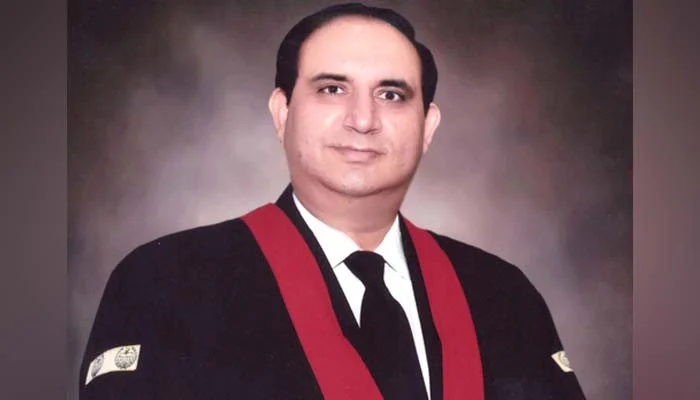
Lahore, September 3, 2026 — One of the Lahore High Court judges, Justice Raheel Kamran Sheikh, has stepped down from the bench. He sent his resignation letter to President Asif Ali Zardari on Thursday, invoking Article 206 of the Constitution. In the letter, he said he wants to move into legal scholarship, policy research and comparative judicial practice.
The exit comes at a sensitive time for the Lahore High Court. The court has been running well below its sanctioned number of judges for over a year, and every departure adds pressure to an already stretched roster of Lahore High Court judges handling one of the country’s heaviest caseloads.
Background: A Judge Known for Rights and Commercial Law
Justice Sheikh joined the Lahore High Court as a judge on May 7, 2021. Before that, he built a varied legal practice covering human rights, public law, white-collar crime, commercial law, taxation and regulatory matters. He is the son of Akram Sheikh, a well-known lawyer who once headed the Supreme Court Bar Association.
His credentials run deep. He holds a law degree from the London School of Economics and trained as a barrister at the Middle Temple in London. He was enrolled as an Advocate of the High Courts in 2000 and as an Advocate of the Supreme Court in 2012. Between 2016 and 2020, he served as a member of the Pakistan Bar Council, also referred to as the Bar Council of Pakistan, where he chaired the Human Rights Committee and sat on its executive committee. That background at the Bar Council of Pakistan gave him a hand in shaping national legal policy years before he took the bench.
He was 27th on the LHC seniority list at the time of his resignation and was not due to retire until January 30, 2036, according to Dawn, which reviewed his resignation letter.
Details: What the Resignation Letter Says
In the letter, dated September 3, Justice Sheikh described his years on the bench as the most formative and fulfilling stretch of his career. He wrote that after what he called “deep and sustained reflection,” he had concluded that his growth as a jurist, and his ability to contribute to the rule of law and access to justice, would be better served outside the courtroom.
He thanked his senior colleagues among the Lahore High Court judges for their guidance and acknowledged his staff for their support throughout his tenure. He said he was leaving with a lasting commitment to the Constitution and the rule of law. A copy of the letter was also sent to the LHC registrar’s office, following standard procedure for judicial resignations.
The resignation was not linked to any disciplinary matter or controversy. Rather, it reflects a personal career shift toward research and academic work, a path some senior lawyers eventually choose after years of judicial service.
Quotes: How the Resignation Was Framed
Justice Sheikh’s own words carried most of the weight in this story. He wrote that his further development as a jurist “would be best served by a period of broader engagement with legal scholarship, policy research and comparative judicial practice.”
Colleagues at the court have not issued a formal statement, and neither the registrar’s office nor the Bar Council of Pakistan has commented publicly on the departure as of this report. Legal commentators tracking Lahore High Court information note that resignations of sitting judges are uncommon in Pakistan, where most judges serve until superannuation or elevation to the Supreme Court.
Impact: Another Gap on an Already Thin Bench
The Lahore High Court’s sanctioned strength stands at 60 judges. Earlier this year, official figures showed only 41 judges, including the chief justice, were actually serving, leaving 19 posts vacant. Justice Sheikh’s resignation adds one more seat to that list at a court already dealing with a mounting backlog of cases.
Chief Justice Aalia Neelum had already opened consultations to fill long-pending vacancies before this resignation, interviewing advocates and law officers for possible elevation to the bench. The shortage of Lahore High Court judges has been blamed for delays in case disposal across Punjab, and a fresh vacancy is unlikely to ease that pressure anytime soon.
For litigants and lawyers who rely on timely rulings, fewer sitting judges usually means longer waits. The Judicial Commission of Pakistan, which handles nominations to fill such seats, will need to factor this departure into its next round of appointments.
Conclusion: What Comes Next
The Judicial Commission of Pakistan is expected to take up the vacancy left by Justice Sheikh alongside the other pending seats at the Lahore High Court. Whether his exit accelerates the broader appointment process, which has moved slowly over the past year, remains to be seen.
Justice Sheikh has not detailed his next professional step beyond his stated interest in scholarship and policy research. Given his background with the Bar Council of Pakistan and his academic training abroad, a move into teaching, writing or advisory work would fit naturally with the path he has described.
Frequently Asked Questions
How many judges serve on Lahore High Court?
The Lahore High Court has a sanctioned strength of 60 judges, including the chief justice. In practice, the actual number of sitting Lahore High Court judges has run well below that figure for some time. Earlier in 2026, only 41 judges were serving, leaving 19 seats vacant, and Justice Raheel Kamran Sheikh’s resignation adds another gap to that count. The court’s administration and the Judicial Commission of Pakistan periodically review this shortfall and move to fill vacancies as sitting judges retire, resign or get elevated to the Supreme Court.
Who are the civil judges at the Lahore High Court?
Technically, the Lahore High Court itself does not have “civil judges” on its own bench; that title belongs to officers of the subordinate judiciary in Punjab’s district courts, which fall under the LHC’s administrative supervision. Civil judges handle first-instance civil disputes at the district and tehsil level, and their appointments, transfers and disciplinary matters are overseen by the Lahore High Court through its administration committee. The judges who sit on the LHC bench itself hold the title of Justice, not civil judge, and are appointed through the Judicial Commission of Pakistan and the parliamentary committee process.
Who is the current Chief Justice of the Lahore High Court?
Justice Aalia Neelum has served as the Chief Justice of the Lahore High Court since July 11, 2024, when she took oath and became the first woman to hold that position. She had earlier served as a Justice of the Lahore High Court since April 2013. As Chief Justice, she oversees the administration of the court, including the ongoing process of filling vacant judge posts, a task that now includes replacing Justice Raheel Kamran Sheikh following his resignation.