

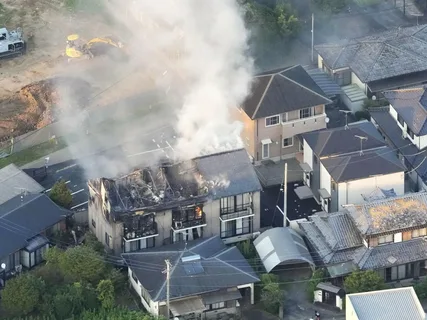

A powerful magnitude 7.1 Japan Kyushu earthquake has killed at least 13 people, with rescuers still searching through the rubble of a partially collapsed shopping mall in Kumamoto prefecture. The Japan earthquake mall disaster has become the focal point of rescue efforts, after an apparent gas explosion tore through the building shortly after the quake struck.
Background
The earthquake struck southern Japan on Tuesday, July 28, with its epicenter located roughly 20 kilometers south of Kumamoto City, the largest city on the island of Kyushu with a population of around 700,000 people. This region also suffered a deadly earthquake a decade ago, in 2016, which killed dozens and left lasting scars on local infrastructure.
Prime Minister Sanae Takaichi confirmed the rising toll on Wednesday, telling reporters in Tokyo that rescue teams were racing against time to reach people still trapped. Around 260,000 residents across the prefecture were instructed to move to evacuation centers as authorities assessed the scale of the damage.
Police said they received 386 emergency calls in the hours after the Japan Kyushu earthquake hit, including reports of collapsed buildings and people trapped inside damaged structures. Authorities have warned residents in the hardest-hit areas to remain alert for aftershocks and landslides for at least another week.
Details
The most devastating single incident tied to the disaster occurred at the Aeon Mall in Kashima Town, where the second floor of the shopping center collapsed after what officials believe was a gas explosion, occurring roughly an hour after the initial earthquake. The blast reportedly happened after customers and staff had already been evacuated from the building.
Eight people were pulled from the rubble of the Japan earthquake mall collapse, five of them with injuries, while two women in their twenties were confirmed dead at the scene. Aeon, the mall’s operator, said several of its roughly 2,700 staff members remained unaccounted for as rescue crews continued searching the wreckage.
Elsewhere in the region, a chimney collapsed at a Nippon Paper Industries factory in Yatsushiro city, trapping additional workers under debris. Rescue teams have been working simultaneously across both sites, splitting resources between the mall and the factory as the search for survivors continues.
The quake also caused significant infrastructure damage across Kyushu. A train derailed and fell on its side at Yatsushiro station, part of a bridge collapsed into the Kumagawa River, and stone walls were damaged at Kumamoto Castle, a major tourist site still undergoing repairs from the 2016 earthquake. Roads leading into coastal towns were cracked and buckled, and the runway at Aso Kumamoto Airport remained closed as of Wednesday.
More than 36,000 homes were left without power following the quake, raising concerns about heat exhaustion as temperatures climbed to around 34 degrees Celsius. Hospitals in Kumamoto and Yatsushiro took in dozens of injured patients, with one facility in Yatsushiro alone treating around 40 people.
Quotes
Prime Minister Takaichi told reporters that people were still waiting to be rescued and described the situation as a race against time, adding that the government would marshal all available resources to save as many lives as possible.
A spokesperson for Aeon told AFP that the explosion at the mall occurred only after customers and staff had already evacuated the building, an account officials are still verifying as part of the broader investigation into the blast’s cause.
A government source told Japan’s Kyodo news agency that the explosion appeared to have been caused by a gas leak, which investigators believe led to the collapse of ceilings and walls inside the shopping center.
Impact
The Japan Kyushu earthquake has disrupted daily life across a wide stretch of southern Japan, affecting transportation, manufacturing, and public services simultaneously. Several major manufacturers in the Kyushu region temporarily suspended operations following the quake, though many resumed work once initial inspections found no major structural damage to their facilities.
The disaster has also renewed public attention on Japan’s earthquake preparedness, given that Kumamoto prefecture is still recovering from the damage caused by the 2016 quakes. Kumamoto Castle’s renewed damage, in particular, has drawn attention to how repeated seismic events can set back long-term reconstruction efforts in the same communities.
Internationally, the earthquake has drawn expressions of concern from neighboring countries and disaster relief organizations, echoing how the global community has responded to major Japanese earthquakes in the past, including the massive 2011 Tohoku disaster.
Conclusion
With search and rescue operations still ongoing at both the Aeon Mall and the Yatsushiro factory site, officials say the death toll from the Japan Kyushu earthquake could rise further as crews continue clearing debris. Investigators are also expected to release more detailed findings on the cause of the mall explosion in the coming days.
For now, authorities remain focused on the immediate rescue effort while warning residents to stay alert for aftershocks, landslides, and further disruptions to power and transportation across the affected region.
Frequently Asked Questions
Where did the Japan earthquake hit?
The earthquake struck southern Japan’s Kyushu region, with its epicenter located approximately 20 kilometers south of Kumamoto City, a major city on the island with a population of around 700,000 people. The hardest-hit areas included Kashima Town, where the Aeon Mall collapse occurred, and Yatsushiro city, a coastal community that saw damaged roads, collapsed buildings, and a partially collapsed bridge over the Kumagawa River. This same general region, Kumamoto prefecture, also experienced a series of severe earthquakes in 2016, meaning many of the same communities have now faced major seismic damage twice within roughly a decade.
Where was the 7.1 earthquake in Japan?
The magnitude 7.1 earthquake was centered in Kumamoto prefecture on the island of Kyushu, in southwestern Japan, striking an area that includes both urban centers like Kumamoto City and smaller coastal towns such as Kashima and Yatsushiro. Kyushu is Japan’s third-largest island and sits along a seismically active zone, making it particularly vulnerable to both earthquakes and related hazards like landslides. The 2026 quake’s location closely overlaps with the epicenter of the destructive 2016 Kumamoto earthquakes, which also caused dozens of deaths and significant damage to historical sites, including Kumamoto Castle.
Who helped Japan after the earthquake in 2011?
Following the devastating magnitude 9.0 earthquake and tsunami that struck Japan’s Tohoku region in March 2011, dozens of countries and international organizations offered assistance, including the United States, which deployed military personnel and resources through Operation Tomodachi, one of the largest humanitarian relief operations the US military has ever conducted abroad. Other nations, including South Korea, China, Australia, and members of the European Union, sent rescue teams, medical supplies, and financial aid, while organizations like the Red Cross and United Nations agencies coordinated broader relief and reconstruction support. That disaster, which also triggered the Fukushima nuclear crisis, remains one of the costliest natural disasters in modern history and continues to shape how Japan approaches earthquake preparedness and international disaster cooperation today.