

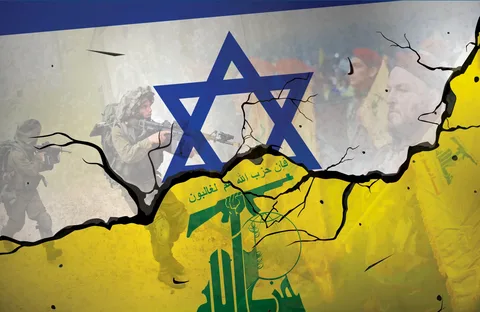

The Israel-Hezbollah War 2026 has entered a dangerous new phase as military strikes, drone attacks, and artillery exchanges continue across the Israel-Lebanon border. The growing violence has raised concerns among regional governments and international observers who fear that the conflict could expand beyond Lebanon and Israel.
The latest developments come amid heightened tensions throughout the Middle East, with ongoing regional disputes creating conditions that could trigger a broader confrontation. Thousands of civilians remain affected by the instability, while diplomatic efforts to reduce tensions have yet to produce lasting results.
Background
The roots of the current Israel-Hezbollah conflict stretch back decades. Hezbollah emerged in Lebanon during the early 1980s and gradually became one of the most influential political and military groups in the country. Its relationship with Israel has been defined by repeated clashes, border incidents, and periods of open warfare.
Many people searching for information about the Israel Hezbollah conflict Wikipedia history often discover that tensions significantly intensified during the Hezbollah Israel War 2006. That conflict lasted more than a month and resulted in widespread destruction in both Lebanon and northern Israel.
Although a ceasefire ended the 2006 war, disagreements over border security, military activities, and regional alliances continued. Over the years, both sides have accused each other of violations and provocations, leading to recurring confrontations.
Latest Developments in the Israel-Hezbollah War 2026
The Lebanon Israel War 2026 has witnessed a sharp increase in military activity. Israeli forces have carried out operations targeting what they describe as Hezbollah positions, weapons facilities, and military infrastructure. Hezbollah, meanwhile, has launched rockets, drones, and other attacks toward Israeli territory.
Military analysts note that both sides possess significantly more advanced capabilities than they did during the 2006 conflict. Precision-guided weapons, surveillance technologies, and drone systems have transformed the battlefield and increased the risks associated with escalation.
Communities located near the border continue to face disruption. Schools, businesses, and public services have experienced interruptions as authorities respond to security concerns. Many residents have been forced to temporarily relocate due to fears of additional attacks.
Is Hezbollah Attacking Israel Right Now?
One of the most frequently searched questions online is: Is Hezbollah attacking Israel right now?
The answer depends on the specific timing of events. Throughout 2026, there have been multiple reports of Hezbollah attack on Israel incidents, including rocket launches, drone operations, and military exchanges along the border region. These attacks have often been followed by Israeli military responses.
Security conditions remain fluid, and the intensity of clashes can change rapidly. Military officials on both sides continue to monitor developments closely as tensions remain elevated.
Why Is Hezbollah Fighting Israel?
Another common question is: Why is Hezbollah fighting Israel?
Hezbollah states that its actions are connected to regional security concerns, support for allied groups, and opposition to Israeli military operations in the region. The organization also presents itself as a resistance movement defending Lebanese interests.
Israel, on the other hand, argues that Hezbollah represents a significant security threat and points to rocket attacks, military buildup, and cross-border operations as reasons for its actions. These opposing narratives continue to fuel one of the Middle East’s longest-running conflicts.
Political, religious, strategic, and territorial issues all contribute to the complexity of the dispute. As a result, achieving a lasting resolution has proven extremely difficult.
Hezbollah vs Israel: Who Would Win?
The question “Hezbollah vs Israel who would win” frequently appears in public discussions, but experts caution that modern conflicts are rarely determined by a simple winner or loser.
Israel possesses one of the region’s most technologically advanced militaries. Its air force, intelligence capabilities, missile defense systems, and military infrastructure provide significant advantages. Israel also benefits from extensive experience in modern warfare and advanced defense technology.
Hezbollah, however, has developed a substantial military capability over many years. The group possesses a large arsenal of rockets, drones, and trained fighters. Analysts believe Hezbollah’s ability to conduct asymmetric warfare could pose significant challenges during any prolonged conflict.
Most experts agree that a major war would likely result in heavy losses on both sides, significant civilian suffering, and widespread regional instability rather than a clear and decisive victory.
International Reactions
Governments across the world have expressed concern about the growing violence. Several countries have urged restraint and called for immediate efforts to reduce tensions. International organizations have also emphasized the need to protect civilians and prevent further escalation.
Diplomatic initiatives continue behind the scenes, with various regional and global actors attempting to encourage dialogue. However, achieving progress remains difficult as military operations continue.
Financial markets have also reacted to developments. Concerns about regional instability have influenced energy markets, shipping routes, and investor sentiment across parts of the Middle East.
Humanitarian Impact
The humanitarian consequences of the Israel-Hezbollah War 2026 are becoming increasingly significant. Civilians living near conflict zones face ongoing uncertainty, displacement, and economic hardship.Infrastructure damage has affected transportation networks, public services, and local economies. Humanitarian organizations continue to monitor conditions and provide assistance where possible.
Families on both sides of the border remain concerned about safety, security, and the possibility of a larger regional conflict. The longer the fighting continues, the greater the challenges facing affected communities.
Regional Implications
The conflict extends beyond Israel and Lebanon. Regional powers are closely watching developments due to concerns about wider security implications. Any major escalation could affect neighboring countries and potentially draw additional actors into the crisis.
The Middle East already faces multiple political and security challenges. Analysts warn that an expansion of hostilities could complicate diplomatic efforts and increase instability across the region.Energy markets, trade routes, and regional alliances could also be influenced by future developments in the conflict.
Conclusion
The Israel-Hezbollah War 2026 represents one of the most serious security challenges currently facing the Middle East. While military operations continue and diplomatic efforts struggle to gain momentum, concerns about a broader regional confrontation remain high.
The coming weeks may prove critical in determining whether tensions can be reduced through diplomacy or whether the conflict continues to expand. For now, civilians, governments, and international organizations remain focused on preventing further escalation and limiting the humanitarian consequences of the crisis.
FAQs
Who is stronger, Israel or Hezbollah?
Israel generally possesses superior conventional military capabilities, including advanced aircraft, missile defense systems, intelligence networks, and sophisticated military technology. Hezbollah, however, maintains a large arsenal of rockets, drones, and experienced fighters. While Israel holds significant military advantages, experts believe Hezbollah’s asymmetric warfare capabilities could make any conflict costly and complex. Therefore, strength depends on the type of warfare being considered rather than a simple comparison.
Can Jews marry Muslims in Israel?
Israel does not currently provide civil marriage services for interfaith couples within the country. Jewish-Muslim couples often marry abroad in countries that allow civil marriages, and those marriages are generally recognized upon their return to Israel. The issue remains part of a broader debate regarding religious and civil marriage laws in the country.
Which country is Israel’s best friend?
The United States is widely regarded as Israel’s closest international ally. The relationship includes extensive cooperation in defense, intelligence, technology, trade, and diplomacy. Over many decades, the two countries have maintained strong strategic ties that continue to influence regional and international affairs.