

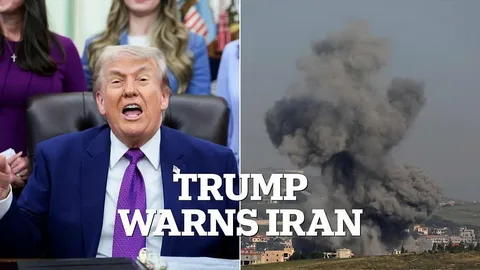

The United States has paused its two-week bombing campaign against Iran, and Tehran has responded by suspending its retaliatory attacks across the region. The sudden mutual halt has reignited hopes of a return to the negotiating table but no one is calling it a ceasefire just yet. Here is everything you need to know about the Iran war peace deal, the latest developments, and what comes next.
Summary
Iran said on Sunday it has halted retaliatory attacks against US allies in the Middle East after Washington stopped its strikes on the country for the past two nights. The announcement came after nearly two weeks of intense military exchanges that had left the earlier ceasefire agreement in tatters. A senior Iranian official told Reuters that Iran will halt its own attacks as long as the United States maintains its latest pause on air strikes. Whether this fragile calm holds or collapses again depends on what happens in the days ahead, particularly around the Trump-Netanyahu meeting planned for Washington.
Background: How Did We Get Here?
On 28 February 2026, Israel and the United States launched airstrikes against Iran, killing its supreme leader and many other officials, destroying a large number of military and government targets, and killing civilians. Iran’s Supreme Leader Ayatollah Ali Khamenei was among those killed in the strikes. Iran responded immediately, launching a broad campaign of missile and drone attacks against US bases and allies across the region, and closing the Strait of Hormuz to global shipping.
On 8 April 2026, the United States and Iran agreed to a two-week ceasefire in the 2026 Iran war, mediated by Pakistan. The ceasefire was fragile from the start. Israel’s continued strikes on Lebanon complicated the agreement, with Iran insisting Lebanon must be included in any truce and the US maintaining the deal applied only to direct US-Iran hostilities.The interim agreement, signed late in June, declared an intent to bring about an “immediate and permanent termination of military operations” in the US-Israeli war with Iran, and started the clock on a 60-day negotiating window to resolve key issues around the future of Iran’s nuclear program. For a brief period, the Strait of Hormuz partially reopened and oil prices fell. But it did not last.
Details: The Ceasefire Collapses and a New Pause Emerges
A US bombing campaign against Iran continued for 13 consecutive nights after the ceasefire agreement crumbled earlier this month. The collapse began when Iran struck commercial vessels in the Strait of Hormuz, prompting the Trump administration to reinstate oil sanctions and resume strikes. Trump declared the ceasefire “over.”Iran responded by striking US military sites in Kuwait and Bahrain in the second day of US-Iran attacks that further jeopardized the ceasefire. Trump declared Iran ceasefire “over” as the two countries traded strikes. The exchanges raised serious fears about a full-scale regional war, with global oil prices surging and the Strait of Hormuz again in jeopardy.
After nearly two weeks of intense military exchanges, signs of a possible pause have emerged as Tehran announced it would stop retaliatory attacks on Gulf countries and American interests in the region. The announcement came after Washington paused strikes on Iranian targets for two consecutive nights, creating a brief moment of calm in a conflict that had raised fears of a wider Middle East war.
Iranian army spokesman Mohammad Akraminia said: “These attacks continued until two nights ago, but over the past two nights the Americans have stopped their attacks. Since our strategy has essentially been retaliatory, we have also halted our retaliatory operations.
Is Iran Still Attacking Israel?
This is one of the most searched questions right now: is Iran still attacking Israel? The situation is nuanced. Israel halted attacks on Iran, Israeli Prime Minister Benjamin Netanyahu said, stopping short of acknowledging a formal ceasefire. Iran has also suspended its operations against Israel but warned it would resume them if Israeli strikes in southern Lebanon continue.
Israel has not been involved in the latest waves of strikes as the most recent military exchanges have been primarily between the US and Iran. However, the situation in Lebanon remains a live flashpoint, with Hezbollah still active and Israeli forces continuing operations in parts of southern Lebanon. BBC Iran news coverage and international reports confirm that the Iran-Israel front has been quieter than the US-Iran front in recent weeks, though it has not been fully pacified.
Quotes: What Officials Are Saying
US President Donald Trump cast his memorandum of understanding with Iran as a “test” that he would have preferred to skip. “It’s a standard tactic in the US that you go to a memorandum of understanding and then you go to the deal. I said, ‘Just go to the deal first,'” Trump said. “But you know what? It was sort of a test, and they weren’t there. They didn’t honor the test.”
Iranian foreign ministry spokesperson Esmaeil Baghaei said Tehran would continue to respond “firmly” to US strikes and had no plans for negotiations. “We currently have no plans for negotiations and remain focused on defending the country,” Baghaei told reporters in Tehran.
Iranian officials privately told Trump administration advisers they “made a mistake” by attacking commercial ships in the Strait of Hormuz and want to continue negotiations, according to CBS News, citing senior US officials. “They came back to the table and said, ‘We screwed up. We made a mistake. Let’s keep talking,'” one US official said.
A US official confirmed that both countries want to return to the interim ceasefire deal and that a compromise being negotiated centers on having Iran run vessel transit through the Strait of Hormuz with fewer restrictions on ships.
Is the Ceasefire Holding in Iran?
The honest answer is: not formally. There is no active ceasefire agreement right now. What exists is a mutual pause both sides have stopped shooting for the moment, but neither has signed a new deal. International observers are closely watching whether the current halt becomes a temporary pause or develops into a broader ceasefire agreement.Diplomacy is happening behind the scenes to ease tensions with Iran. Pakistan and Qatar are also working to bring the two countries back to the negotiating table, regional sources told CNN. The next few days especially the scheduled Trump-Netanyahu meeting in Washington will be critical in determining whether this pause leads to something more durable, or whether the fighting resumes.
Can Iran Now Sell Oil? What Is Trump’s Deal With Iran? Is the Strait of Hormuz Open?
These questions have dominated headlines since the conflict began. Here is where things stand.
Can Iran now sell oil?
The Trump administration revoked a sanctions waiver that had allowed the sale of Iranian oil and petrochemicals, following Iran’s alleged attack on three ships in the Strait of Hormuz. Under the original June memorandum, Iran had been allowed to sell oil freely. That permission was pulled when the ceasefire broke down. As of now, with the mutual pause in place, no new sanctions waiver has been announced. Iran’s ability to freely sell oil remains suspended.
What is Trump’s deal with Iran?
Trump and Iranian President Masoud Pezeshkian signed a memorandum of understanding in June 2026, laying out terms for ending the war. The deal included lifting sanctions on Iran, unfreezing funds, allowing Iran to sell oil freely, and reopening the Strait of Hormuz. The MOU also started a 60-day clock for further talks on Iran’s nuclear program. That deal has since effectively collapsed due to renewed fighting, though both sides say they want to return to it.
Is the Strait of Hormuz open again?
Iran has no intention of restoring the Strait of Hormuz to the status quo ante, when it functioned as a free and open international waterway. The MOU stipulated that Iran would allow ships to pass “with no charge for 60 days only,” followed by negotiations with Oman to define the future administration of the vital trade route. Currently, the Strait is partially operational but remains under significant risk. Traffic has been consistently at around a third of normal, and transits continue, even as the situation remains volatile.
Global and Regional Impact
The Iran war peace deal or the lack of a permanent one has had enormous consequences far beyond the Middle East. Global oil markets have swung violently with every ceasefire announcement and every breakdown. The Strait of Hormuz, through which some 20 percent of the world’s oil once flowed freely, remains a chokepoint of critical global importance.
Traffic in the Strait of Hormuz dramatically dropped off again following strikes on several commercial vessels. Traffic had increased during the ceasefire when negotiations between the US and Iran were ongoing. For countries across Asia and Europe that depend on Gulf oil, every escalation sends fuel prices higher and every pause brings relief.
In Lebanon, the situation remains deeply fragile. By mid-April 2026, more than 2,000 people had been killed in Lebanon, and over one million had been displaced due to the conflict. The broader war has created one of the largest humanitarian crises in the region in recent memory.
Pakistan and Qatar, who have both played active mediating roles, face pressure to bring the two sides back to a sustainable framework. The world is watching.
What Comes Next
The overnight lull came two days ahead of a key meeting scheduled in Washington between President Donald Trump and Israeli leader Benjamin Netanyahu, planned for July 28 exactly five months since US and Israeli forces launched a wide campaign of air strikes on Iranian targets.
The Iran-Israel news agenda will be dominated by what comes out of that Washington meeting. If Trump and Netanyahu agree on a unified approach to Iran, a new ceasefire framework becomes more possible. If they clash over strategy particularly over Lebanon the fragile pause could collapse quickly.
No official text of the 14-point memorandum of understanding signed in June has been published, but both sides have indicated the broad outlines: permanent termination of military operations on all fronts, reopening of the Strait of Hormuz, and resolution of nuclear issues within a 60-day negotiating window. Getting back to that framework and making it stick this time is the central diplomatic challenge of the coming weeks.
FAQs
Can Iran now sell oil?
Iran was briefly allowed to sell oil freely under the June 2026 memorandum of understanding signed between Washington and Tehran. That agreement gave Iran immediate sanctions relief and allowed oil exports to resume, which caused global oil prices to fall significantly. However, the Trump administration revoked that sanctions waiver after Iran allegedly attacked commercial vessels in the Strait of Hormuz. As of now, Iran’s oil sales are once again restricted under US sanctions. Any return to free oil sales will depend on whether Iran and the US can reach a new or restored agreement. The reinstatement of sanctions has already sent oil prices sharply higher again, affecting markets globally, and Iran’s economy already under severe pressure from the war is facing renewed financial strain.
What is Trump’s deal with Iran?
Trump and Iranian President Masoud Pezeshkian signed a 14-point memorandum of understanding in June 2026. The deal aimed for an immediate and permanent end to military operations, the reopening of the Strait of Hormuz, the lifting of US sanctions on Iran, and a 60-day window for further negotiations on Iran’s nuclear program. Trump has described it as a “test” of Iranian intentions one he says Tehran failed when it attacked ships in the Strait. The deal is now effectively in limbo. Both sides say they want to return to its framework, but fresh fighting has made that politically difficult for both governments. The core dispute remains Iran’s insistence on controlling the Strait of Hormuz and the US demand for full, unrestricted, toll-free passage for international shipping.
Is the Strait of Hormuz open again?
The Strait of Hormuz is partially open but remains far from normal operations. Iran has no intention of restoring the strait to its pre-war status as a free and open international waterway. The MOU required Iran to allow ships to pass with no charge for 60 days only, after which negotiations with Oman would define the future administration of the waterway. Iran has been striking vessels that attempt to use the southern route rather than the northern corridor through Iranian waters. Traffic has been running at around a third of normal levels, with massive premium costs for tankers willing to attempt transit. Until a lasting agreement is reached one that clearly defines rights of passage the Strait of Hormuz will remain a volatile and unpredictable route for global energy shipping.