

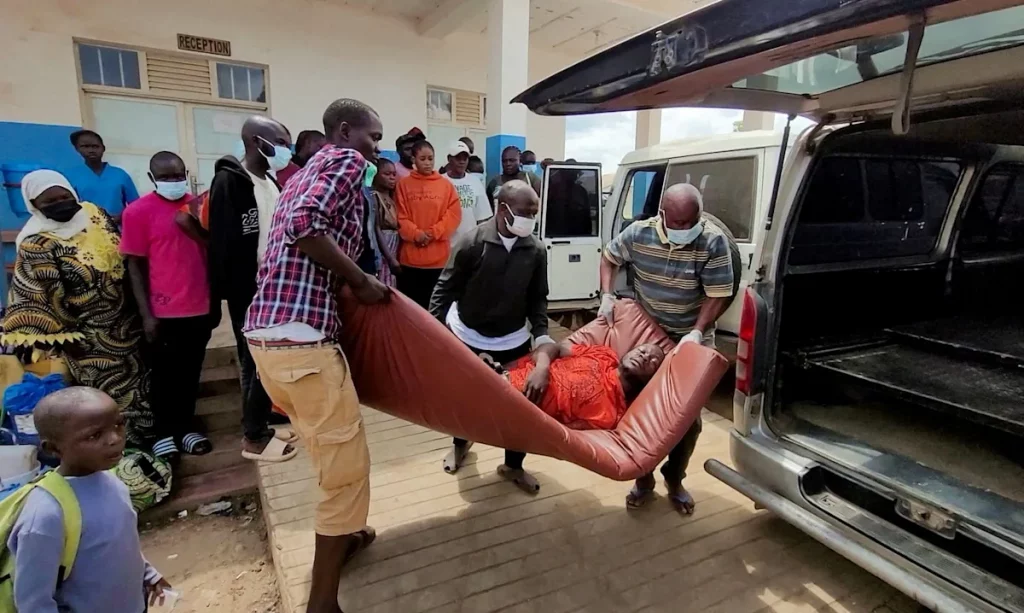

The Ebola outbreak 2026 has become the fastest-growing Ebola epidemic on record. As of July 26, the Democratic Republic of the Congo has confirmed 3,200 cases and 1,405 deaths, with numbers climbing by roughly 100 new cases per day. What makes this outbreak different from previous ones is the virus itself: it’s caused by the Bundibugyo ebolavirus, a species for which no approved vaccine or treatment currently exists, leaving response teams without the tools that contained past outbreaks.
The WHO Ebola outbreak 2026 designation as a Public Health Emergency of International Concern, announced on May 16, triggered international travel restrictions, emergency funding, and the first clinical trials for Bundibugyo-specific treatments.
Background
The outbreak was officially confirmed on May 15, 2026, when DR Congo’s Ministry of Public Health reported cases in Ituri Province, centered around the town of Mongbwalu. This is the 17th Ebola outbreak the DRC has faced and it began just five months after the previous one ended, giving health teams almost no recovery time between emergencies.
Early infections are believed to have started in January or February 2026, months before authorities had enough confirmed cases to declare an outbreak. By the time the declaration came, the virus had already spread beyond Ituri into North Kivu, Haut-Uélé, Tshopo, and South Kivu provinces inside DRC, and had crossed the border into Uganda’s capital, Kampala.
The critical difference from previous outbreaks: past DRC Ebola emergencies were caused by the Zaire ebolavirus, for which an approved vaccine (rVSV-ZEBOV) and treatments exist. The Bundibugyo virus is a different species, and those tools do not work against it. Response teams arrived at an outbreak with no approved interventions available.
Ebola Outbreak 2026 Cases and Map
<cite index=”44″>The number of confirmed Ebola cases in DRC has increased to 3,200, including 1,405 deaths, according to government data released July 26.</cite>
<cite index=”37″>As of July 22, Ituri province remains the most affected, with 2,595 cases including 1,077 deaths reported from 28 of 36 health zones. North Kivu has reported 275 cases including 172 deaths from 11 of 34 health zones.</cite>
<cite index=”38″>Uganda has reported 20 confirmed cases and one death, with cases centered in Kampala.</cite>
The Ebola outbreak 2026 map shows a clear geographic pattern. Ituri Province is the epicenter, accounting for roughly 80% of all cases. From there, the virus has moved along trade and transport routes into North Kivu and Haut-Uélé, and crossed the border into Uganda. The spread into a capital city, Kampala, triggered immediate international concern about urban transmission.
<cite index=”37″>In total, 519 people have recovered, and 74.5% of identified case contacts are under follow-up in Ituri, North Kivu, and Tshopo provinces.</cite>
Ebola Outbreak 2026 Update: The Race Against a Moving Outbreak
<cite index=”45″>WHO’s representative to the DRC, Dr. Anne Ancia, said the outbreak’s “true scale has not yet been fully established.” She told reporters: “We would like to say it is stabilising, but frankly, we cannot say it yet.”</cite>
<cite index=”41″>One of the highest single-day increases was recorded in late July, with 37 deaths in 24 hours, described as one of the highest daily figures since the outbreak began.</cite>
<cite index=”38″>Doctors Without Borders (MSF) called on July 15 for an “urgent scale-up” of the medical response, saying the epidemic “continues to spread at an unprecedented pace and into new areas while efforts to control it remain insufficient.” MSF has more than 1,400 staff on the ground in DRC running treatment centers, isolation units, and supply chains.</cite>
The core problem is a structural one: the Bundibugyo virus has never before spread at this scale. Previous Bundibugyo outbreaks were small and contained. This one has exposed the gap left by building vaccine stockpiles and treatment protocols specifically for the Zaire strain.
No Approved Vaccine or Treatment
This is the detail that most distinguishes the Ebola outbreak 2026 from the outbreaks that dominated global health news between 2014 and 2021.
The rVSV-ZEBOV vaccine, which helped end the 2018-2020 DRC outbreak, was developed specifically for Zaire ebolavirus. It does not protect against Bundibugyo. There is no licensed vaccine or treatment for Bundibugyo at all.
<cite index=”45″>On July 2, a clinical trial began to identify effective treatment options. The trial is evaluating two promising therapies: MBP134, a monoclonal antibody, and remdesivir, an antiviral. Neither has yet been proven to work against the Bundibugyo virus.</cite>
The UK also launched its first Bundibugyo vaccine trial eight weeks into the emergency, but trial results take time. Healthcare workers on the front line in Ituri and North Kivu are responding to one of the most dangerous pathogens known without the protections that existed in previous outbreaks.
Ebola Outbreak 2026 Symptoms
Ebola outbreak 2026 symptoms caused by the Bundibugyo virus are broadly similar to Zaire ebolavirus disease, with some differences in severity profile.
Symptoms typically appear two to 21 days after exposure and include:
- Sudden onset of fever
- Severe headache
- Muscle pain and weakness
- Fatigue
- Sore throat
- Vomiting and diarrhea
- Rash
- Impaired kidney and liver function
- In severe cases: internal and external bleeding
Bundibugyo ebolavirus has historically shown a slightly lower case fatality rate than Zaire ebolavirus, though the current outbreak’s scale and the absence of approved treatment complicate any direct comparison. The case fatality rate in this outbreak is running at approximately 44%.
Early supportive care fluids, electrolytes, maintaining blood pressure, treating secondary infections remains the only established intervention and improves survival odds.
CDC Ebola Outbreak 2026 Response
<cite index=”48″>On May 18, 2026, the CDC, the Department of Homeland Security, and other federal agencies announced enhanced travel screening, entry restrictions, and public health measures to prevent Ebola from entering the United States. The CDC invoked Title 42 of the Public Health Service Act in response to the ongoing outbreak in East and Central Africa.</cite>
<cite index=”49″>The measures restrict entry for non-US passport holders who have been in Uganda, DRC, or South Sudan in the previous 21 days, and coordinate with airlines, international partners, and port-of-entry officials to identify and manage travelers who may have been exposed.</cite>
The US has also issued Level 4 “Do Not Travel” advisories for DRC, Uganda, and South Sudan, the strongest possible travel warning, urging US citizens to avoid travel to those regions entirely.
Travelers from affected countries who are permitted to enter the US are now funneled through designated airports with enhanced public health screening capacity.
Ebola Outbreak Air France: Flight Diverted Over Entry Rules
The Ebola outbreak Air France incident became one of the more visible international moments of the outbreak.
<cite index=”46″>On May 20, Air France flight 378 from Paris to Detroit was diverted to Montreal after US Customs and Border Protection determined that a passenger should not have boarded under the new Ebola entry restrictions. The passenger was removed in Montreal. CBP said the passenger had been “allowed to board in error.”</cite>
<cite index=”51″>No symptoms were detected on the flight. The passenger disembarked from the rear of the aircraft at Montreal Trudeau Airport; the remaining passengers then flew on to Detroit aboard the same plane. The passenger departed back to Paris.</cite>
<cite index=”51″>Dr. Celine Gounder, commenting on the incident, emphasized that the risk to other passengers was essentially zero: “You are not going to catch Ebola from sitting next to somebody who doesn’t have symptoms.”</cite>
<cite index=”46″>Following the incident, Air France announced that passengers arriving from DRC and other affected countries may now enter US territory only through Washington Dulles International Airport, where dedicated public health screening is in place.</cite>
Ebola Outbreak 2026 Travel Restrictions
The Ebola outbreak 2026 travel restrictions now in effect span several countries and have had real impact on airline operations, visa applications, and humanitarian movement.
US restrictions (Title 42):
- 30-day travel ban on non-US passport holders from DRC, South Sudan, and Uganda
- Mandatory screening at designated US airports for travelers from affected regions
- Level 4 Do Not Travel advisories for DRC, Uganda, and South Sudan
<cite index=”47″>The US has also issued Level 4 “Do Not Travel” advisories for DRC, Uganda, and South Sudan, urging citizens to avoid travel to those regions for any reason. Airlines are adjusting booking systems and pre-boarding checks to align with evolving entry requirements. Border authorities globally are enhancing measures at airports to prevent inadvertent boarding of passengers subject to public health restrictions.</cite>
The restrictions have created complications for humanitarian organizations operating in affected regions, who require exemptions to continue delivering medical supplies and personnel to outbreak zones.
Global and Regional Impact
This outbreak is the first since the 2014-2016 West Africa epidemic to require this level of international coordination, and it has exposed gaps in global preparedness specifically for non-Zaire Ebola species.
The spread to Uganda’s capital, Kampala, made clear that geographic containment within DRC was not achievable. Kampala is a regional aviation hub with connections across East Africa and beyond, which is why international health authorities moved quickly to implement screening and restrictions when Ugandan cases were confirmed.
The economic impact on DRC and Uganda has been significant. Ituri and North Kivu are already provinces recovering from years of armed conflict. Adding a large-scale Ebola response on top of existing humanitarian crises has stretched both local health systems and international aid capacity.
For the global health architecture, the outbreak has intensified calls to develop vaccines and treatments for the full range of Ebola species, not just the Zaire strain that dominated previous emergencies.
Conclusion
The Ebola outbreak 2026 is not following the script of previous outbreaks. The Bundibugyo virus has no approved countermeasures, the geographic spread has been faster than any prior outbreak on record, and response teams are working in provinces already destabilized by years of conflict.
The next few weeks will be critical. The clinical trials for MBP134 and remdesivir need time to produce usable data. Ring vaccination, which worked against Zaire ebolavirus by vaccinating contacts of confirmed cases, cannot be deployed here because no Bundibugyo vaccine exists yet. Contact tracing is ongoing but, as WHO has acknowledged, surveillance gaps mean the true case count is likely higher than official figures.
The WHO Ebola outbreak 2026 response is scaling up, but it’s scaling up against an outbreak that’s been running since at least January and is still accelerating. The 3,200 case count as of July 26 represents a genuine crisis, and the trajectory suggests it will be substantially larger before it peaks.
FAQs
Which country has the Ebola virus outbreak in 2026?
The primary outbreak is in the Democratic Republic of the Congo, specifically centered in Ituri Province in the country’s northeast, with spread into North Kivu, Haut-Uélé, Tshopo, and South Kivu provinces. Uganda is also affected, with 20 confirmed cases reported in and around Kampala. The outbreak is caused by the Bundibugyo ebolavirus a species distinct from the Zaire ebolavirus responsible for previous major outbreaks — and for which no approved vaccine or treatment currently exists. As of July 26, DRC has confirmed 3,200 cases and 1,405 deaths, making this the fastest-growing Ebola outbreak on record.
Is there an outbreak of Ebola in the Congo?
Yes, and it is a serious one. DRC has been managing what WHO has formally declared a Public Health Emergency of International Concern since May 16, 2026. The outbreak began in Ituri Province and has spread to multiple provinces and into Uganda. The absence of an approved vaccine or treatment for the Bundibugyo strain has made containment significantly harder than in previous DRC outbreaks, where ring vaccination with the rVSV-ZEBOV vaccine was a core tool. As of late July, cases are increasing by roughly 100 per day, and WHO has said it cannot yet say the outbreak is stabilizing.
Which country has the highest rate of Ebola?
Historically and in the current outbreak, the Democratic Republic of the Congo has by far the highest burden of Ebola. The country has now experienced 17 separate Ebola outbreaks, more than any other nation. The 2018-2020 Kivu outbreak was the second-largest in history. The current 2026 outbreak has already become the fastest-growing on record in terms of case accumulation, and Ituri Province alone accounts for approximately 80% of all confirmed cases. Uganda has experienced its own outbreak linked to the DRC epidemic but at a much smaller scale, with 20 confirmed cases as of late July.