

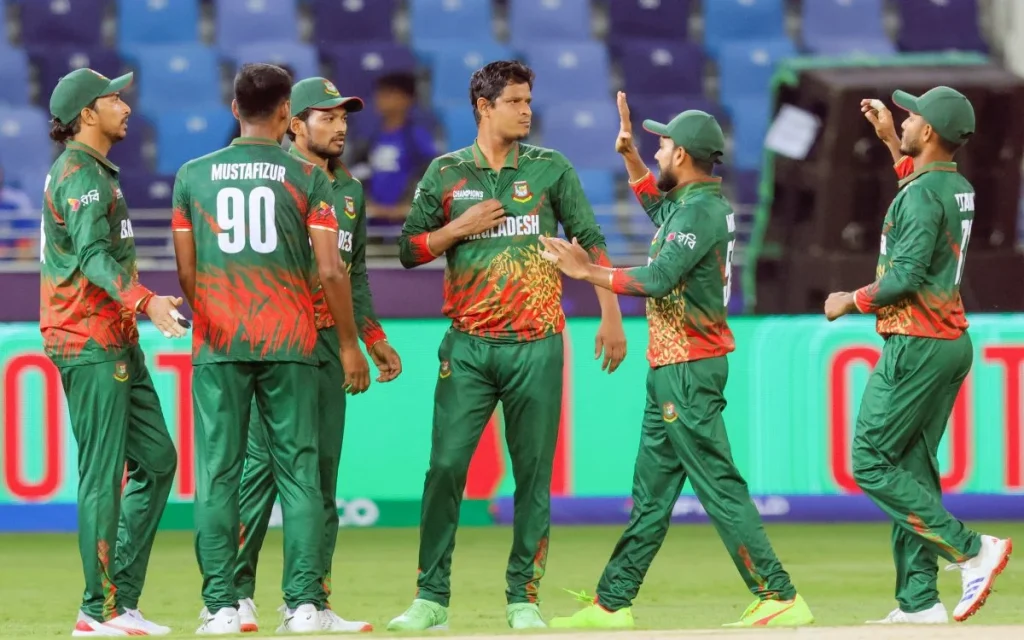

Bangladesh’s national cricket team was supposed to be at this year’s T20 World Cup. Instead, the squad sat the tournament out entirely, and a new government report says that never should have happened.
Background
The Bangladesh national cricket team has been part of every T20 World Cup since the format began, so their absence this year stood out immediately. The story behind it started well before the opening match, in a dispute that had far more to do with politics than cricket.
Relations between the Bangladeshi and Indian governments had been tense for some time following the political changes in Dhaka in 2024. That tension eventually spilled into sport, and once it did, Bangladesh’s T20 World Cup participation became the main casualty.
Timeline: How Bangladesh Missed The Tournament
On January 3, the Indian board told Kolkata Knight Riders to release Bangladesh bowler Mustafizur Rahman from their IPL squad. No reason was given publicly, but the timing, right in the middle of a diplomatic chill, was hard to miss.
A day later, sports adviser Asif Nazrul said openly that he wanted the ICC to move Bangladesh’s World Cup matches out of India. The Bangladesh Cricket Board followed through, formally asking the ICC to relocate the fixtures to Sri Lanka on security grounds.
The ICC looked into it and said no. It found no credible or verifiable threat to the team and told the board its matches would stay in India as scheduled. Bangladesh held its position anyway, and when the government would not clear the team to travel, the ICC removed them from the competition and slotted Scotland into their place.
The tournament went ahead as planned, jointly hosted by India and Sri Lanka from February 7 to March 8, without the Bangladesh cricket team on the field.
Why The Bangladesh Government Committee Got Involved
Public pressure over the withdrawal did not fade once the tournament ended. In March, the Ministry of Youth and Sports set up a three-member Bangladesh government committee to work out exactly what had happened and who was responsible for it.
The committee brought together Dr AKM Wali Ullah of the ministry, former national captain Habibul Bashar, and lawyer Barrister Faisal Dastagir. They spent months gathering accounts from players and officials before presenting their findings in September.
What The Committee Concluded
Their headline finding was blunt: Bangladesh should have played in the World Cup. The report found that the players were ready and had no objection to travelling to India, and that the call to stay away came from the top of government, not the dressing room.
The panel also rated the different pressures behind the decision. It described political tension between India and Bangladesh, together with the ICC’s refusal to shift the venue, as having a “very high” impact on the eventual outcome, more than any other single factor.
Reactions To The Report
Asif Nazrul, who had earlier tried to shift blame onto the board and the players, changed his position once the report landed. He confirmed the decision had been his and defended it, arguing that an ICC assessment had acknowledged real security concerns and that Indian authorities had not done enough to make the trip workable.
Committee member Faisal Dastagir was equally direct at the press briefing, saying the responsibility sat with Nazrul and with the interim government he served in at the time. Neither the cricket board nor the players, he said, were the ones who made the call.
Impact On Bangladesh Cricket
A missed T20 World Cup costs a cricket board more than one tournament’s worth of matches. Bangladesh’s players lost exposure on a global stage, the board lost broadcast and sponsorship revenue tied to the event, and the team’s ranking points took a hit they will need years to recover.
There was a regional ripple too. Pakistan’s board publicly considered withdrawing in solidarity before staying in, which shows how one bilateral dispute between India and Bangladesh nearly reshaped the whole tournament field.
For the Bangladesh Cricket Board, the episode has raised harder questions about how much control it actually had over its own team selection once the interim government got involved, and what safeguards need to exist so a political dispute cannot sideline the national side again.
Conclusion
The government committee has now said clearly what many fans suspected all along: Bangladesh’s absence from the T20 World Cup was avoidable. With the report published and Nazrul no longer in office, attention shifts to whether the cricket board puts any structural changes in place before the next global event comes around.
FAQs
Is Bangladesh out from T20 WC?
Yes, Bangladesh was removed from the 2026 T20 World Cup after the government refused to send the team to India for its scheduled matches. The ICC replaced Bangladesh with Scotland once it became clear the team would not travel, and the tournament proceeded without them.
Why did the ICC remove Bangladesh?
Bangladesh asked the ICC to move its World Cup matches from India to Sri Lanka over safety concerns linked to tension between the two governments. The ICC assessed the request and said there was no credible or verifiable threat, so it kept the matches in India. When the Bangladesh government still refused to clear the team’s travel, the ICC treated the team as withdrawn and brought in a replacement.
What did the Bangladesh government committee find?
The three-member panel concluded that Bangladesh should have taken part in the tournament and that the players had been willing to travel throughout. It held former sports adviser Asif Nazrul and the interim government responsible for the final decision to keep the team home.