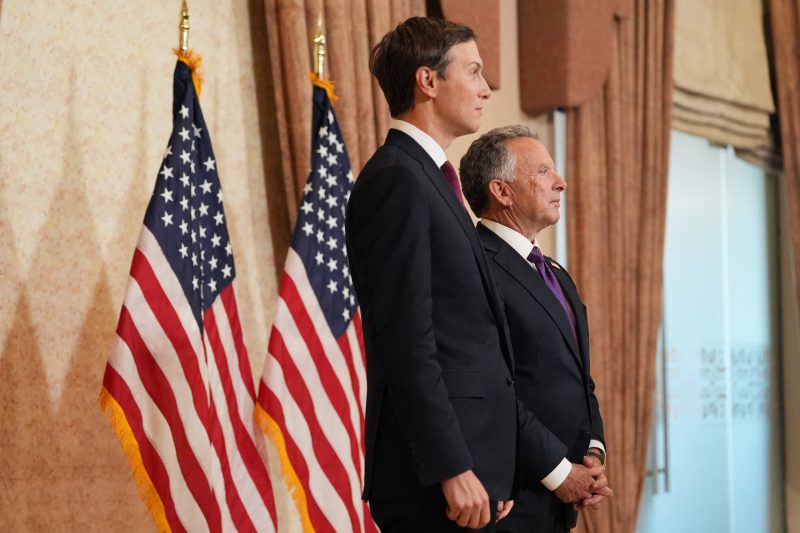
The Iran war entered a critical diplomatic phase on April 24, 2026, as the United States dispatched senior envoys to Pakistan for direct talks. White House press secretary Karoline Leavitt confirmed that US special envoy Steve Witkoff and Jared Kushner will head to Pakistan on Saturday morning to engage in “direct talks” with their Iranian counterparts, saying the Iranians had reached out and asked for an in-person conversation.The Iran news comes amid a fragile ceasefire, a widening US-NATO rift, and the ongoing closure of the Strait of Hormuz.
Background: How the Iran War Began
On 28 February 2026, Israel and the United States began a series of strikes against Iran, saying they aimed to induce regime change and target its nuclear and ballistic missile programme. Iran’s supreme leader, Ali Khamenei, was killed in the strikes.
Iran responded swiftly and forcefully. Iran launched hundreds of drones and ballistic missiles at Israel and at US military bases in neighboring Arab countries including Bahrain, Jordan, Kuwait, Qatar, Saudi Arabia, and the United Arab Emirates.In a move that shook global energy markets, Iran also closed the Strait of Hormuz the world’s most critical oil shipping lane.
Until the US–Israeli war against Iran, the Strait of Hormuz was open and about 25% of the world’s seaborne oil trade and 20% of the world’s liquefied natural gas passed through it each year.Its effective closure sent shockwaves across global markets and created immediate pressure on Western governments.
Details: The Ceasefire, the Talks, and the Mixed Signals
On 8 April 2026, the United States and Iran agreed to a two-week ceasefire in the Iran war, mediated by Pakistan. Iran had rejected a 45-day two-phased ceasefire framework, instead proposing its own 10-point plan for a peace agreement.
Trump announced a three-week extension to the Israel-Lebanon ceasefire after talks at the White House with Israeli and Lebanese envoys, saying he “could make a deal right now” with Iran but is willing to wait for an “everlasting” agreement.
However, Iran news coming out of Islamabad painted a conflicting picture. Iran’s Foreign Ministry spokesperson Esmaeil Baghaei said that “no meeting is planned to take place between Iran and the US,” adding that Iran’s observations would be conveyed to Pakistan.The statement added yet another layer of confusion to an already unpredictable Iran war situation.
Iran has vowed to retaliate for the seizure of an Iranian cargo vessel by the US Navy, and Iran demanded its release, along with “its sailors, crew and their families.”The incident added fresh tension to the already fragile negotiations.
Why Jared Kushner Is Involved in Iran Peace Talks
The involvement of Jared Kushner in Iran peace talks raised eyebrows globally. Kushner, the son-in-law of President Trump and a veteran of Middle East diplomacy during Trump’s first term, has re-emerged as a key figure in this Iran war.
White House press secretary Karoline Leavitt said President Trump was dispatching Witkoff and Kushner to Islamabad “to go hear” what the Iranians have to say, adding: “We’re hopeful that it will be a productive conversation and hopefully move the ball forward towards a deal.” She confirmed the Iranians asked for the talks.
Vice President Vance, who led the U.S. delegation in the first round of Pakistan talks, is not planning to travel this weekend. Leavitt said Vance “remains deeply involved in this entire process” and will stand by in the United States along with President Trump and Secretary of State Marco Rubio.
Kushner’s involvement signals that Trump is treating these Iran news developments as a personal diplomatic mission mirroring his approach during his first term in dealing with Middle East issues.
Iran’s Demands vs. US Demands: A Wide Gap
Both sides in this Iran war have presented starkly different visions of what a peace deal should look like.
The US proposal included an end to Iran’s nuclear program, limits on its missiles, reopening of the Strait of Hormuz, restrictions on Iran’s support for armed groups, and sanctions relief for Iran.
Iran rejected this outright. The Iranians issued a counter-proposal including an end to US-Israeli attacks on Iran and pro-Iranian forces in Lebanon and Iraq, security guarantees to prevent future aggression, war reparations, and international recognition of Iranian sovereignty over the Strait of Hormuz.
The gap between both sides remains enormous. Iran news analysts widely describe the Iran war negotiations as among the most complex diplomatic standoffs in recent decades, with each side publicly insisting on terms the other has flatly rejected.
What’s Going On Between the US and Europe Over the Iran War?
One of the most consequential side-effects of this Iran war has been the visible fracturing of the transatlantic alliance. The US-Europe relationship has reached one of its lowest points in modern history.
UK Prime Minister Keir Starmer is spearheading efforts to reopen the Strait of Hormuz, along with French President Emmanuel Macron. Standing alongside them were German Chancellor Friedrich Merz and Italian Prime Minister Giorgia Meloni together representing Europe’s four largest economies and pillars of the NATO alliance.
But Trump reacted furiously to these moves. No European nations joined the offensive military action against Iran. Several Britain, Germany, France, Portugal, and Greece eventually allowed American ships and planes to launch strikes, refuel, or rearm at military bases under their control.Trump called NATO members “cowards” and threatened that the US would not be there to help Europe in the future.
An internal Pentagon email circulated laying out potential measures Washington could take against NATO allies it believes have not sufficiently supported its war on Iran, including options such as suspending Spain from NATO and re-evaluating Washington’s stance on the British Falkland Islands.
A former NATO official noted that the level of trust towards the United States in Europe is probably the lowest since World War One.The Iran war has accelerated a European rethinking of its security dependence on Washington.
Quotes: Key Voices on the Iran War
Leavitt told Fox News: “The Iranians reached out and asked for an in-person conversation, as President Donald Trump had asked them to do. So the president is dispatching Steve and Jared to go hear what they have to say.”
US Defense Secretary Pete Hegseth, commenting on the Strait of Hormuz crisis, said: “The time for free-riding is over,” directing the remark at NATO allies who declined to join combat operations.
Pope Leo, speaking aboard the papal plane, urged all sides to remain committed to dialogue, calling the US-Iran negotiations “complex” but stressing that “when conflicts arise, the question is how to promote the values we believe in without the deaths of so many innocents.”
NATO Secretary General Mark Rutte acknowledged Trump’s frustration: “He is clearly disappointed with many NATO allies, and I can see his point. But the large majority of European nations has been helpful with basing, logistics and overflights.”
Impact: Global Consequences of the Iran War
The Iran war’s effects have rippled across the entire world, far beyond the Middle East battlefield.
Around 20% of global petroleum and 20% of liquefied natural gas traverses the Strait of Hormuz each year. Pre-conflict, around 3,000 vessels used the strait each month. Their numbers now stand at around 5% of this level, pushing up global oil and gas prices.
Iran’s foreign minister Abbas Araghchi arrived in Islamabad, coordinating with partners on bilateral matters and consulting on regional developments,underscoring how Pakistan has become a central broker in this Iran war diplomacy. Iran news from the region suggests that multiple major powers including China and Russia are watching the negotiations closely and shaping outcomes behind the scenes.
The USS George HW Bush aircraft carrier arrived in the Middle East, increasing the number of massive US warships in the region to three,a signal that military pressure is being maintained even as diplomacy is attempted.
What Is the Safest Country in Europe If WW3 Breaks Out?
As Iran war news dominates global headlines, many Europeans are asking a pressing question: where is safe?
Switzerland is often seen as Europe’s classic option for neutrality, having avoided involvement in global conflicts for more than 200 years, making it an unlikely participant in any future war. Ireland is another frequently mentioned choice it is not a NATO member and has a history of staying out of major conflicts. Austria also has a long-standing neutral position and is known for being outside NATO.
Portugal’s position on the far side of Europe makes it another relatively safe option, given that any potential enemy countries would have to pass through almost the entirety of Europe to reach it.
However, experts caution that no country is completely immune from the consequences of a global conflict, particularly given the threat of nuclear escalation.
Conclusion: What Comes Next in the Iran War?
The Iran war stands at a pivotal moment. Peace talks are alive but fragile. Trump said that a potential agreement with Iran would be “FAR BETTER than the JCPOA,” referring to former President Obama’s nuclear deal with Tehran.
Iran news from both sides continues to send mixed signals, and the gap between US and Iranian demands remains wide. The coming days of talks in Pakistan whether direct or through mediators will determine whether this Iran war moves toward resolution or deeper conflict.
The world is watching Islamabad very closely.
FAQs
What’s going on between the US and Europe over the Iran war?
A serious rift has emerged. No European nations joined the offensive military action against Iran, though several including Britain, Germany, France, Portugal, and Greece allowed American ships and planes to use military bases on their territory.Trump has publicly attacked NATO allies as “cowards” and threatened to withdraw US support. The Iran war has pushed US-Europe relations to their lowest point in decades, with Europe now beginning to consider a future security order without American leadership.
Why is Jared Kushner involved in peace talks? President Trump is dispatching Witkoff and Kushner to Pakistan because the Iranians reached out and asked for an in-person conversation. Leavitt stated the president is sending them “to go hear what they have to say” and move progress toward a deal.Kushner is a longtime Trump ally with prior Middle East diplomatic experience, making him a trusted personal envoy for the president in sensitive Iran war negotiations.
What is the safest country in Europe if WW3 breaks out?
Switzerland, Ireland, and Austria are most frequently cited as the safest options in Europe, due to their long-standing neutral positions and histories of avoiding major military conflicts.Portugal is also considered relatively safer due to its geographic position at the far western edge of Europe.However, no location offers guaranteed safety in a full global conflict scenario.