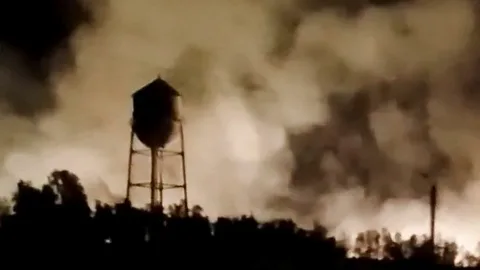
The latest news on the Iran Israel war shows no sign of the fighting slowing down, with US forces striking Iran for a 12th consecutive night while Yemen’s Houthi rebels claimed fresh attacks on two Saudi oil tankers in the Red Sea. The escalation has opened a second front in a conflict already threatening global oil supplies through the Strait of Hormuz.
Background
The current Iran-Israel war traces back to earlier this year, when hostilities between Israel and Iran reignited following the collapse of nuclear negotiations and mounting instability inside Iran. The United States joined the fighting directly in early July, launching a sustained bombing campaign against Iranian military and nuclear-linked infrastructure.
Since then, the status of the Iran-Israel war has shifted from an Israeli-Iranian confrontation into a broader US-Iran conflict, with American forces conducting nightly strikes across Iranian territory. Yesterday’s war update from US Central Command confirmed strikes had reached Iranian cities including Bushehr, Ahvaz, and Sirik, part of a campaign now in its twelfth straight night.
Iran and Iraq war today headlines have also emerged in recent days, though it’s worth clarifying that US strikes remain focused on Iran itself rather than Iraq. Iraq has been drawn into the conflict indirectly, as Iranian-linked attacks have killed American troops stationed at bases in the country and in neighboring Jordan.
Details
President Donald Trump has warned that US forces would strike an Iranian bridge or power plant every time Iranian forces hit a ship in the Strait of Hormuz, a threat aimed at deterring further Iranian attacks on commercial shipping. Iran’s Foreign Minister, Abbas Araghchi, responded by describing Tehran’s defense doctrine as “an eye for an eye.”
The Pentagon confirmed the deaths of three US service members over the past weekend, two at a military base in Jordan and one in northern Iraq, with a search continuing for a possible fourth after unidentified remains were found at the Jordan attack site. Nearly 100 American service members have been injured in Iranian strikes across the Middle East this month, though the Pentagon says the vast majority have returned to duty.
The conflict escalated further this week when Yemen’s Iran-aligned Houthi rebels claimed missile and drone strikes on two Saudi-flagged oil tankers, named the Encelia and the Layla, in the Red Sea. The Houthis said the attacks were carried out because the vessels “violated” a blockade the group had announced against Saudi ports days earlier.
British maritime security monitor UKMTO confirmed a tanker was struck by an unidentified projectile roughly 70 nautical miles southwest of the Saudi town of Al Shuqaiq, causing a fire onboard that the crew was working to contain. The European Union’s naval mission in the region has since warned vessels linked to Israel, the United States, or Saudi Arabia to avoid the Red Sea and the Gulf of Aden altogether.
Oil markets have reacted sharply to the growing threat on two fronts. Brent crude jumped roughly 4 percent to nearly $95 a barrel following the tanker attacks, with analysts at Deutsche Bank noting that strikes between the US and Iran have shown no sign of easing, compounding pressure already building from the near-closure of the Strait of Hormuz.
Quotes
Iran’s Supreme Leader designate, Mojtaba Khamenei, dismissed President Trump’s public statements as “utterly worthless,” warning that continued American strikes would bring what he called “unforgettable lessons” for the United States.
US Energy Secretary Chris Wright, addressing the deaths of American troops in Jordan, said losing American lives was tragic but described the broader campaign as a mission intended to save far more lives by degrading Iran’s ability to threaten global commerce and pursue nuclear weapons.
A Houthi spokesperson said the group’s forces struck the two Saudi tankers because the ships had violated their announced blockade of the Red Sea, adding in a broadcast warning to other vessels that “those ships will be in our target” if shipping continued without compliance.
Impact
The dual escalation across the Strait of Hormuz and the Red Sea threatens two of the world’s most important oil chokepoints simultaneously, raising the stakes far beyond the original Iran-Israel war. Analysts warn that a sustained Houthi blockade, layered on top of the Hormuz disruption, could push global oil prices significantly higher heading into peak summer demand.
Regionally, Gulf states caught between the fighting face growing risk simply by hosting US military infrastructure or allowing Saudi oil shipments through their waters. Kuwait reported attacks on a power and desalination plant for a second consecutive day, while Jordan continues dealing with the aftermath of the deadly strike that killed US troops there.
For global markets, the current Iran update means one more layer of uncertainty in an already volatile summer, with gasoline prices in the United States climbing back above $4 a gallon as the conflict intensifies. Shipping companies have begun rerouting vessels away from both the Bab al-Mandeb Strait and sections of the Persian Gulf, adding cost and delay to global trade routes.
Conclusion
With US strikes on Iran now well into their second week and Houthi forces opening a new front against Saudi shipping, neither side is showing signs of backing down. President Trump has signaled he is weighing further expansion of military operations, while Iranian and Houthi leaders continue vowing retaliation for what they describe as escalating American and Saudi aggression.
For anyone tracking the current Iran update in the days ahead, three flashpoints are worth watching closely: whether the Houthi blockade on Saudi ports holds, whether the death toll among US troops in Iraq and Jordan continues climbing, and whether oil prices keep rising as shipping routes through both the Strait of Hormuz and the Red Sea remain under threat.
Frequently Asked Questions
Why did the Houthis attack the Red Sea?
The Houthis, an Iran-aligned rebel group controlling much of Yemen, announced a blockade against Saudi shipping in the Red Sea shortly before claiming strikes on two Saudi-flagged oil tankers, the Encelia and the Layla. The group framed the attacks as retaliation against vessels it accused of violating this blockade, and the move appears connected to the broader Iran-Israel war, since the Houthis have long positioned themselves as part of the Iran-backed regional alliance opposing US and Saudi interests. This marks an expansion of a tactic the group has used before, having previously targeted shipping in the Red Sea during the Gaza war, though this latest round directly targets Saudi vessels rather than ships linked to Israel.
Did the Houthis attack Saudi?
Yes, the Houthis claimed responsibility for missile and drone strikes on two Saudi-flagged oil tankers in the Red Sea, identifying the vessels as the Encelia and the Layla. Saudi state media confirmed a fire broke out on the Encelia’s bow after being targeted while sailing in the Red Sea, though Saudi authorities have not commented on the reported attack on the Layla, and the incident remains only partially confirmed by independent sources. The attacks came shortly after the Houthis publicly threatened a maritime blockade against Saudi Arabia, a country the group has fought for years amid Yemen’s broader civil conflict.
What are the Houthis fighting for?
The Houthis, formally known as Ansar Allah, are a Zaidi Shia rebel movement that has controlled large parts of Yemen, including the capital Sanaa, since seizing power from the internationally recognized government in 2014. The group receives backing from Iran and has framed much of its recent military activity, including previous Red Sea shipping attacks, as solidarity with Palestinians and opposition to US and Israeli influence in the region. More broadly, the Houthis have fought a prolonged civil war against a Saudi-led coalition backing Yemen’s internationally recognized government, and their latest targeting of Saudi tankers reflects both this long-running rivalry and their alignment with Iran in the current wider regional conflict.