
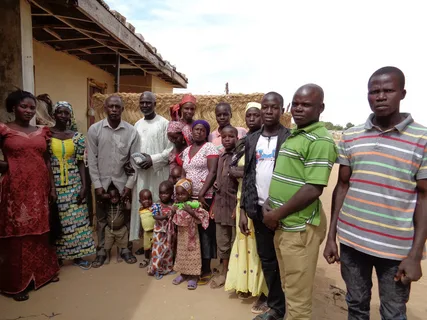

Nigeria is facing one of the most severe internally displaced persons crises in Africa. Millions of Nigerians have been forced from their homes due to armed bandit attacks, Boko Haram insurgency, and farmer-herder conflicts. Women and children are among the most vulnerable, yet many are finding unexpected paths to survival through NGO-backed vocational programs and community support.
Background
For more than a decade, violence has torn through communities across northern and northeastern Nigeria. States like Katsina, Zamfara, Borno, and Adamawa have witnessed repeated armed raids, mass kidnappings, and deadly attacks on rural villages. These events have pushed hundreds of thousands of families into displacement camps, urban centers, and neighboring states.
The term “internally displaced persons Nigeria” has become a defining phrase in conversations about West African humanitarian crises. Unlike refugees who cross international borders, internally displaced persons, or IDPs, remain within their own country but lose access to their homes, livelihoods, farms, and family networks. Their suffering often goes underreported compared to refugees, yet their numbers in Nigeria are staggering.
International organizations including Plan International Nigeria, UNDP, UNHCR, and UNICEF have been working on the ground to provide emergency relief, education, and economic empowerment to affected communities. But the scale of the crisis continues to overwhelm available resources.
The Scale of Displacement: Who Are Nigeria’s IDPs?
Nigeria hosts one of the largest IDP populations on the African continent. The crisis spans multiple regions and is driven by distinctly different conflict dynamics in different parts of the country.
In the northeast, the Boko Haram insurgency that began around 2009 has displaced millions from Borno, Yobe, and Adamawa states. Attacks on villages, bombings of markets, and mass abductions of schoolchildren forced entire communities to flee their homes. Many have been living in IDP camps for years with little prospect of immediate return.
In the northwest, states like Katsina, Zamfara, Kebbi, and Sokoto have seen a dramatic rise in bandit attacks over the last five years. Armed groups raid villages, kill residents, abduct community leaders for ransom, and destroy farmland. Farmers who depend on agricultural income are often the hardest hit, losing not only their homes but their entire source of food and revenue.
In the Middle Belt region, violent clashes between nomadic Fulani herders and settled farming communities have created additional waves of displacement. Competition over land and water resources, worsened by climate change and shrinking agricultural land, has fueled cycles of revenge attacks that leave villages burned and communities scattered.
A Mother’s Story: Survival After Loss
Safiya Musa of Kankara, Katsina State, is one of the countless internally displaced persons Nigeria has produced in recent years. When armed bandits raided her town in 2023, she locked herself inside her room while her two youngest children, Umar aged four and Maryam aged six, were playing outside. Her husband had gone to the farm. She never saw any of them again. The bandits killed approximately 20 people, including her husband and both young children, as they left the community.
Safiya fled to Batsari with her three surviving children and was later forced to flee again when violence reached there too. She eventually arrived in Jibia, where she joined a camp for internally displaced persons Nigeria shelters in the border region near Niger.
For months she survived by grinding grain and doing temporary jobs. Then she was selected for a handbag-making training program run by UNDP’s Climate Security Project, which provides vocational training and equipment to conflict-affected women. The program changed her circumstances entirely.
“I used to wake up with nothing to offer my children,” she said. “There were days I sent my boys out with bowls to beg for food because I had nothing to give them. Now I can feed them myself.”
How NGOs Are Responding to the IDP Crisis in Nigeria
Organizations working on the ground have recognized that emergency food and shelter, while critical, are not enough. Long-term recovery for internally displaced persons Nigeria requires livelihood support, education access, and psychosocial care.
Plan International Nigeria has been one of the most active organizations addressing the needs of displaced children and women. The organization focuses on education in emergencies, child protection, gender-based violence prevention, and economic empowerment. In states like Borno and Katsina, Plan International works with IDP camps and host communities to ensure displaced children continue attending school and displaced women have access to skills training and financial support.
UNDP’s Climate Security Project in Jibia represents another model of intervention. By linking conflict displacement with climate vulnerability, the program trains women in income-generating skills like bag-making and provides them with tools and materials to start small businesses. Muhammad Hamisu, the project coordinator in Jibia, described the program’s purpose clearly.
“The essence is to give them an opportunity to become self-reliant,” he said.
Karima Sule, a 30-year-old displaced woman who has lived in Jibia for four years, now earns approximately fifty dollars a month from her handbag business. She uses the income to pay her children’s school fees and support her household.
“When demand is high, I earn even more,” she said. “I help my husband and pay the school fees for my two older children from this business.”
The Continuing Security Threat
Even as some NGO programs gain ground, the security environment remains deeply unstable across areas housing internally displaced persons Nigeria depends on for humanitarian access. Bandit violence in the northwest has not stopped. Market activities slow down after every attack, cutting into the incomes of women who have already rebuilt fragile businesses.
Abdussamad Ahmad Yusuf, a human security researcher at HumAngle, a Nigerian newsroom focusing on conflict reporting, warned that growing economic activity among displaced women could make them new targets.
“Kidnapping for ransom in that region is becoming more targeted,” he said. “Authorities should conduct regular conflict and security risk assessments to identify high-risk trading routes, markets, and emerging threats before expanding commercial activities.”
The Katsina State government established the Community Watch Corps in 2023, a local initiative that uses community intelligence networks to respond to armed group activities. Officials say conditions have improved in some areas. However, many families who fled violence are still not ready to return, and those who do go back find their former villages partially destroyed and economic life disrupted.
The Impossible Choice: Stay or Return Home?
For Safiya, the question of return has become deeply complicated. She wants her surviving children to grow up near their relatives. She understands the emotional cost of raising them away from their roots and extended family. But the handbag business she built in Jibia has given her something she did not have before displacement: financial independence.
She does not know whether she could replicate that business in Kankara. She does not know whether customers would be there, whether materials would be available, or whether violence would return. The uncertainty keeps her in place even as part of her heart pulls toward home.
“I want to go back home because my children need their relatives,” she told journalists visiting the Jibia camp. “But I am afraid of losing this business. If I cannot continue it there, how will we survive?”
Her dilemma captures something that statistics about internally displaced persons Nigeria rarely convey: displacement is not simply a physical condition. It reshapes identity, economic capacity, family structure, and the ability to imagine a safe future. Even when physical danger subsides, the conditions that made home livable often remain broken.
Global and Regional Impact
The internally displaced persons Nigeria crisis has implications that extend well beyond the country’s borders. Nigeria is West Africa’s most populous country and its largest economy. When millions of its people are displaced, the ripple effects are felt in regional food supply chains, cross-border trade, migration patterns, and the capacity of neighboring states to absorb pressure.
The Jibia region borders Niger, which is itself dealing with severe political instability following a military coup in 2023 and ongoing Sahel-wide security challenges. Cross-border trade between Jibia and Maradi in Niger is economically significant for displaced women like Karima. But it also raises questions about how conflict spillover could affect those markets.
At the global level, the situation of internally displaced persons in Nigeria draws attention to a broader pattern: climate change, weak governance, and armed group proliferation are creating displacement crises across the Sahel and Horn of Africa that humanitarian systems are not yet equipped to handle at scale. Without sustained international funding, political will for peaceful resolution, and local economic empowerment, cycles of displacement risk becoming permanent.
What Needs to Happen Next
Humanitarian organizations working on the ground have identified several key priorities. Security must stabilize enough for IDPs to consider voluntary return. Where return is not yet possible, vocational training and livelihood support programs need to be expanded significantly. Schools in IDP camps need more teachers, materials, and safe infrastructure. Women and girls need targeted protection from gender-based violence, which increases sharply in displacement settings.
Plan International Nigeria and partner organizations have called on the Nigerian government and international donors to increase sustained funding rather than relying on emergency appeal cycles. They argue that long-term recovery investment will cost less than repeated emergency response if Nigeria’s displacement crisis is allowed to deepen further.
Conclusion
The story of internally displaced persons Nigeria is ultimately a story about millions of individual human beings who did not choose to lose their homes, families, or futures. Women like Safiya and Karima are proof that with the right support, displaced people can rebuild some degree of stability even in the most difficult circumstances. But their resilience should not be used as a reason to reduce investment in resolving the root causes of their displacement.
The crisis in Katsina, Borno, Zamfara, and across northern Nigeria demands sustained attention, funding, and political commitment. Until security is restored and communities can return safely, the work of organizations like Plan International Nigeria, UNDP, and their partners remains the most meaningful bridge between survival and recovery for Nigeria’s displaced millions.
FAQs
What are the causes of IDPs in Nigeria?
The displacement crisis in Nigeria is driven by several overlapping causes that have built up over more than a decade. In the northeast, the Boko Haram insurgency launched a campaign of violence beginning around 2009 that targeted villages, markets, schools, and government institutions, forcing millions from their homes in Borno, Yobe, and Adamawa states. In the northwest, armed groups commonly referred to as bandits have carried out mass raids on rural communities in Katsina, Zamfara, Kebbi, and Sokoto states, killing civilians, abducting people for ransom, and destroying farmland, which removes people’s ability to survive in their original locations. In the Middle Belt region, violent clashes between Fulani herders and settled farming communities over land and water resources have created additional large-scale displacement. Climate change is worsening these tensions by reducing available agricultural land and water sources, pushing herders further south and into conflict with farmers who depend on the same land. Poverty, weak governance, under-resourced security forces, and porous borders that allow armed groups to move freely across West Africa have all contributed to creating conditions where displacement has become widespread and difficult to reverse.
Are there refugees in Nigeria?
Yes, Nigeria hosts a significant population of refugees and asylum seekers, even as it simultaneously faces one of Africa’s largest internal displacement crises. According to UNHCR data, Nigeria hosts tens of thousands of refugees, primarily from neighboring countries including Cameroon, Chad, and the Central African Republic, as well as smaller numbers from other conflict-affected countries across Africa. Many of these refugees are themselves fleeing violence and instability in the Lake Chad Basin region, which spans parts of Nigeria, Cameroon, Niger, and Chad. It is important to distinguish between refugees, who have crossed an international border and receive formal refugee status under international law, and internally displaced persons, who have fled within their own country and do not receive the same legal protections. Nigeria is a country that is simultaneously a refugee host nation and a country generating large numbers of its own internal refugees, which puts enormous pressure on both government systems and humanitarian organizations working in the region.
How many IDPs are there in Nigeria?
Nigeria has one of the largest populations of internally displaced persons on the African continent. As of the most recent reports from the Internal Displacement Monitoring Centre and UNHCR, Nigeria has approximately two to three million internally displaced persons, though some estimates place the figure significantly higher when seasonal and hard-to-reach displacement populations are included. The majority of Nigeria’s IDPs are concentrated in the northeast, particularly in Borno State, where the Boko Haram insurgency displaced entire communities. However, the northwest has seen a sharp increase in displacement numbers over the past four to five years due to bandit violence, and this region is now generating a growing share of Nigeria’s overall IDP population. In states like Katsina alone, tens of thousands of people are living in displacement camps or with host families in urban areas, having fled rural villages. The numbers fluctuate as some people attempt to return home when conditions temporarily improve, while new displacement events push others from their communities. The true scale of the crisis is likely undercounted because many displaced people do not register with authorities or NGOs and survive informally within host communities.