Humanity Sacrificed at the Altar of Proxy Wars
The map of global politics is as intricate as the relationships among the nations that populate it, and within this web of complexity, few tensions are as pronounced as the one existing between Pakistan, Iran, the United States, and Israel. This friction is not merely a matter of bilateral or quadrilateral disagreements but is deeply rooted in the proxy wars waged by global powers, where the primary target and the greatest casualty is invariably the ordinary human being. The term proxy war is used when major world powers, instead of confronting each other directly, employ smaller nations or non-state actors as instruments to achieve their objectives, and this very strategy is consistently observable in the relations among Pakistan, Iran, the United States, and Israel.
Every conflict that emerges between these nations is, in reality, a component of a larger global power’s agenda, and its repercussions are borne by ordinary citizens who are neither aware of the war’s underlying motives nor possess any means to escape its consequences. When we examine the relationship between Pakistan and Iran, despite their geographical adjacency and shared cultural heritage, a climate of mutual distrust prevails, largely because Iran seeks to expand its influence in the region on the basis of its Shia ideology, while Pakistan perceives itself as a Sunni-majority nation and views Iran’s growing influence as a threat to its own national security. Furthermore, Pakistan’s close ties with Saudi Arabia and other Gulf states make Iran suspicious of Pakistan’s intentions, and this very knot is exploited by global powers, particularly the United States and Israel, to further their own interests.
The United States and Israel regard Iran as their foremost regional adversary and consider its nuclear program a threat to their survival, while Iran, in turn, views these two nations as conspiring against its sovereignty and revolutionary values. In this backdrop, Pakistan finds itself in a position where it faces Iran’s proximity on one side and the pressure tactics of the United States and Israel on the other, and it is precisely here that proxy wars ignite, with each party prioritizing its own interests in an effort to weaken the other.
Looking at Iran, it provides financial and military support to various non-state groups such as Hezbollah, Hamas, and the Houthis to consolidate its position in the Middle East, using them to advance its agenda aimed at undermining the interests of Israel and the United States. In response, Israel and the United States refrain from direct action against Iran but instead indirectly utilize Pakistan and other regional countries to curb Iran’s ambitions, and this cycle continues, with ordinary people bearing the brunt of the damage.
In Pakistan as well, separatist groups are active near the Iranian border in Balochistan and other areas, sometimes labeled as Iran-backed, while the Pakistani government views them as a challenge to its internal security, and in retaliation, Iran accuses Pakistan of harboring terrorist groups near its borders. These mutual accusations and border skirmishes create an atmosphere of fear and insecurity for the ordinary citizens of both countries, and those residing in border areas face daily displacement, economic hardships, and loss of life and property. The role of the United States and Israel in this entire conflict is that of a catalyst, for although these two nations do not directly engage in warfare, their financial, military, and intelligence support continually propels various groups and
countries into the fray. After its military operations in Afghanistan and Iraq, the United States made Pakistan a key strategic partner to maintain its presence in the Middle East and designated it as its frontline state in the war against terror, while Israel, in view of its own regional security, perceived Pakistan’s nuclear capabilities as a threat and continued its efforts to neutralize or weaken it. All these factors have created a complex web where each nation is prepared to sacrifice the other for its own survival and benefit, and the greatest share of this sacrifice falls upon ordinary people who are merely pawns in these political games.
When it comes to proxy wars, the greatest challenge for the common person is the lack of access to accurate information, as the media is often influenced by state or global powers and does not present the ground reality as it truly is but rather from a particular angle to steer public opinion in a desired direction. Consequently, the ordinary citizen remains not only uninformed about the motives behind the war but also suffers from psychological stress, as they must constantly worry about their own safety and that of their family, and alongside this, economic decline,
unemployment crises, lack of educational and health facilities, and social instability make their lives even more difficult. In areas where these proxy wars intensify, even basic necessities like water and electricity become unavailable, and people are forced to migrate from one place to another, which also affects their cultural and social identity, reducing them to a homeless and rootless population. Although there is no direct border tension between Iran and Israel, this war is fought through cyberspace, espionage, and economic sanctions, with the greatest impact felt by ordinary Iranian citizens, while Israeli citizens too are forced to live under the constant fear of rocket attacks from Hamas and Hezbollah. When the United States imposes sanctions on Iran, they paralyze the entire Iranian economy, and the common Iranian citizen faces shortages of food and medicine, even though these sanctions are
aimed at the government, their direct harm always falls upon the poor and middle classes who are already living frugally. Similarly, when Israel attacks Gaza or Lebanon, the homes of ordinary citizens there are destroyed, and they are displaced from their lands, while international law and human rights organizations condemn these attacks as war crimes, yet due to the partiality of global powers, no effective restrictions are imposed on these actions, and the cycle continues.
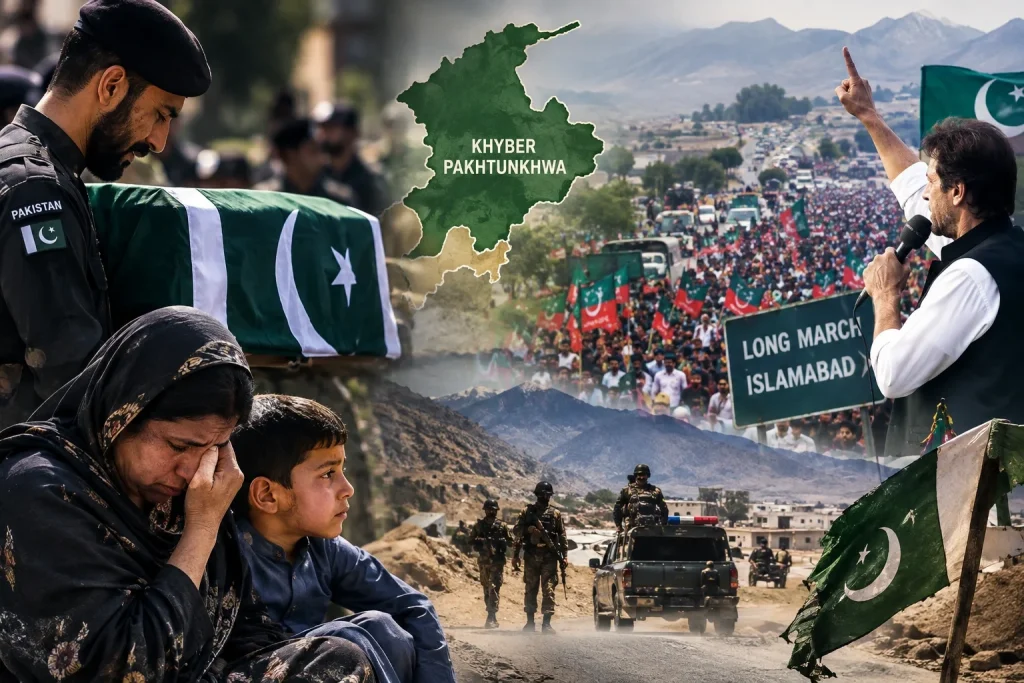
When Pakistan joins the United States in its war against terrorism, extremism and radicalism increase within its internal regions, resulting in hundreds of security personnel and thousands of ordinary citizens losing their lives in bomb blasts and attacks, and the real motive behind these attacks is the same proxy wars where non-state groups receive support from external powers. In such circumstances, Pakistani citizens are not only concerned for their lives but also suffer economically from inflation and unemployment because war devastates the economy, foreign investment dries up, new jobs are not created, and existing employment is also put at risk. Another significant aspect of proxy wars is environmental destruction, as bombing, the use of chemical materials, and deforestation damage the ecological system of the area, polluting water, air, and soil, which affects agriculture and livestock,
depriving people of their livelihoods. Despite all this destruction, when it comes to global powers, they view these wars as a game where they celebrate their victories, while the ordinary people who face the real losses are given no importance and are merely presented as statistics in reports. The same is true in border disputes between Iran and Pakistan; whenever military clashes occur between the two countries, ordinary people living on both sides of the border are forced to bid farewell to their homes and become refugees living in camps where they are deprived of even basic facilities like health and education. Moreover, these conflicts affect the relations between the two
countries, creating obstacles in mutual trade and cultural exchange, which hinders the overall development of the region, and the hopes of those who dream of peace and prosperity are crushed.
When the sanctions and threats imposed by Israel and the United States on Iran do not yield any results, they use countries like Pakistan to isolate Iran, even though Pakistan itself is grappling with economic challenges and security threats, yet it is compelled to endure the pressure of these global powers because it has to protect its own interests. Here, a bitter truth is that proxy wars never end with a decisive victory for any one side but instead
become a perpetual conflict where every day gives rise to a new dispute and a new crisis, and in this entire scenario, the greatest loss is borne by the ordinary person who, caught in the crossfire of these powers, is deprived even of the basic right to live a dignified life. If we consider the psychological dimension of these wars, it becomes evident that anxiety, depression, and fear become common among ordinary citizens, children are robbed of their childhood, women face economic and social instability, and the elderly are left without proper health and care facilities. The education system is also destroyed because schools are either bombed or temporarily set up in refugee camps where the quality of education is almost non-existent, and thus an entire generation is deprived of its future prospects.
Everywhere there is an atmosphere of despair and helplessness, and people are preoccupied not with bringing any positive change in their lives but merely with surviving, while the ruling elite and representatives of global powers sit in their air-conditioned offices making decisions that affect the lives of millions, yet they remain oblivious to this reality.
Another dimension of proxy wars in Balochistan and along the border areas between Pakistan and Iran is smuggling and illegal movement, which not only creates economic instability but also promotes the trade of narcotics and arms, with the greatest harm falling upon the weaker segments of society, and the younger generation becomes addicted to drugs and crime. When the United States and Israel label Iran a threat, they increase their military presence in the region, forcing countries like Pakistan to alter their domestic policies and shift their development
budgets toward defense, as a result of which the public is deprived of health, education, and employment projects. Thus, a cycle is created where the more the conflict escalates, the more resources are spent on war, and the funds allocated for public welfare keep decreasing, leading to increased poverty and unemployment, and this poverty then fuels extremism, which is the very fuel for proxy wars. Despite all these facts, the major powers of the international community do not take serious steps to stop these wars because they have their own interests tied to them, such as arms sales, control over oil reserves, and geopolitical influence. When Pakistan receives military aid from the United States, it supports American policies in return, which often clash with the interests of Iran and Israel, and thus Pakistan becomes involuntarily entangled in these proxy wars. The ordinary Pakistani citizen is frustrated that the money earned from his taxes is being spent on America’s wars while his own home lacks electricity and his children do not have access to clean water. In Iran too, the public faces a similar situation where their government is
spending its resources on fighting Israel and America, while ordinary Iranians, due to inflation and sanctions, are unable to meet their basic needs, and in Israel as well, ordinary citizens live in constant fear and uncertainty because of their government’s hardline policies.
The reality is that proxy wars never end, nor do they have any logical conclusion, because when one objective is achieved, ten new objectives emerge, and this process continues indefinitely, much like a maze where paths never seem to run out. The ordinary person loses their way in this maze and can never find an exit from this turmoil, because every time they hope that the war will end, a new incident occurs that once again fans the flames of conflict. The greatest tragedy of these wars is that those who are actually killed or wounded are never among those who

declare the war, nor do they know its real purposes, but are merely sacrificed for the interests of rulers and global powers, and their sacrifices are soon forgotten when a new crisis arises. Countries like Pakistan and Iran should stay away from proxy wars to improve their mutual relations and prioritize the welfare of their people, but the pressure of global powers and their interests are the biggest obstacles in this path, because the United States and Israel want to see Iran weakened at any cost, and they use Pakistan as a bridge to extend their interests into the region. In this situation, the voice of ordinary people is suppressed, and they struggle for their survival, but their struggle never succeeds because they are unaware of the rules of this game and lack the resources to influence it. It would not be
wrong to say that the proxy wars between Pakistan, Iran, the United States, and Israel are essentially a chessboard of global powers where the pawns are ordinary human beings, and this chess game never ends because a new match begins every time. In this game, the role of the common person is merely that of a spectator who remains engaged in the race to save their life and never achieves any significant purpose in this race. International law and human rights organizations should seriously consider this situation and take effective measures to stop these proxy wars, but as
long as global powers prioritize their own interests, these wars will continue, and ordinary people will remain their greatest victims. There is no victor in these wars; everyone loses, especially those who are merely spending their
lives hoping for a new tomorrow, but that tomorrow never comes because every morning brings a new report, a new attack, a new crisis, and a new fear. It is a tragedy that in this modern age, when humanity has reached the moon, it still resorts to proxy wars against its own neighbors and tries to color its future with the blood of its own brothers, even though this colorful future is in reality a dark and hazy dream that never materializes. This is the lesson we learn from these wars: that if we wish to save our humanity, we must end these proxy wars and protect ordinary
people from being part of this game, so that they can live their lives in peace and tranquility, and future generations can also reap the fruits of this peace.