
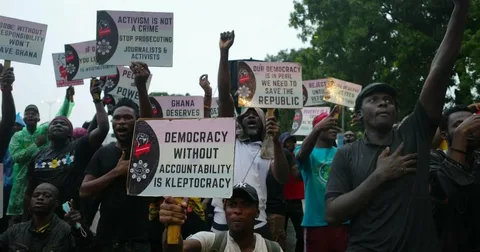
Ghana has long been regarded as one of West Africa’s most stable democracies, earning international recognition for peaceful elections, political pluralism, and constitutional governance. However, recent events have sparked renewed discussion about Ghana human rights issues today, particularly regarding freedom of expression, civil liberties, and the relationship between the state and its critics.
Human rights organizations, legal experts, and civil society groups have increasingly raised concerns about whether democratic institutions are adequately protecting fundamental freedoms. While Ghana remains stronger than many regional counterparts in democratic governance, recent controversies have highlighted challenges that continue to test the country’s commitment to human rights.
Background
Human rights are protected under Ghana’s 1992 Constitution, which guarantees freedoms including speech, assembly, association, religion, and access to justice. Over the years, Ghana has built a reputation as a country where democratic institutions generally function and political transitions occur peacefully.
Despite these achievements, concerns regarding Ghana human rights issues 2020, Ghana human rights issues 2022, and current developments demonstrate that democratic progress does not eliminate human rights challenges entirely. Issues related to press freedom, treatment of protesters, corruption, judicial independence, and accountability have periodically emerged.
Many international organizations continue to rank Ghana favorably compared to several neighboring countries. However, rights advocates argue that maintaining democratic standards requires constant vigilance and institutional reform.
Understanding Human Rights in Ghana
When discussing human rights in Ghana PDF reports and legal frameworks, experts typically refer to rights guaranteed by both national and international law.
The list of Human rights in Ghana includes civil, political, economic, social, and cultural rights. These protections are designed to ensure that citizens can participate fully in society without discrimination or fear of persecution.
The constitution provides legal safeguards intended to protect individuals from arbitrary detention, unlawful restrictions on speech, and abuses of governmental power. Courts are empowered to hear cases involving alleged violations of constitutional rights.However, having legal protections on paper is different from ensuring those protections are consistently respected in practice.
Recent Concerns Over Freedom of Expression
One of the most discussed aspects of current issues in Ghana today is the debate surrounding freedom of expression and criticism of government policies.
Civil society groups argue that democratic societies depend on open debate and the ability of citizens, journalists, activists, and opposition figures to express their views without intimidation. Concerns often arise when critics claim that legal actions or arrests may discourage public discussion of political matters.
Supporters of stronger law enforcement measures argue that governments also have a responsibility to maintain public order, prevent misinformation, and uphold national security. This balance between security and freedom remains a central challenge for democracies around the world.
In Ghana, recent discussions have focused on whether authorities are striking the right balance between these competing priorities.
Media Freedom and Journalistic Challenges
The media plays a vital role in democratic governance. Ghana has a diverse media landscape that includes newspapers, radio stations, television networks, and digital news platforms.
Nevertheless, journalists occasionally report challenges when covering sensitive political issues. Media watchdog organizations have documented incidents involving threats, legal disputes, and pressure faced by reporters investigating controversial topics.
Freedom of the press is often viewed as an important indicator when evaluating Ghana human rights issues today. A strong and independent media sector enables citizens to access information and hold public officials accountable.Experts note that protecting journalists contributes directly to broader democratic stability and public trust in institutions.
The Role of Civil Society Organizations
Civil society organizations have historically played an important role in promoting accountability and defending democratic values in Ghana.
These organizations monitor elections, document human rights concerns, advocate for vulnerable communities, and encourage citizen participation in governance. Their work frequently appears in various Human rights in Ghana PDF reports published by international and local organizations.
Advocacy groups argue that civic participation strengthens democracy by ensuring that diverse voices are represented in public decision-makingAs political debates intensify, the role of independent civil society actors becomes increasingly important in maintaining transparency and protecting constitutional rights.
Political Rights and Democratic Accountability
Political rights remain a significant component of discussions about human rights in Ghana.Citizens generally enjoy the right to vote, join political parties, attend peaceful demonstrations, and participate in public affairs. Ghana’s electoral history reflects several successful democratic transitions, which many observers view as a positive achievement.
However, debates occasionally emerge regarding the treatment of opposition figures, political activists, and government critics. Human rights advocates stress that democratic accountability requires equal treatment under the law regardless of political affiliation.Maintaining public confidence in institutions depends heavily on perceptions of fairness and impartiality.
Economic and Social Rights Challenges
Human rights discussions are not limited to politics and free speech. Economic and social concerns also affect the daily lives of many Ghanaians.Issues such as unemployment, access to healthcare, educational opportunities, housing conditions, and poverty reduction are frequently highlighted in assessments of current issues in Ghana today.
While Ghana has experienced periods of economic growth, inequalities remain. Rural communities often face different challenges compared to urban populations, creating disparities in access to public services and opportunities.Human rights experts emphasize that economic rights are closely connected to democratic development and social stability.
Five Fundamental Human Rights in Ghana
When discussing the five fundamental human rights in Ghana, legal experts commonly highlight:
1. Right to Life
Every individual has the right to life and protection from unlawful harm.
2. Freedom of Speech
Citizens are entitled to express opinions and share information within the limits established by law.
3. Freedom of Assembly
People have the right to gather peacefully and participate in public demonstrations.
4. Freedom of Religion
Individuals may practice their religion or choose not to follow any religion without discrimination.
5. Right to Equality Before the Law
All citizens are entitled to equal legal protection regardless of background, ethnicity, gender, or political affiliation.
These rights form the foundation of Ghana’s constitutional framework and democratic system.
Regional and International Impact
Developments related to human rights in Ghana attract international attention because the country is often viewed as a democratic model within West Africa.
International organizations, foreign governments, investors, and development partners closely monitor governance indicators, civil liberties, and rule-of-law standards.
Positive human rights performance can strengthen investor confidence and diplomatic relationships. Conversely, concerns regarding civil liberties may generate scrutiny from international institutions and advocacy groups.As a result, debates surrounding Ghana human rights issues today extend beyond domestic politics and influence Ghana’s global reputation.
Looking Ahead
The future of human rights in Ghana will likely depend on the strength of democratic institutions, judicial independence, media freedom, and civic participation.Many observers believe Ghana possesses the institutional foundations necessary to address emerging challenges. However, maintaining democratic credibility requires continued commitment to constitutional principles and respect for fundamental freedoms.
As political discussions continue, citizens, lawmakers, courts, journalists, and civil society organizations will all play important roles in shaping the country’s human rights landscape.
The coming years may determine how Ghana balances security concerns, political competition, and civil liberties while preserving its reputation as one of Africa’s leading democracies.
FAQs
What are the human rights in Ghana?
Human rights in Ghana include the right to life, freedom of speech, freedom of religion, freedom of assembly, equality before the law, protection from discrimination, access to justice, and participation in democratic processes. These rights are guaranteed under Ghana’s Constitution and supported by various international human rights agreements. Citizens are legally entitled to express opinions, vote in elections, practice their beliefs, and seek legal protection when their rights are violated.
What are the top 3 causes of death in Ghana?
Public health data frequently identifies cardiovascular diseases, infectious diseases, and complications related to maternal and child health among major causes of death in Ghana. The exact ranking can vary by year and source, but non-communicable diseases, malaria-related illnesses, and respiratory conditions continue to represent significant health challenges. Improvements in healthcare access and preventive medicine remain important national priorities.
What is the biggest human rights issue today?
Globally, many experts identify restrictions on freedom of expression, political repression, discrimination, and unequal access to justice as among the most significant human rights concerns. In the context of Ghana human rights issues today, debates surrounding free speech, treatment of critics, media freedom, and democratic accountability have become particularly prominent. Human rights advocates argue that protecting civil liberties is essential for maintaining public trust and democratic stability.